


I first stumbled across mango sticky rice on the busy streets of Yangon, where vendors stack mangoes sky-high and the scent of coconut milk drifts through the air. Burmese mango sticky rice brings together sweet glutinous rice soaked in coconut milk and slices of ripe mango for a dessert that’s both simple and somehow unforgettable. Thailand usually gets the spotlight for this treat, but Burma’s version really has its own twist on the classic.
I’m pretty excited to show you how to make this at home with just a handful of ingredients. The magic of mango sticky rice is in its simplicity—no fancy gadgets or specialty stores required. Once you taste that creamy coconut, chewy rice, and juicy mango, you’ll totally get why people love this dessert all over Southeast Asia.
I’ll walk you through picking the right ingredients, nailing the cooking steps, and sharing a bit about what makes this dessert so special. I’ll throw in some of my favorite tips for getting that perfect texture and a few fun ways to serve it up at your next get-together. Let’s get into it.
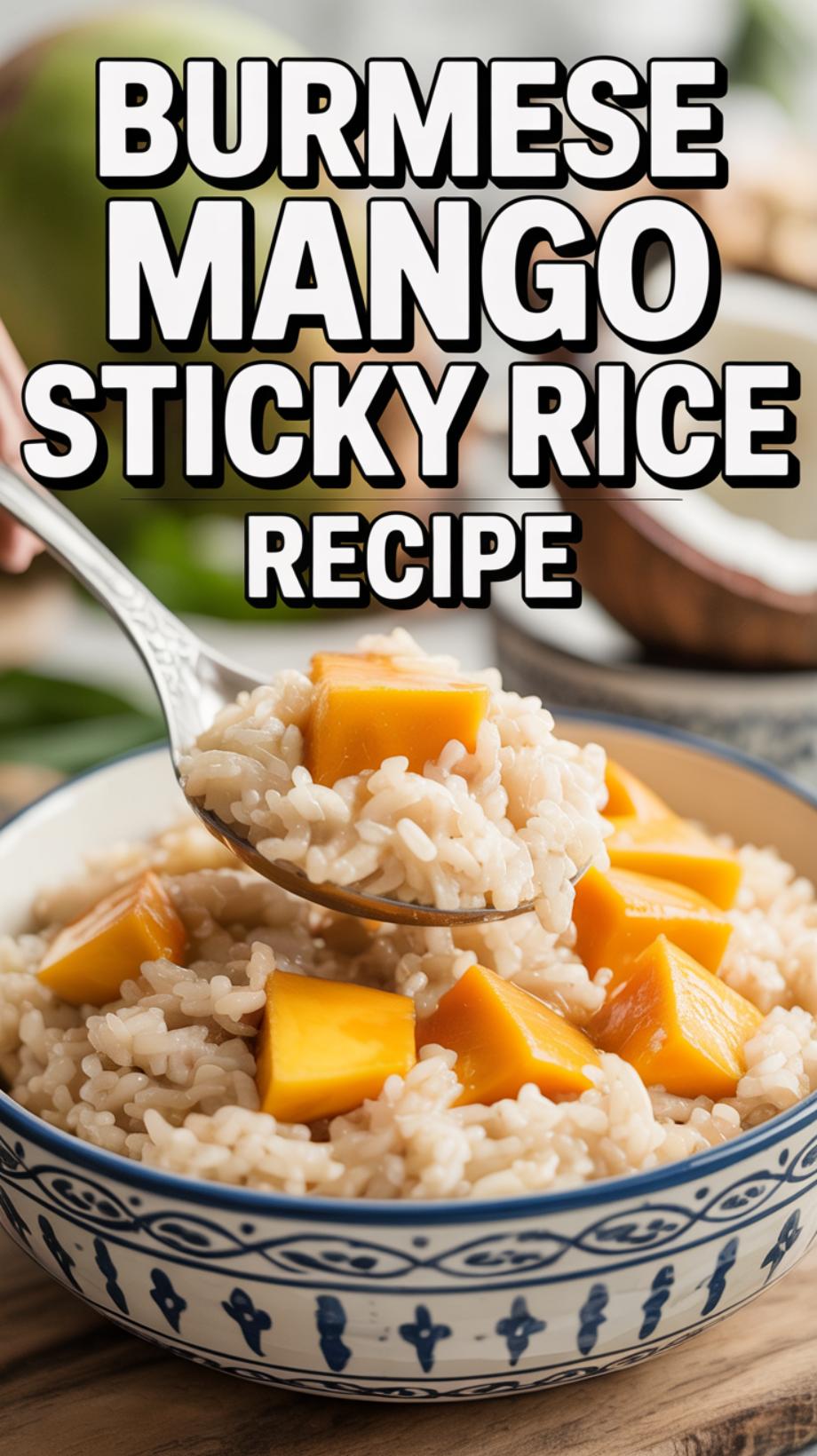
Essential Ingredients for Burmese Mango Sticky Rice
The ingredients really matter when I whip up this dessert. The three stars—sticky rice, fresh mangoes, and coconut milk—work together to create that dreamy balance of sweet, creamy, and tropical.
Glutinous Rice vs. Sweet Rice
People often ask me about the difference between glutinous rice and sweet rice, but honestly, they’re just two names for the same thing. Both mean white glutinous rice, which is exactly what you want for authentic mango sticky rice.
This rice turns sticky when you cook it because it’s packed with amylopectin. If you use regular jasmine rice, the texture just won’t be right.
I like Thai sweet rice for its spot-on texture. Some folks use black sticky rice for a cool purple color and a bit of nuttiness. For Burmese mango sticky rice, though, I always stick to white glutinous rice.
You’ll need to soak the rice for at least 4 hours. I usually just let it soak overnight—makes life easier.
Choosing the Perfect Mango Variety
The mango you pick really makes a difference! I’ve learned that not every ripe mango works for this.
Here’s what I usually go for:
- Ataulfo mango (champagne or honey mango)
- Nam Dok Mai mango (from Thailand)
- Kataulfo mangoes
Ataulfo mangoes are my top pick. They’re creamy, not stringy, and perfectly sweet. These little golden mangoes might be small, but wow, they’re flavorful.
The mango should be ripe but still firm enough to slice. I check ripeness by pressing near the stem—it should give a little but not feel mushy. The skin should smell sweet and fragrant.
Skip mangoes that are too soft or have dark spots. They’ll just fall apart when you try to slice them.
Selecting the Right Coconut Milk and Sweeteners
I never use cheap coconut milk for this dessert. Full-fat coconut milk is a must for that luscious coconut cream sauce.
The can usually separates into cream on top and thinner liquid below. I use the thick cream for the sauce and the rest to cook the rice. I always shake the can and peek inside—more cream is always better.
Palm sugar is my go-to sweetener. It gives a caramel flavor that plain white sugar just can’t touch. Sometimes I toss in pandan leaves for a little extra aroma.
The ratio is important. I use about 1 cup of coconut milk per cup of uncooked sticky rice, plus more for the sauce.

Step-by-Step Burmese Mango Sticky Rice Recipe
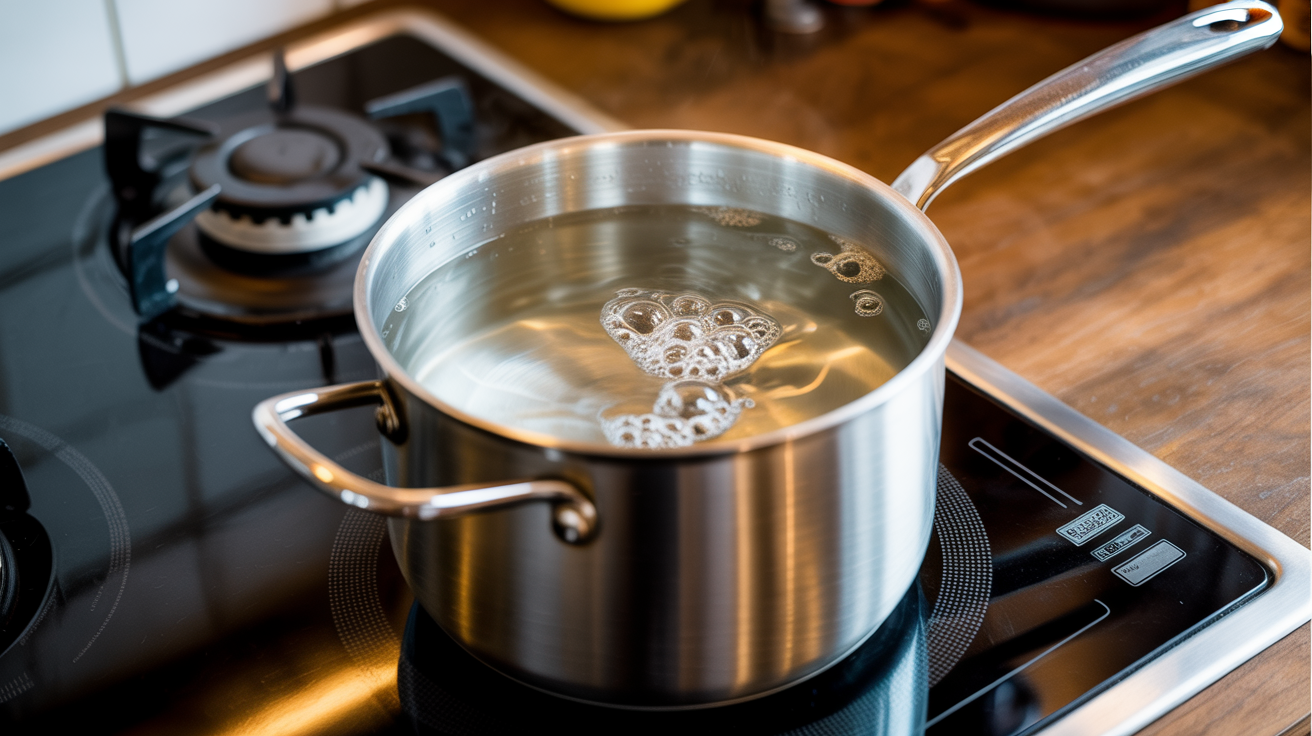
Step 1: Boil the water and add the rice.
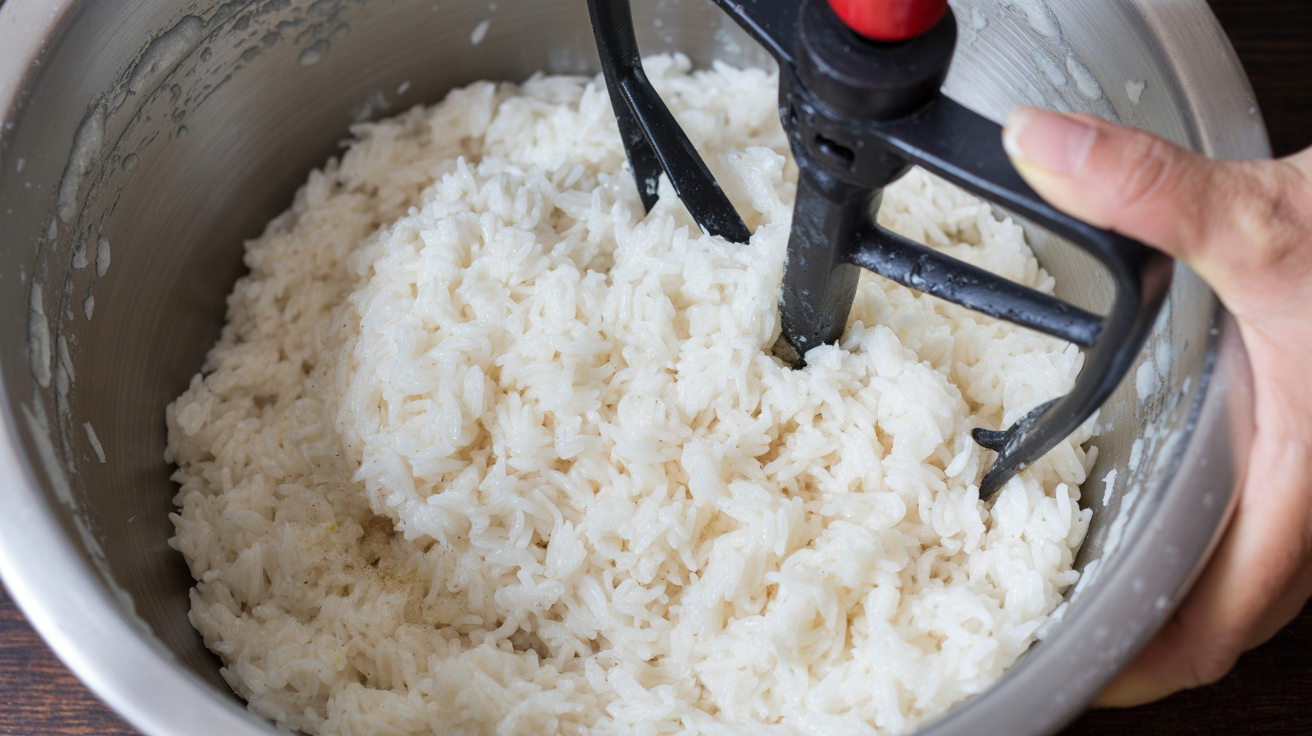
Step 2: Drain the rice and to a mixer.

Step 3: Add the coconut milk to the rice.
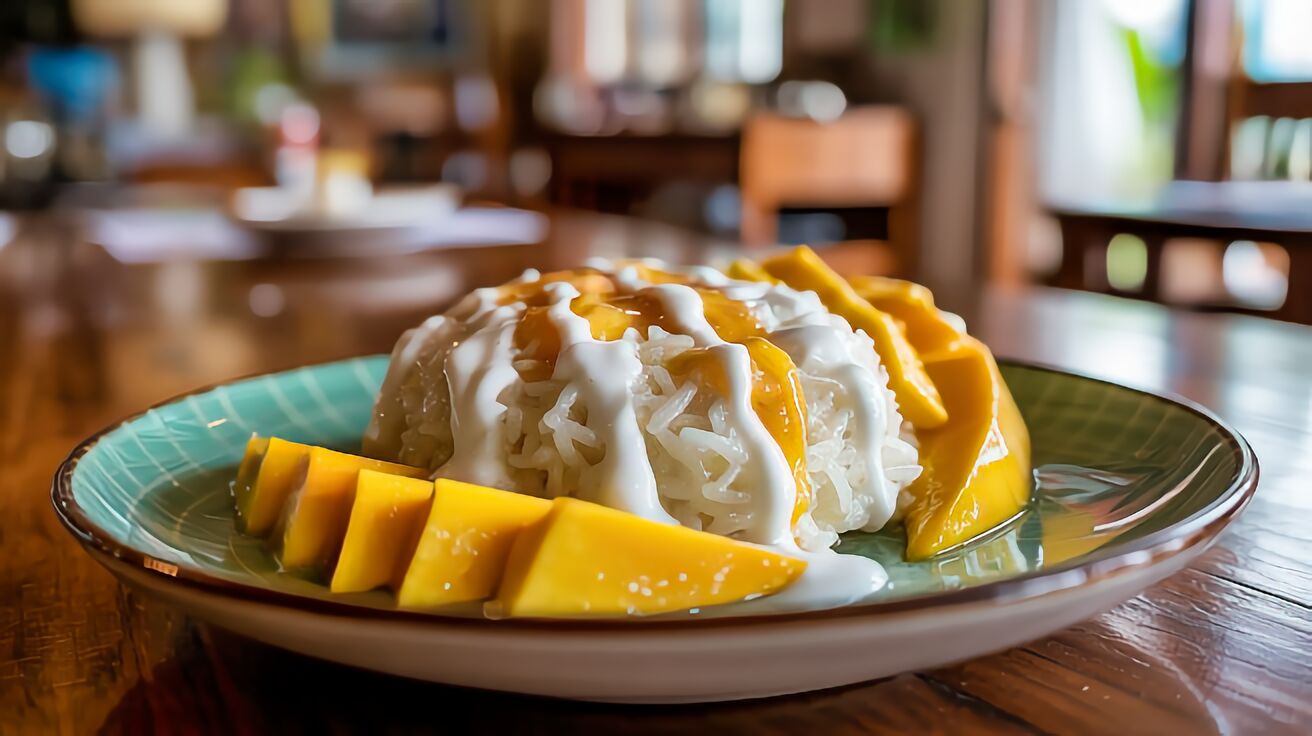
Step 4: Add to a bowl, add diced mango to the top and serve.
How to Prepare and Steam Sticky Rice
I rinse 2 cups of glutinous rice (sweet rice or khao niao) under cold water until it runs clear. This step washes off extra starch so the rice doesn’t get too gummy.
After rinsing, I soak the rice in cool water for at least 4 hours or overnight. This helps the grains cook evenly and get that signature chewy bite.
When it’s time to cook, I drain the rice and line a bamboo steamer with cheesecloth. I spread the soaked rice in a layer about an inch or two thick. Then I set the steamer over a pot of boiling water and cover it.
I steam the rice for 25 to 30 minutes, flipping it halfway through with a spoon. When the grains look translucent and feel tender but chewy, it’s ready. I keep the rice covered until I’m ready to mix in the coconut cream.
Making Sweet Coconut Sticky Rice
While the rice steams, I make the sweet coconut mixture that turns plain sticky rice into authentic Thai mango sticky rice. I stir together 1 cup coconut cream, ½ cup sugar, and ¼ teaspoon salt in a small saucepan over medium heat.
I keep stirring until the sugar dissolves. The mixture should be warm but not boiling.
When the sticky rice finishes steaming, I move it to a big bowl. I pour about three-quarters of the warm coconut cream over the hot rice and gently fold it in. The rice soaks it up as it sits.
I cover the bowl with a towel and let it rest for 20 to 30 minutes. During this time, the rice drinks up all that coconut sweetness. I save the rest of the coconut cream for drizzling on top.
Slicing and Preparing Ripe Mangoes
Picking the right mangoes is key for this dessert. I look for ripe mangoes that yield a little when I press them and smell sweet near the stem.
I peel each mango with a sharp knife or peeler, working around the big flat seed. Then I slice off the two big cheeks of mango flesh.
I cut each cheek into thin slices, about ¼ inch thick, or sometimes dice them if I’m feeling fancy. Fresh mangoes should be juicy, sweet, and have a deep yellow or orange color.
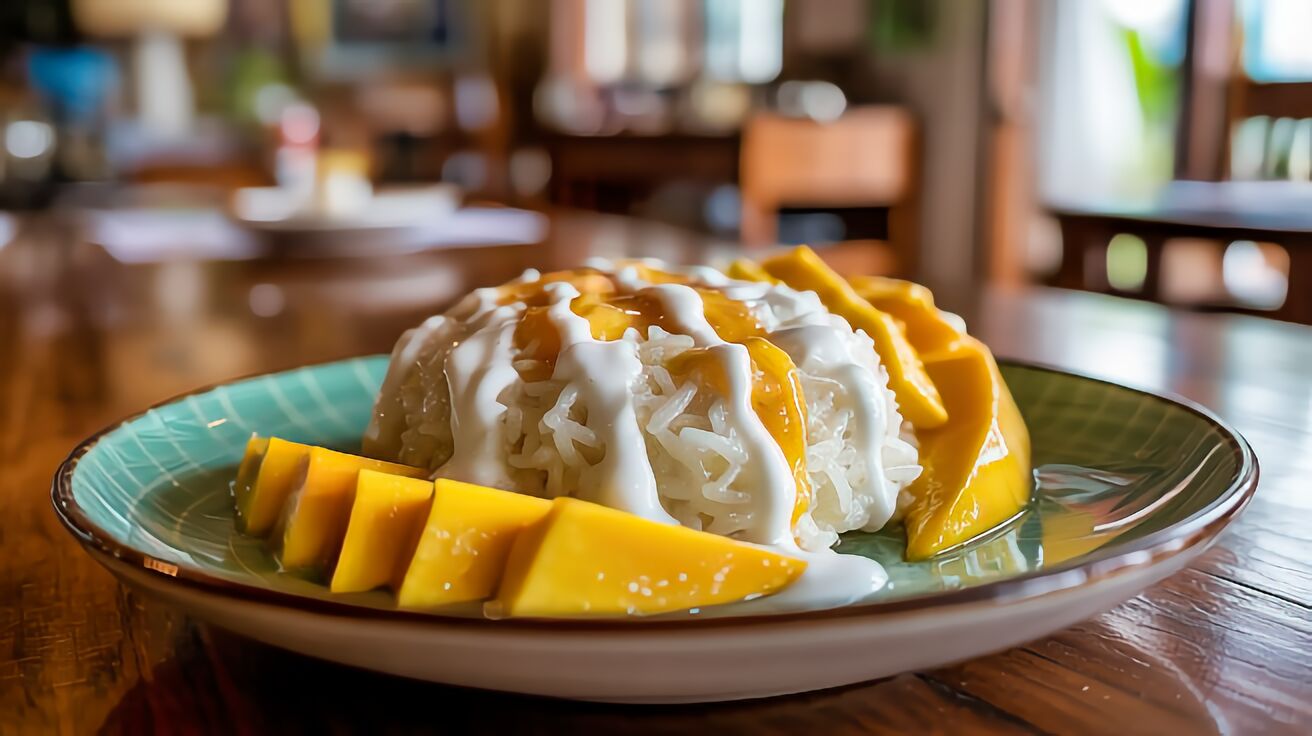
I arrange the mango slices on plates next to a scoop of coconut rice. The cool, juicy mango paired with the warm sticky rice is just unbeatable.
Crafting the Salted Coconut Sauce
The salted coconut sauce finishes off my khao niao mamuang. I take the coconut cream I set aside and pour it into a saucepan with 1 tablespoon sugar and ½ teaspoon salt.
I heat this over medium-low, stirring often. Some people add a tablespoon of rice flour or cornstarch mixed with water to thicken the sauce.
I cook the sauce for 3 to 5 minutes until it thickens a bit and looks glossy. The salt in the sauce might sound odd, but it really balances the dessert and brings out the flavors.
I drizzle this warm sauce over the mango and sticky rice right before serving. Sometimes I sprinkle on toasted sesame seeds or crispy mung beans for a little crunch.
Tips, Toppings, and Serving Ideas
Little details like texture and toppings can turn homemade Burmese mango sticky rice into something truly special. I’ve found that nailing these makes all the difference.
Secrets for Perfect Sticky Rice Texture
I always soak my sticky rice for at least 4 hours, but overnight is even better. This makes sure the grains absorb water evenly and cook up chewy.
When I steam, I use cheesecloth in my bamboo steamer so the rice doesn’t fall through. The rice should be tender with a slight bite—not mushy. I taste a few grains after 20 minutes to check.
The coconut milk mixture should be warm when you mix it in. I fold the rice gently with a wooden spoon and cover it for 30 minutes. Letting it rest helps the rice soak up the coconut flavor without turning soggy.
Topping Options: Sesame Seeds, Mung Beans, and More
Toasted sesame seeds are my first choice for topping—they add a nutty crunch that’s just perfect. I toast them in a dry pan for a couple of minutes until they’re golden.
Crispy mung beans give this dish an authentic twist. I split and peel yellow mung beans, then fry them in a little oil until they’re crispy. They add great texture and a subtle earthy flavor.
Here’s what I like to top with:
- White or black sesame seeds (toasted)
- Split mung beans (fried)
- Fresh coconut flakes
- Extra coconut sauce
- A pinch of sea salt
Creative Presentation and Pairing Suggestions
I like making mango sticky rice bites for parties—they’re cute, easy to eat, and look impressive. Shaping the rice into small rounds, topping with a mango cube, and skewering with a toothpick does the trick.
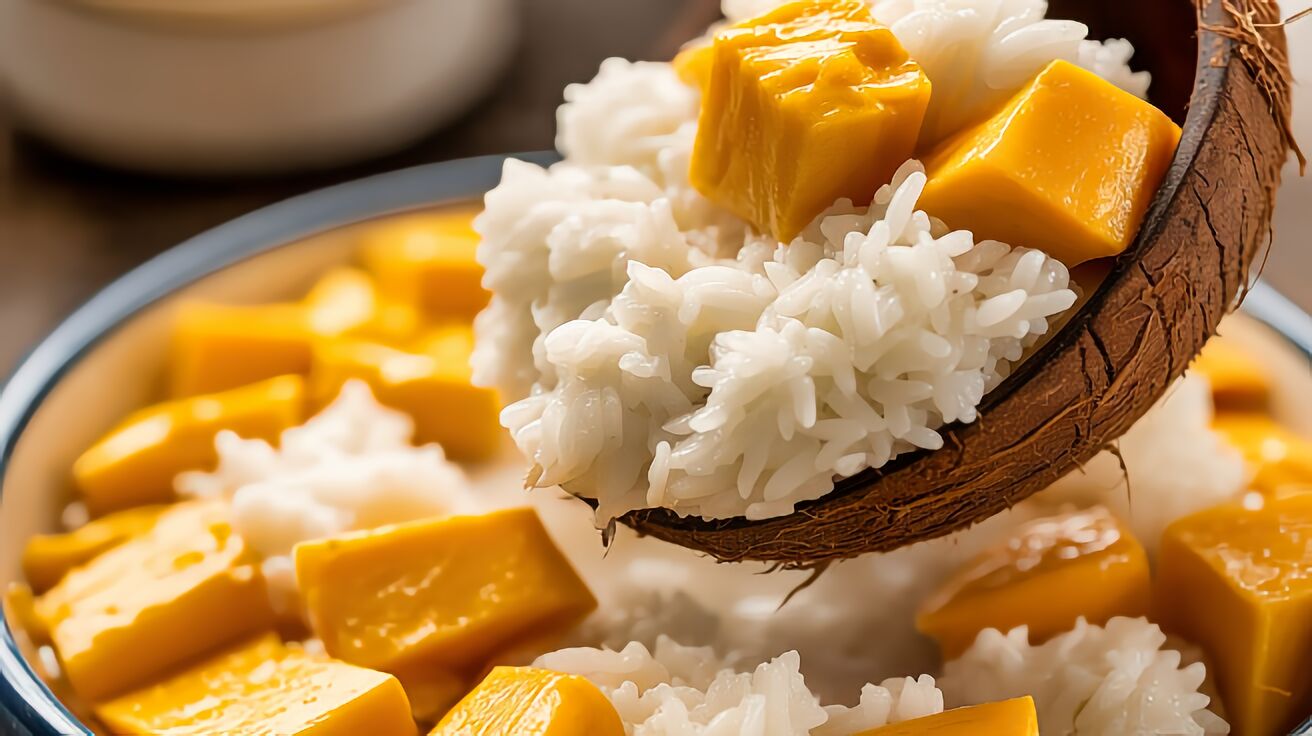
For a pretty presentation of Thai mango sticky rice, I sometimes serve it in coconut shells or glass cups to show off the layers. Leftover sticky rice is great the next day—just warm it up and add fresh mango.
I like pairing this dessert with Thai iced tea or coconut water. The combo is refreshing and keeps the sweetness in check.
Cultural Significance and Variations
Mango sticky rice means a lot in Southeast Asia, with unique styles in Thailand and Burma, seasonal traditions, and even some creative new spins that keep the dish exciting.
Thai vs. Burmese Mango Sticky Rice Traditions
I’ve noticed that while khao niao mamuang is Thailand’s favorite dessert, Burmese mango sticky rice definitely has its own vibe. The Thai version uses jasmine-scented sticky rice with a generous drizzle of salted coconut cream. In Burma, I find the rice often has palm sugar mixed right in, which gives it a deeper caramel flavor.
The coconut sauce changes too. Thai sticky rice usually gets a thinner coconut milk topping, while Burmese versions use a thicker cream, sometimes cooked down with jaggery. Both countries see rice as a symbol of life and prosperity, but Burma’s Buddhist traditions give mango sticky rice an extra layer of meaning—people often offer it at temples during full moon festivals.
Seasonality and Special Occasions
I always get excited for mango season, which runs from April to June in both Thailand and Burma. That’s when mango sticky rice pops up at festivals and parties everywhere.
In Burma, I see this dessert front and center during Thingyan (the Burmese New Year water festival) in April. Families make big batches to share with neighbors and monks. The timing is perfect—mangoes are at their best.
Thai culture celebrates mango sticky rice during Songkran, too. I think it’s lovely how this dessert stands for prosperity and sweetness during these special times. Street vendors seem to multiply during peak season, so everyone gets a taste.
Innovative Flavor Twists and Modern Adaptations
I’m honestly amazed by how chefs keep reinventing this classic dessert! I’ve come across versions like black sticky rice made with purple glutinous rice, butterfly pea flower infusions that turn the rice a wild blue, and even durian sticky rice if you’re feeling brave.
Some folks swap in condensed milk instead of coconut cream, and others throw in matcha powder, pandan extract, or a drizzle of chocolate sauce. I’ve noticed restaurants getting fancy, stacking the ingredients in glasses to show off the colors and textures. There are even mango sticky rice ice creams, sushi-style rolls, and croissants stuffed with the combo—people get pretty creative.
But at the end of the day, I still think nothing beats the original: warm, fragrant Thai sticky rice and juicy, ripe mango slices. Maybe that’s nostalgia talking, but honestly, it’s hard.
Mango Sticky Rice vs Rice Pudding
Mango sticky rice and rice pudding are both popular rice-based desserts, but they offer very different textures, flavors, and overall eating experiences.
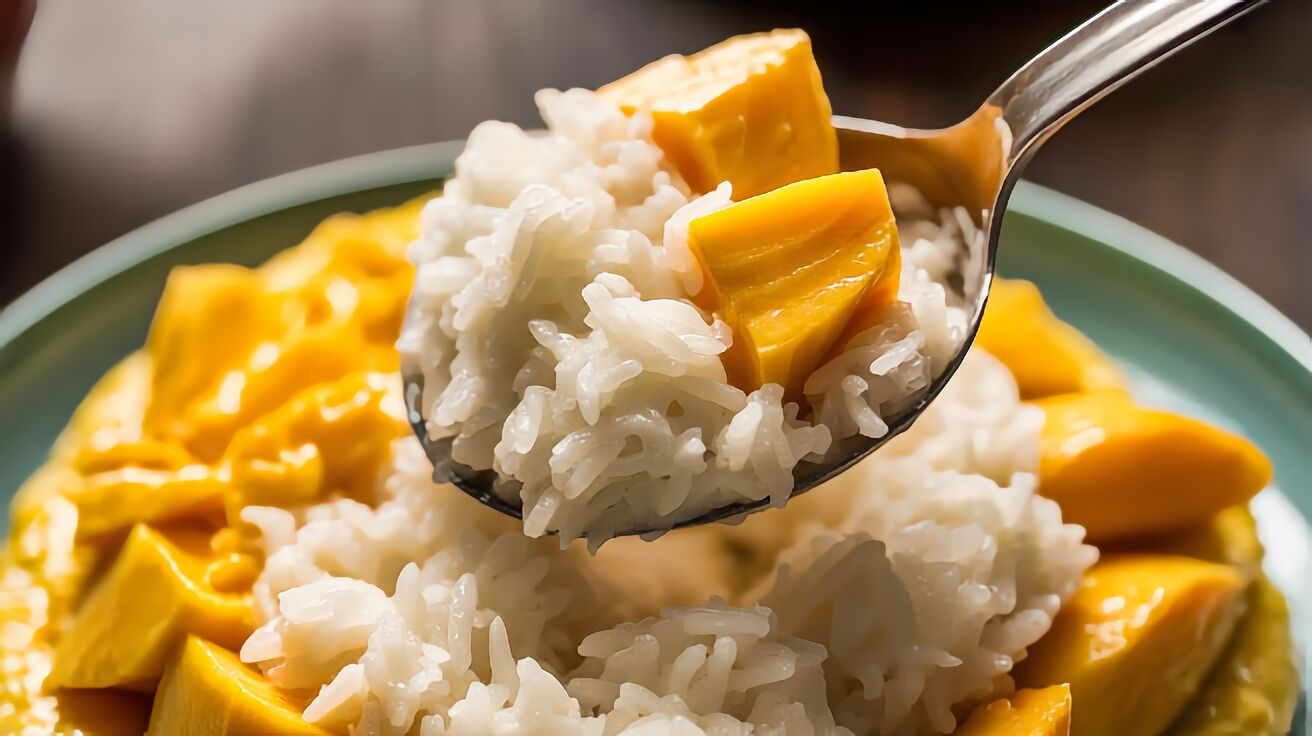
Mango sticky rice, a classic Thai dessert, combines glutinous rice cooked in sweetened coconut milk with slices of fresh, ripe mango. The rice is slightly chewy and dense, while the coconut sauce adds richness without making the dish overly heavy. The fresh mango brings a bright, natural sweetness that balances the richness of the coconut, making the dish feel both indulgent and refreshing.
Rice pudding, by contrast, is typically made by simmering rice in milk or cream with sugar until it becomes soft and creamy. Depending on the variation, it may include spices like cinnamon or vanilla, and sometimes raisins. The texture is smooth and comforting, with a consistent creaminess throughout rather than contrasting elements.
The key difference is freshness versus comfort: mango sticky rice highlights fresh fruit and texture contrast, while rice pudding focuses on creamy consistency and warmth.
If you prefer a dessert that feels light and vibrant, mango sticky rice is the better choice. If you’re looking for something rich, smooth, and comforting, rice pudding is ideal.
Burmese Sticky Rice Recipe FAQ
1. What type of rice is used for sticky rice?
Glutinous rice is used.
2. Why is sticky rice soaked before cooking?
Soaking helps it cook evenly.
3. Is sticky rice sweet or savory?
It can be either depending on preparation.
4. How is sticky rice cooked?
Usually steamed.
5. What dishes pair with sticky rice?
Curries and grilled meats.

Mango Sticky Rice
Ingredients
- 1 cup rice white glutinous
- ⅔ cup coconut milk
- ½ tsp salt
- ½ cup sugar
- ½ cup coconut milk
- ¼ tsp salt
- 1 tsp rice flour
- 1 tbsp water
Instructions
- White glutinous rice to a pot of boiling water

- Drain and add rice to a mixer.

- Add coconut to rice mixture and blend.

- Serve the rice and milk mixture with diced mangos on top or on the side.

Video


8 comments
Interesting read! Ever tried using coconut cream instead of milk for a richer flavor in the Mango Sticky Rice?
Has anyone tried substituting the sweet rice with jasmine? Does the coconut milk brand really make a huge difference?
Does using a different mango variety really affect the overall flavor of the Mango Sticky Rice? Lets discuss!
Isnt it peculiar how the mangos variety can drastically affect the overall taste of the sticky rice dessert?
Isnt it intriguing how the type of mango can dramatically alter the taste of the sticky rice dessert?
Absolutely! Its like the mango dictates the narrative of the dessert.
Isnt the choice of mango variety subjective? And, do different coconut milks really impact the overall taste?
Absolutely! Mango type can dramatically shift the flavor profile. Coconut milk? Unquestionably impacts taste!
Comments are closed.