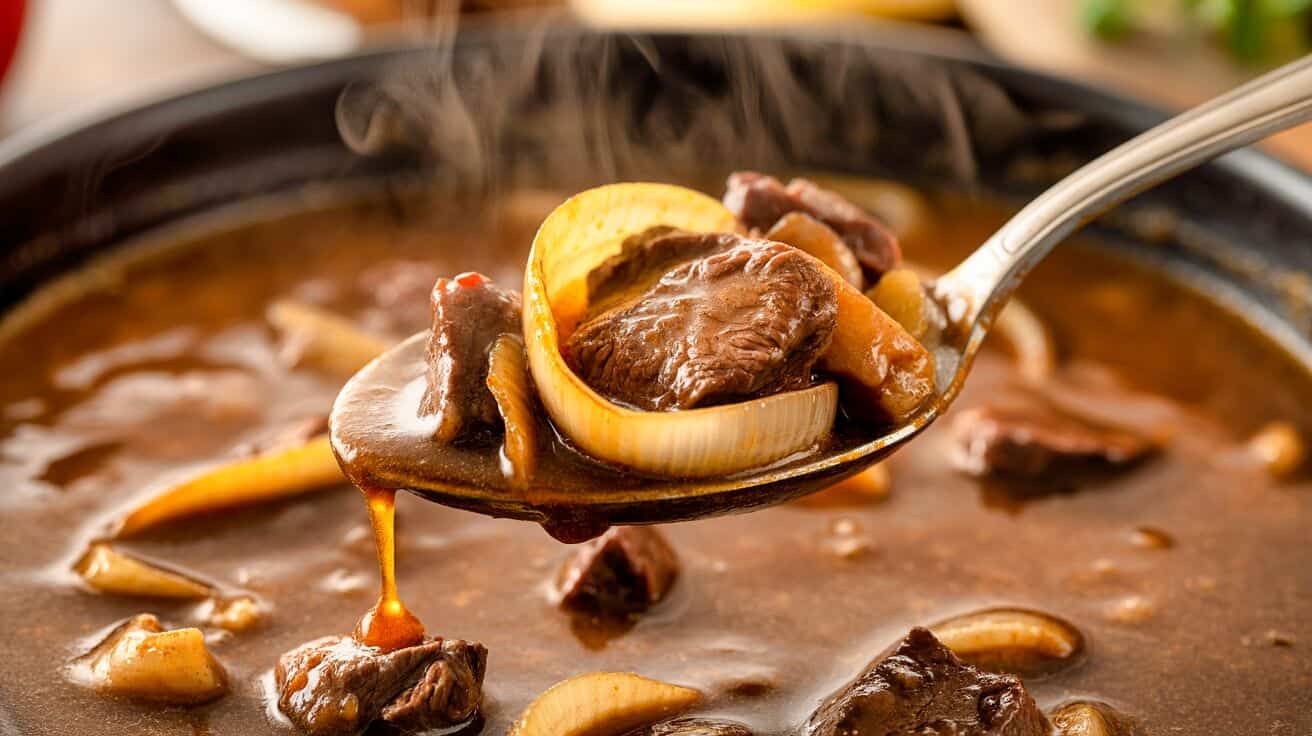
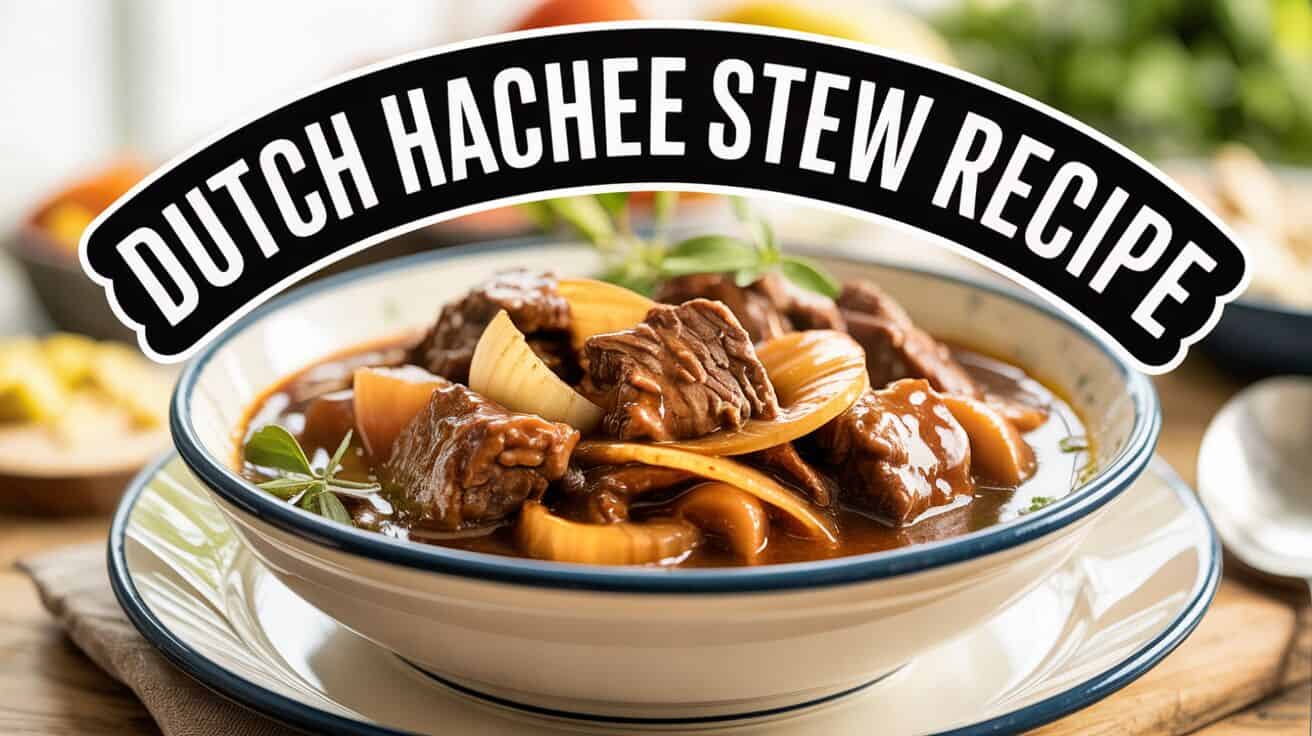
The Dutch Hachee Stew recipe is one of those dishes that’s both simple to make and incredibly comforting—a slow-simmered Dutch beef and onion stew with savory beef, sweet caramelized onions, and just a hint of vinegar or apple butter for gentle acidity. If you’re craving a Dutch Hachee Stew recipe that tastes like it came straight from a Dutch grandma’s kitchen, this one brings you tender beef, rich gravy, and classic, old-school flavors.
I’ll walk you through the key ingredients that make this Dutch Hachee Stew recipe unique, the simmering techniques that guarantee melt-in-your-mouth beef, and some easy serving ideas—like pairing with red cabbage or mashed potatoes. I’ll also sprinkle in some practical tips, small tweaks, and storage advice so you can confidently make this Dutch Hachee Stew recipe again and again.

Essential Ingredients and Traditional Flavors
For this Dutch Hachee Stew recipe, I stick to a handful of honest, robust ingredients: slow-cooked beef, lots of onions, warm spices like cloves and bay leaves, plus a mix of savory broth and a touch of sweetness to thicken and balance the sauce.
Key Cuts of Beef
I go with beef chuck or stewing beef for this Dutch Hachee Stew recipe. These cuts have enough marbling and connective tissue to turn tender after a long, gentle simmer. I cut the beef into 1–1.5 inch cubes—big enough to brown well, but not so big they dry out.
I leave a bit of fat on the cubes for richness, but if you want it leaner, just trim off the extra fat and keep the connective bits. Brisket or blade roast work too, just plan for the same slow-cooking approach to get that fall-apart texture.
Signature Aromatics: Onions, Bay Leaves, and Cloves
Onions are the heart of any Dutch Hachee Stew recipe. I use big yellow onions, sliced thin so they almost disappear into the sauce. I take my time caramelizing them slowly to bring out their sweetness and balance the beef.
I toss in whole cloves and a bay leaf or two for extra depth—cloves give a warm, slightly sharp note, and bay leaves add a subtle herbal bitterness. Usually, I stud an onion with the cloves or just drop them in, then fish out the bay leaves before serving. Too many cloves can overpower, so go easy.
Liquids, Thickeners, and Seasonings
For the braising liquid in this Dutch Hachee Stew recipe, I use beef stock or broth, sometimes with a bouillon cube for a flavor boost. A splash of red wine vinegar or apple butter is classic—both add that sweet-tangy kick.
To thicken, I dust the browned meat with flour or stir in a beurre manié (soft butter mixed with flour). That way, the sauce ends up glossy and just thick enough. I season with salt, pepper, and sometimes a pinch of speculaas spice mix or a little crumbled gingerbread for that old-fashioned, sweet warmth.
Regional Variations and Add-ins
There’s plenty of room for tweaks in a Dutch Hachee Stew recipe. Some folks add apple butter or gingerbread for sweetness and body, others prefer a splash of vinegar for brightness. A bit of beer isn’t unheard of—it deepens the stew’s flavor.
As for veggies, carrots and celery pop up in some versions, but most Dutch cooks serve hachee with braised red cabbage and mashed potatoes instead of mixing veggies right in. If I’m in the mood for a little spice, I’ll add speculaas mix; if not, I just let the caramelized onions and beef stock do the work.
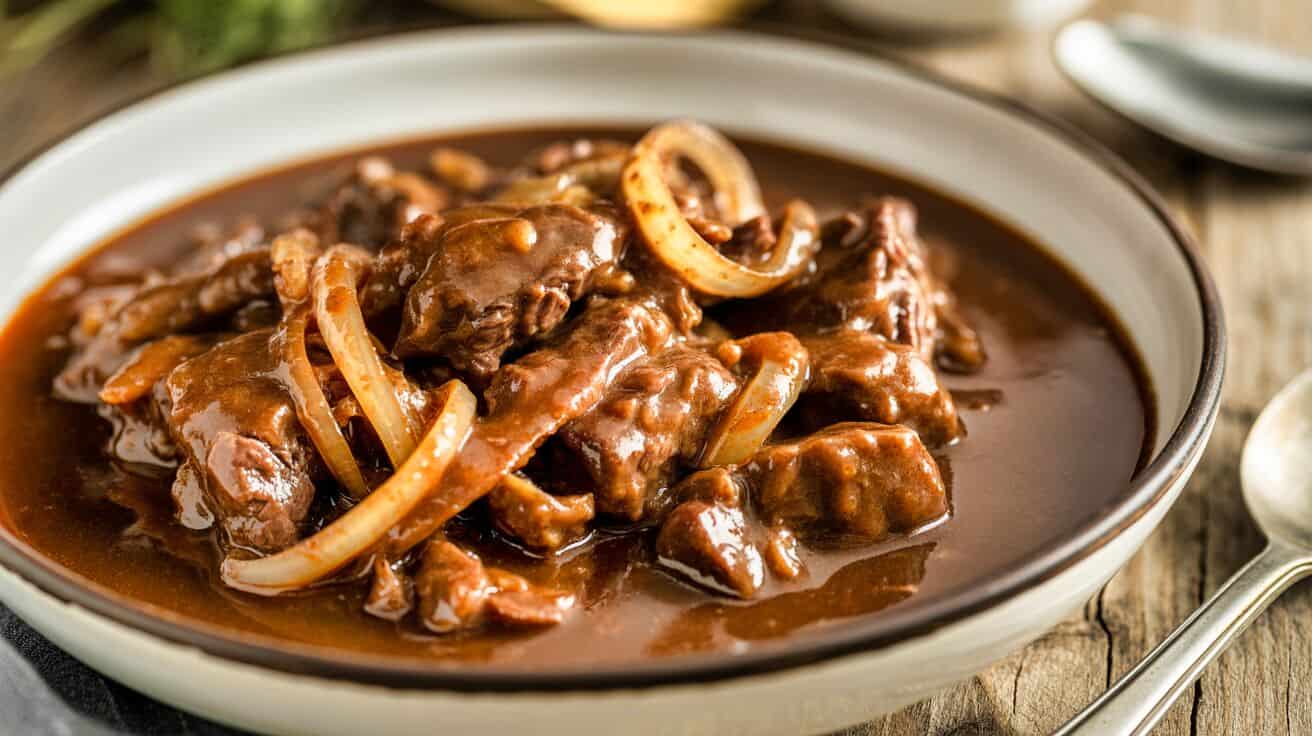
Authentic Cooking Methods and Preparation Steps
For the best Dutch Hachee Stew recipe, I stick to techniques that give you tender beef, deeply golden onions, and a rich, glossy gravy. The order matters—caramelize onions first, then brown the beef, and finally simmer everything low and slow with vinegar and spices.
Dutch Oven and Slow Cooker Techniques
I reach for a sturdy Dutch oven because it handles both browning and simmering. Use a 5–7 quart enameled or cast-iron pot. Preheat, add oil, and brown the beef in batches so it sears instead of steams. After browning, splash in vinegar or beef stock to scrape up all those tasty browned bits.
If you’re using a slow cooker for your Dutch Hachee Stew recipe, start by browning the beef and caramelizing onions on the stove. Then transfer everything to the slow cooker with broth, spices, and maybe a spoonful of apple butter or brown sugar if you want a hint of sweetness. Cook on LOW for 6–8 hours. If the sauce is too thin, finish on HIGH with the lid off for 20 minutes or so.
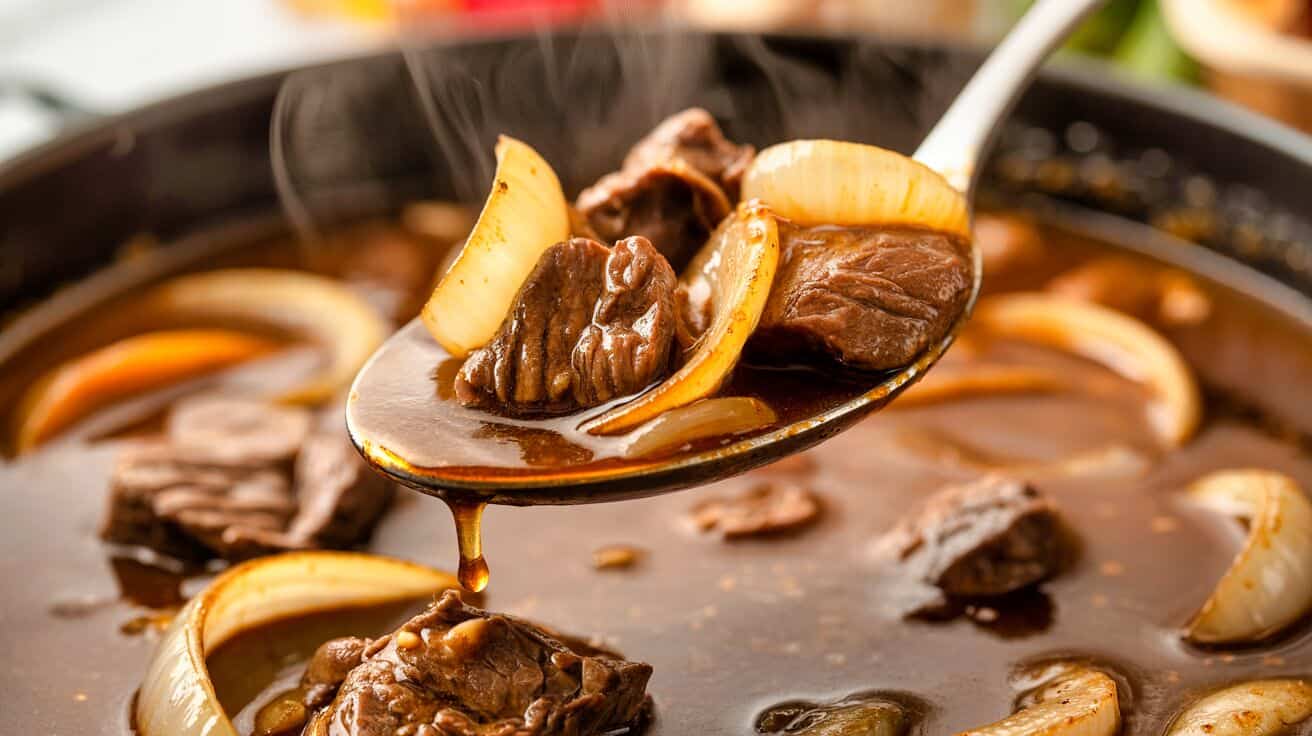
How to Make Hachee: Step-by-Step
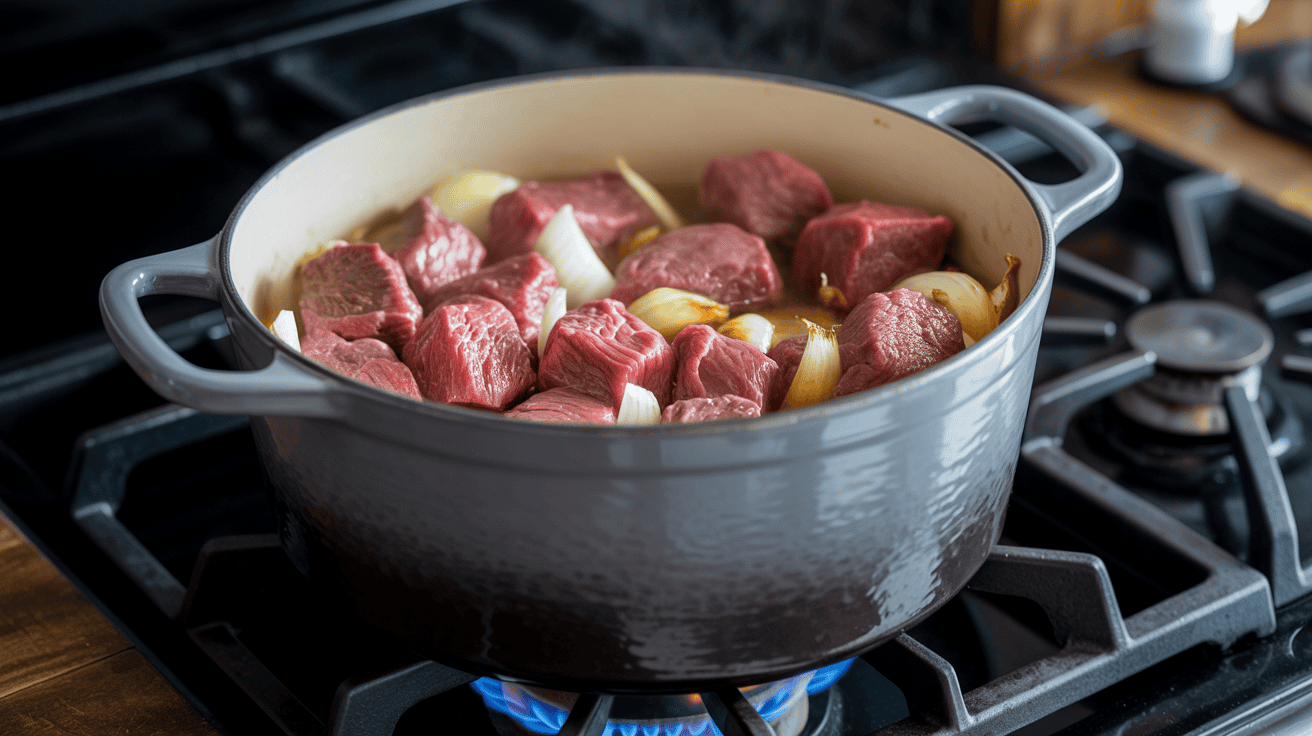
Setp 1: Add the onions to the pot and cook until softened, stirring occasionally for about 8-10 minutes.
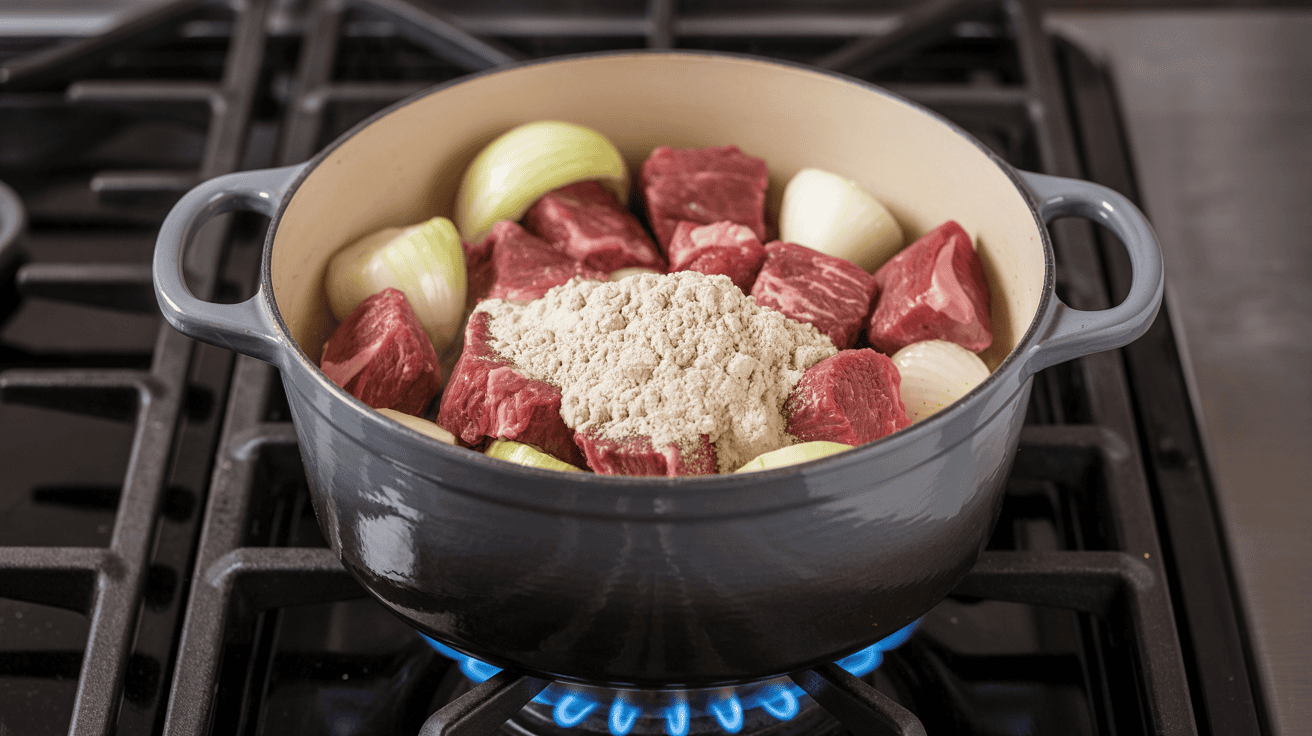
Setp 2: Add the flour and brown sugar to the onions, and stir until the flour is well incorporated.
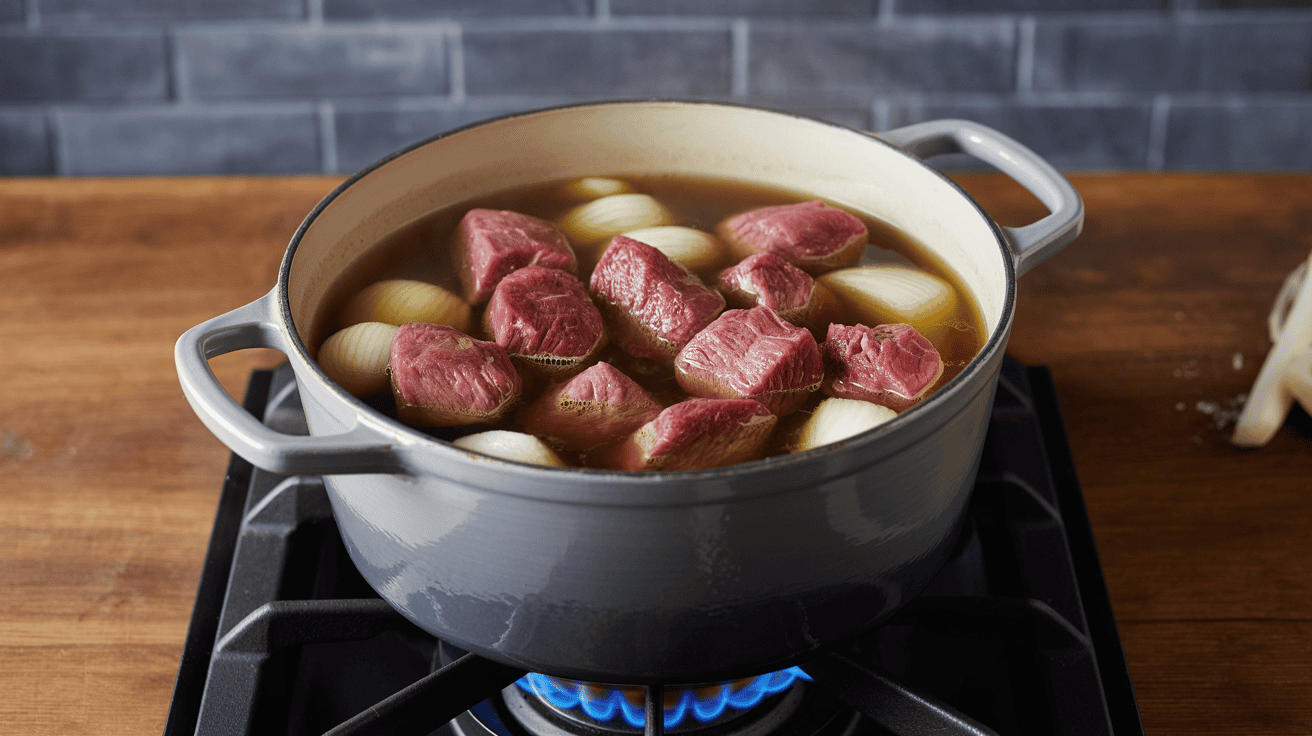
Setp 3: Gradually pour in the beef broth and red wine while stirring constantly. Add the bay leaves, cloves, and thyme. Bring the mixture to a simmer and stir until the sauce thickens.
Setp 4: Add the beef back to the pot, stir to combine with the sauce, and cover with a lid. Reduce the heat to low and let the stew simmer for 2-3 hours or until the beef is tender.
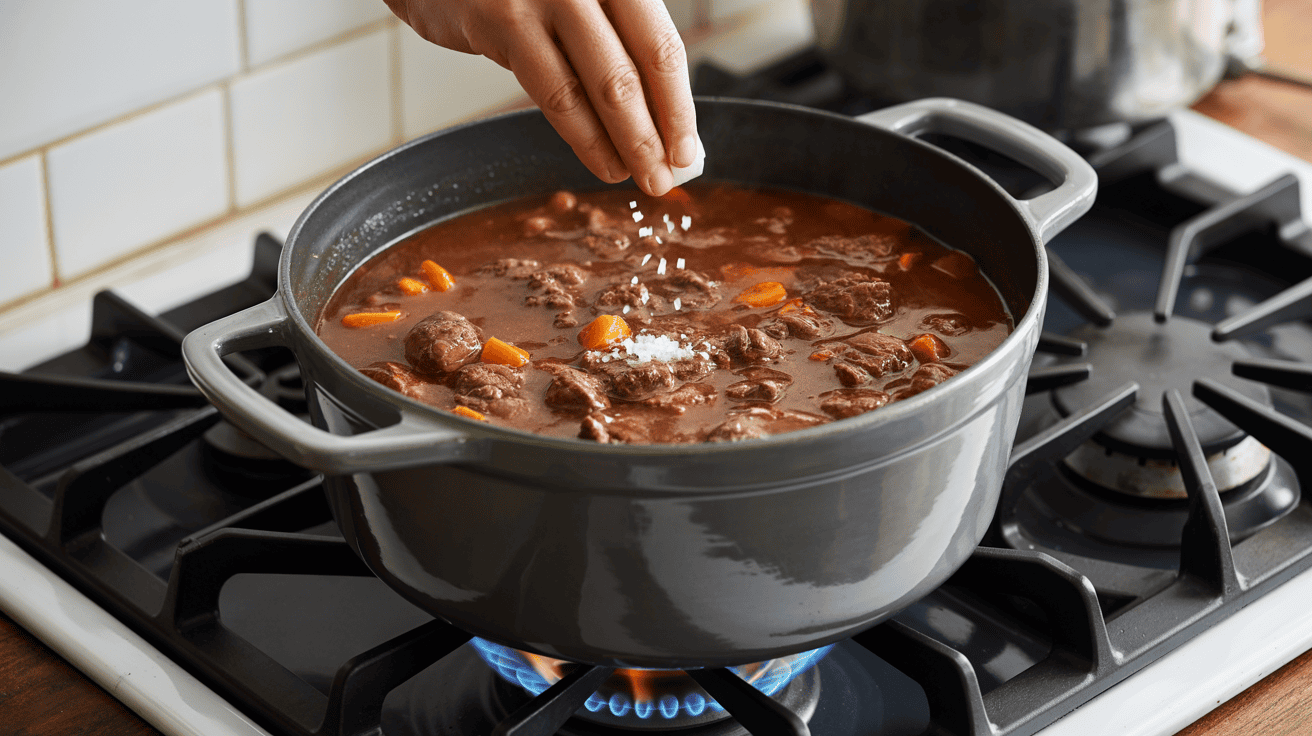
Setp 5: After 2-3 hours, remove the bay leaves and cloves, and adjust the seasoning with salt and pepper.
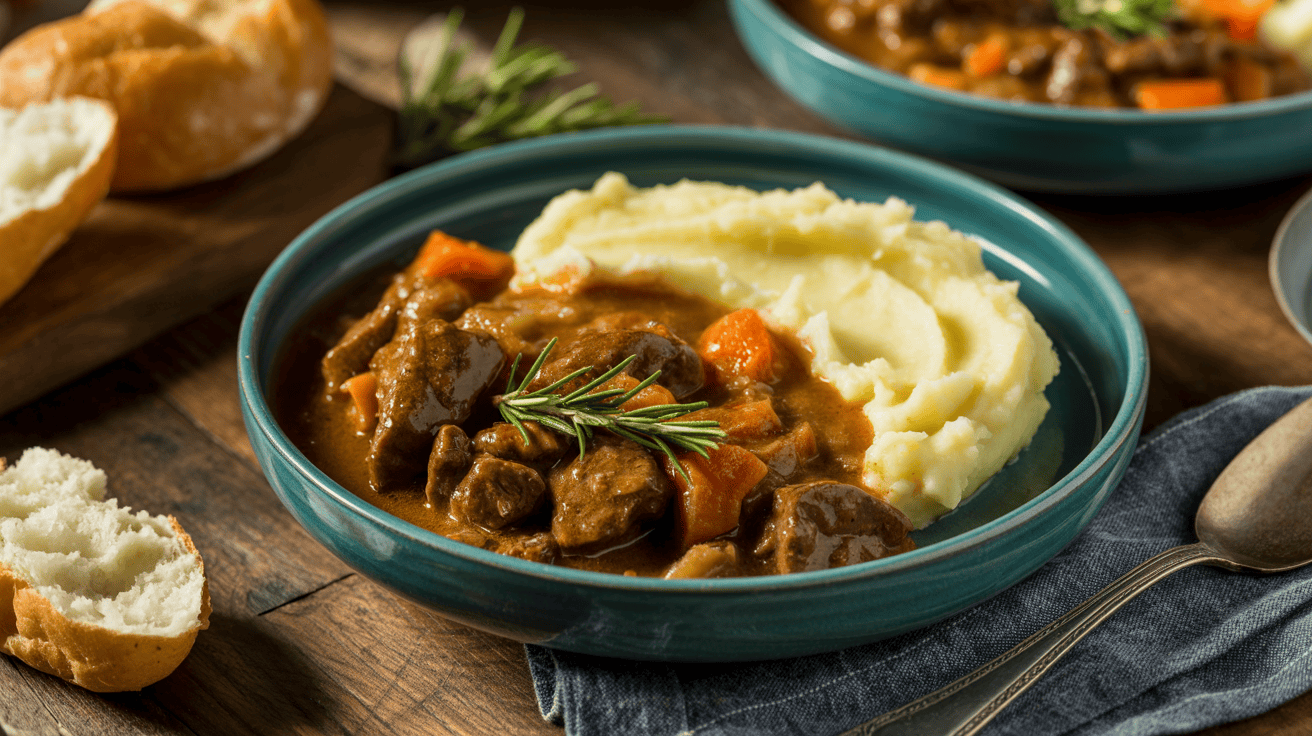
Setp 6: Serve hot with mashed potatoes or crusty bread.
Building Depth: Caramelized Onions and Browned Beef
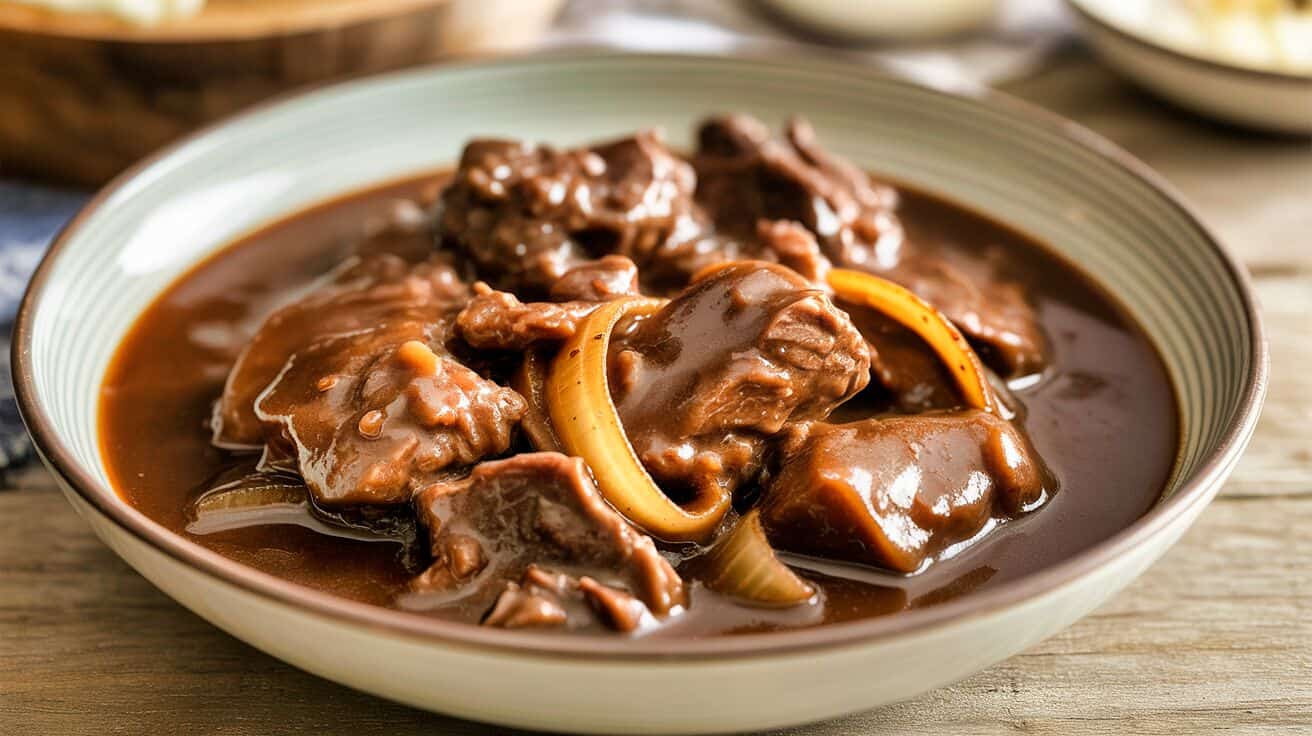
Caramelized onions are what give a Dutch Hachee Stew recipe that sweet-savory backbone. I let them cook slowly until they’re deep golden and soft—don’t rush this part. That mellow sweetness mixes with the vinegar and beef juices for the stew’s signature tang.
Browning the beef is just as important. I pat the meat dry and work in small batches to get a good crust. Those browned bits in the pan? They’re gold—scrape them up when you deglaze. When you combine those onions and beef, then finish with vinegar and spices, you get the real Dutch Hachee Stew recipe magic.
For more on ingredient ratios and variations, check out this Hachee (Dutch Beef & Onion Stew) recipe.
Classic Serving Suggestions and Dutch Sides
This Dutch Hachee Stew recipe shines with hearty sides that soak up all that gravy. I’m talking mashed potatoes, braised cabbage, and a few simple veggies to balance the sweet-and-sour notes.
Mashed Potatoes and Stamppot
I almost always serve Dutch Hachee Stew recipe with creamy mashed potatoes—peeled aardappelen boiled and mashed with butter, warm milk, and maybe a dash of nutmeg. Yukon Golds are my go-to for that silky texture.
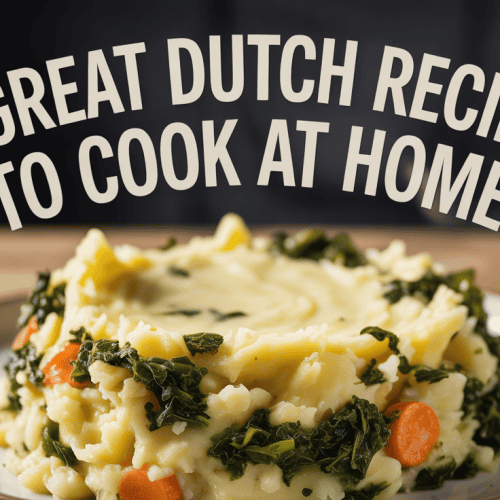
If I want a Dutch twist, I’ll make stamppot by mashing potatoes with kale (boerenkool) or endive, plus mustard and butter. It’s a rustic, slightly chunky base that holds up to the beef and gravy.
To serve, pile up the potatoes or stamppot and ladle the Dutch Hachee Stew recipe right on top. For extra richness, swirl in a little butter or pan drippings before serving.
Braised Red Cabbage and Rotkohl
Braised red cabbage is my favorite side for this Dutch Hachee Stew recipe—thinly sliced cabbage cooked down with apple, vinegar, brown sugar, and sometimes juniper berries. That sweet-tart flavor cuts through the stew’s richness.
If I’m feeling fancy, I’ll make rotkohl (German-style braised cabbage) with bacon and red wine for smoky depth. I serve the cabbage warm, just tender, alongside the stew so you get a bite of contrast without drowning the plate.
Other Accompaniments
When I want to keep things rustic, I’ll just boil some potatoes and let the Dutch Hachee Stew recipe gravy speak for itself. Steamed green beans or buttered peas add color and a fresh bite—don’t overcook them. Pickles or cornichons on the side bring a sharp pop that wakes up your palate. Sometimes, I’ll make hutspot (potato-onion-carrot mash) for another classic Dutch side. If I’ve got guests, I put out crusty bread and a jar of mustard—people love customizing their plates.
Tips, Variations, and Storage
Here are some real-world tips for nailing your Dutch Hachee Stew recipe every time. Focus on the right beef cut, proper browning, balancing your liquids, and don’t stress about swapping ingredients—it’s a forgiving, comfort-food classic.
Expert Tips for Success
I always start with a well-marbled chuck or blade roast for my Dutch Hachee Stew recipe. The connective tissue melts down as it cooks, making the beef super tender. Trim just the big hunks of fat; leave some for flavor. Cut the beef into 1½–2 inch cubes so everything cooks evenly.
Browning the meat in batches is key—don’t crowd the pan. That deep, caramelized base is what gives the Dutch Hachee Stew recipe its signature flavor. I take my time with the onions, too—slow caramelization is non-negotiable. After that, a splash of vinegar or beer brings up all the browned bits from the pan.
I braise at 160–170°C (325–340°F) or let it simmer low on the stove for 2–3 hours, checking after 90 minutes. Season late—salt gets stronger as the sauce reduces. If the sauce is too thin, I take the lid off and let it reduce for 10–15 minutes, or I thicken with a little roux or even a bit of crushed gingerbread for a traditional touch.
Modern Twists and Ingredient Substitutions
When I make my Dutch Hachee Stew recipe, I stick to the basics—beef, a heap of onions, vinegar, and a hint of sweetness—but I’m always tinkering with the rest depending on what’s around or who’s coming over.
If I want a richer Dutch Hachee Stew recipe, I’ll pour in a splash of dark beer or a sturdy red wine to deglaze the pot. Sometimes I keep it lighter by swapping in beef broth and cutting back on sugar. Roasting a few bones or using a super-concentrated beef stock really cranks up the flavor without piling on the fat.
Vegetarian? I’ve had success with the Dutch Hachee Stew recipe using seared king oyster or portobello mushrooms instead of beef for that deep umami kick. Vegetable stock mixed with a spoonful of miso brings a surprising savory punch. If gluten’s a problem, I’ll thicken the Dutch Hachee Stew recipe with a cornstarch slurry or toss in gluten-free gingerbread for that classic spice-sweet vibe.
Sometimes I throw in chopped parsley and a squeeze of lemon at the end to wake up the cozy flavors. Most folks pair this Dutch Hachee Stew recipe with potatoes and red cabbage, but honestly, I love it piled over buttery egg noodles too. There’s no one right way—just whatever tastes right that day. If you haven’t tried tweaking your Dutch Hachee Stew recipe, you’re missing out on half the fun.
Storing and Reheating Leftovers
Here’s how I handle leftovers for my Dutch Hachee Stew recipe: I let the stew cool at room temperature, but never longer than two hours—food safety and all that. Then I scoop it into airtight containers. The fridge keeps it good for about three days, but if you want to save it longer, just freeze it in smaller portions. It’ll hang out happily in the freezer for up to three months without losing much of its flavor or texture. Quick tip: this Dutch Hachee Stew recipe actually tastes even richer after a day or two.
When it’s time to bring leftovers back to life, I usually grab a saucepan and heat the Dutch Hachee Stew recipe gently over low heat, stirring now and then. If the sauce seems thick, I just splash in a bit of water or stock. For frozen portions, I try to thaw them in the fridge overnight, but if I forget (which happens more than I’d like to admit), I’ll reheat straight from frozen. Just toss it in a covered pot on low for 45–60 minutes, stirring every so often to keep things smooth.
Honestly, microwaving the Dutch Hachee Stew recipe isn’t my favorite. It tends to toughen the beef and mess with the sauce’s vibe. Slow, gentle reheating is the way to go. If you want to make it feel freshly made, add a twist of black pepper or a little knob of butter at the end. That’s the trick to getting the Dutch Hachee Stew recipe all glossy and cozy again. It’s comfort food, so don’t rush it—just enjoy the process. And if you haven’t tried this Dutch Hachee Stew recipe yet, what are you waiting for?
Dutch Hachee vs Beef Stew
Dutch hachee and classic beef stew are both slow-cooked beef dishes, but they differ in flavor profile, ingredients, and overall character.
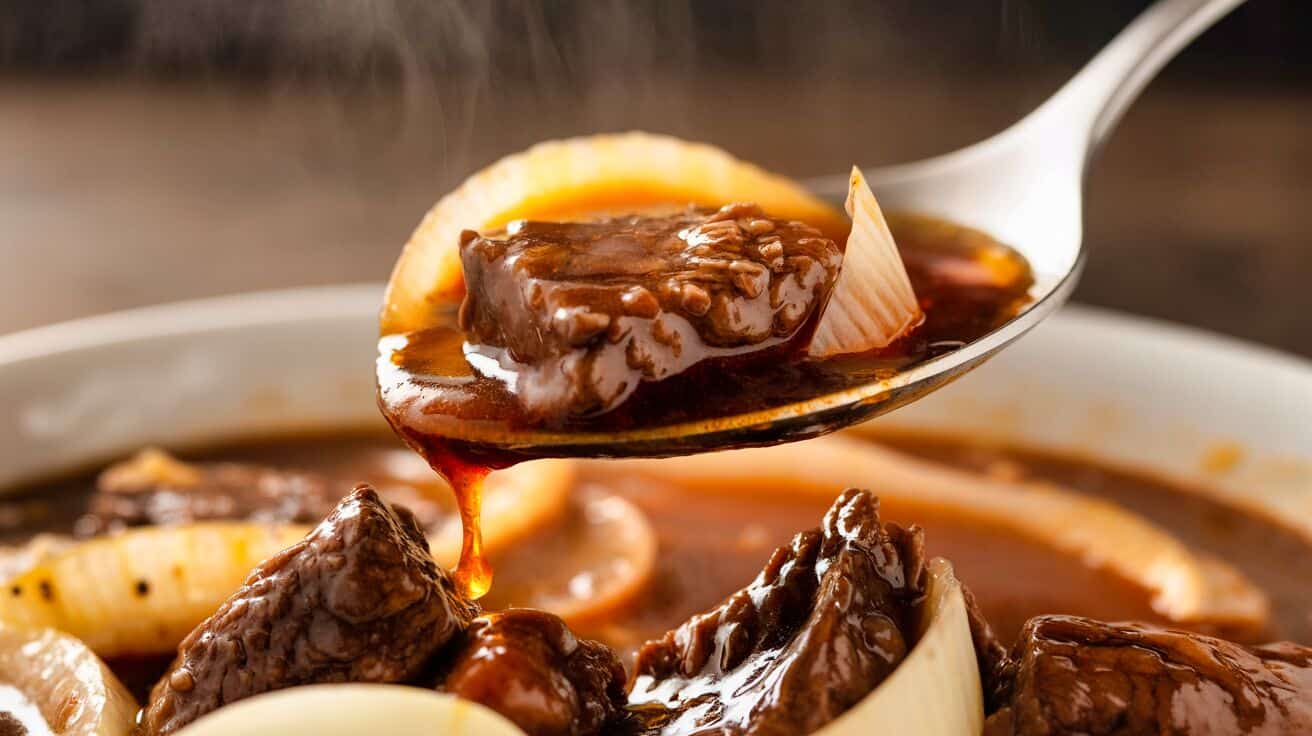
Hachee is a traditional Dutch stew made with beef, onions, and vinegar, often combined with spices like bay leaves and cloves. The vinegar is a defining ingredient, giving the dish a subtle sweet-sour balance that sets it apart from most stews. As it cooks slowly, the onions break down and create a rich, slightly tangy sauce that coats the tender beef. The result is deeply flavorful but also distinctively sharp compared to other stews.
Classic beef stew, found in many cuisines, typically relies on a savory broth made with stock, vegetables like carrots and potatoes, and herbs. It focuses on depth and richness without acidity, resulting in a more straightforward, hearty flavor.
The key difference is flavor balance: hachee has a noticeable tangy-sweet element, while beef stew is purely savory.
Choose hachee if you want a unique, slightly tangy twist on a traditional stew. Opt for classic beef stew if you prefer a familiar, rich, and savory comfort dish.
Dutch Hachee Stew Recipe FAQ
1. What makes hachee different from other beef stews?
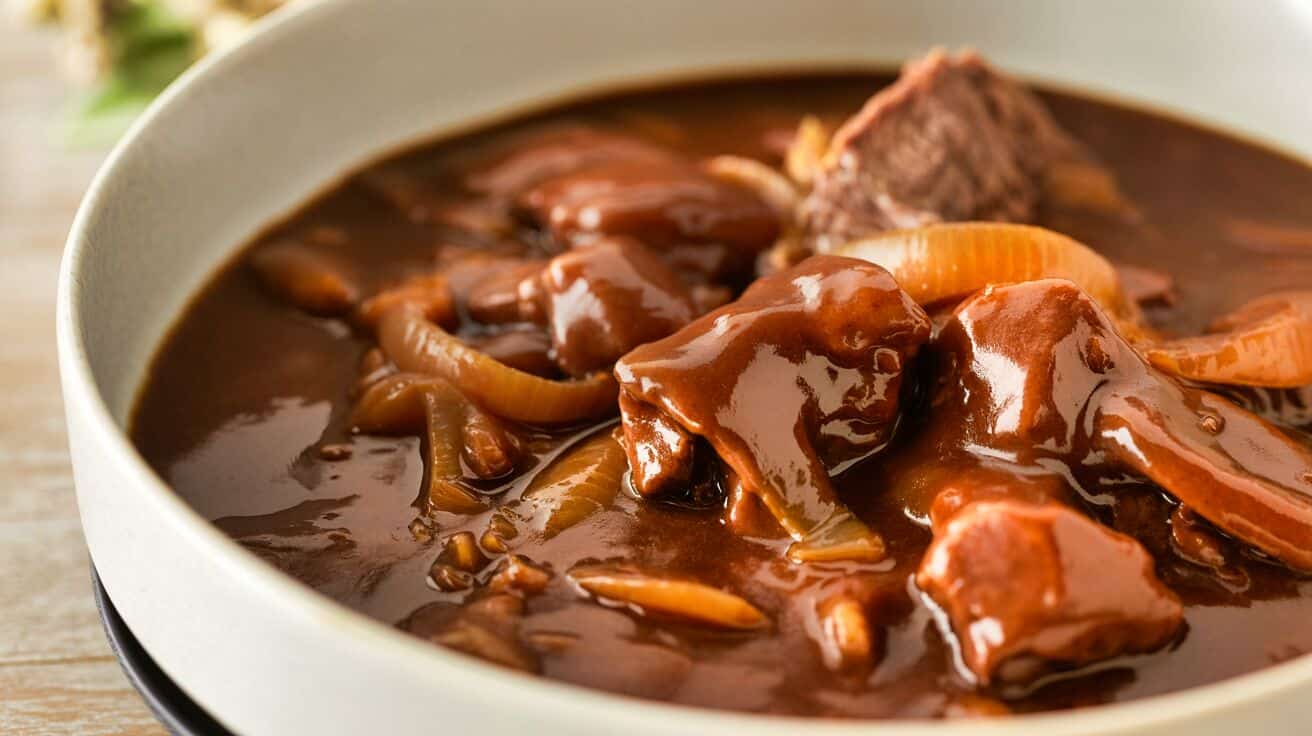
Hachee stands out because of its sweet-and-sour flavor profile, created by combining onions, vinegar, and spices with slow-cooked beef.
2. Why are onions such a large part of this dish?
Onions break down during cooking, adding both sweetness and body to the sauce, which is a defining feature of hachee.
3. What spices are typically used in hachee?
Bay leaves, cloves, and sometimes juniper berries are commonly used to give the stew its warm, aromatic depth.
4. How long should hachee be cooked for best results?
It benefits from long, slow cooking—usually at least 2 to 3 hours—to make the meat tender and allow the flavors to develop fully.
5. What is traditionally served with hachee?
It’s often served with potatoes or red cabbage, which complement its rich and slightly tangy sauce.
Dutch Hachee Stew
Ingredients
- 2 pounds beef chuck, cut into 1-inch cubes
- 3 large onions, thinly sliced
- 2 tbsp vegetable oil
- 2 tbsp all-purpose flour
- 2 tbsp brown sugar
- 2 cups beef broth
- 1 cup red wine
- 2 bay leaves
- 4 whole cloves of garlic
- 1 tsp dried thyme
- Salt and pepper, to taste
Instructions
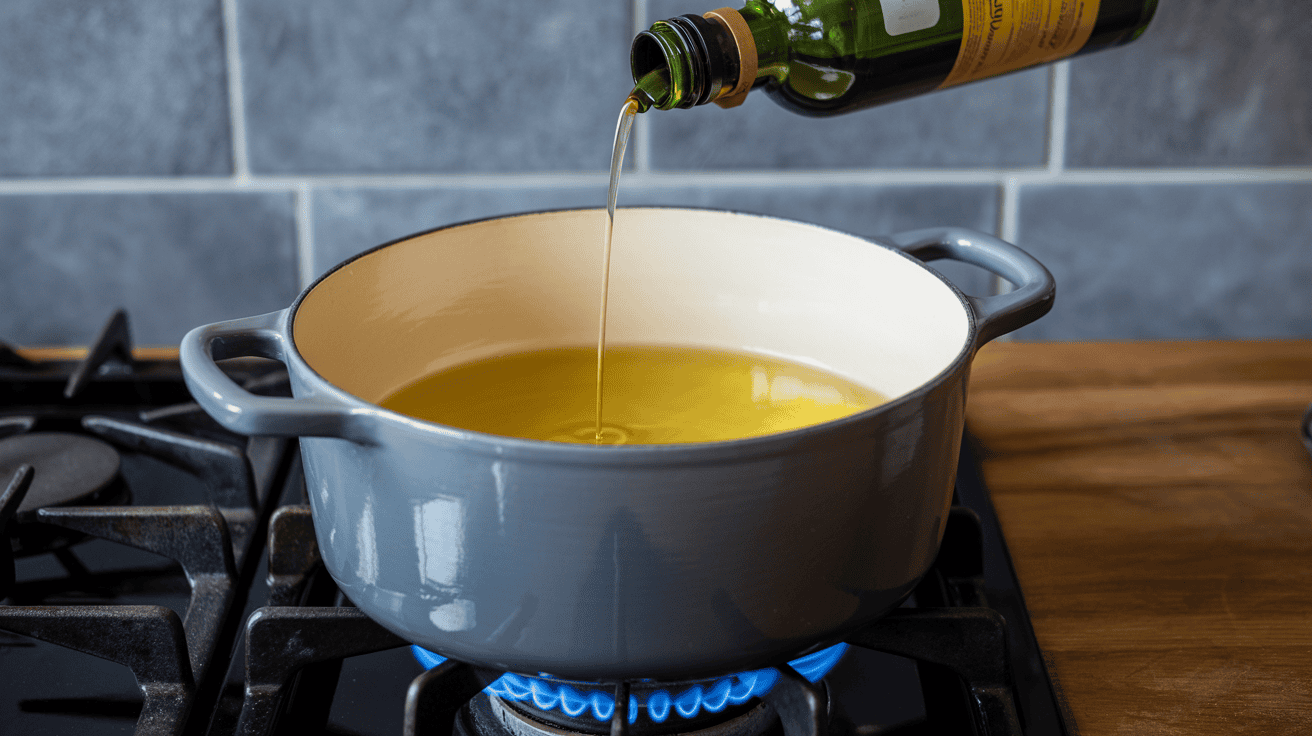
- Preheat a Dutch oven or a heavy-bottomed pot over medium heat. Add the vegetable oil and heat until shimmering.
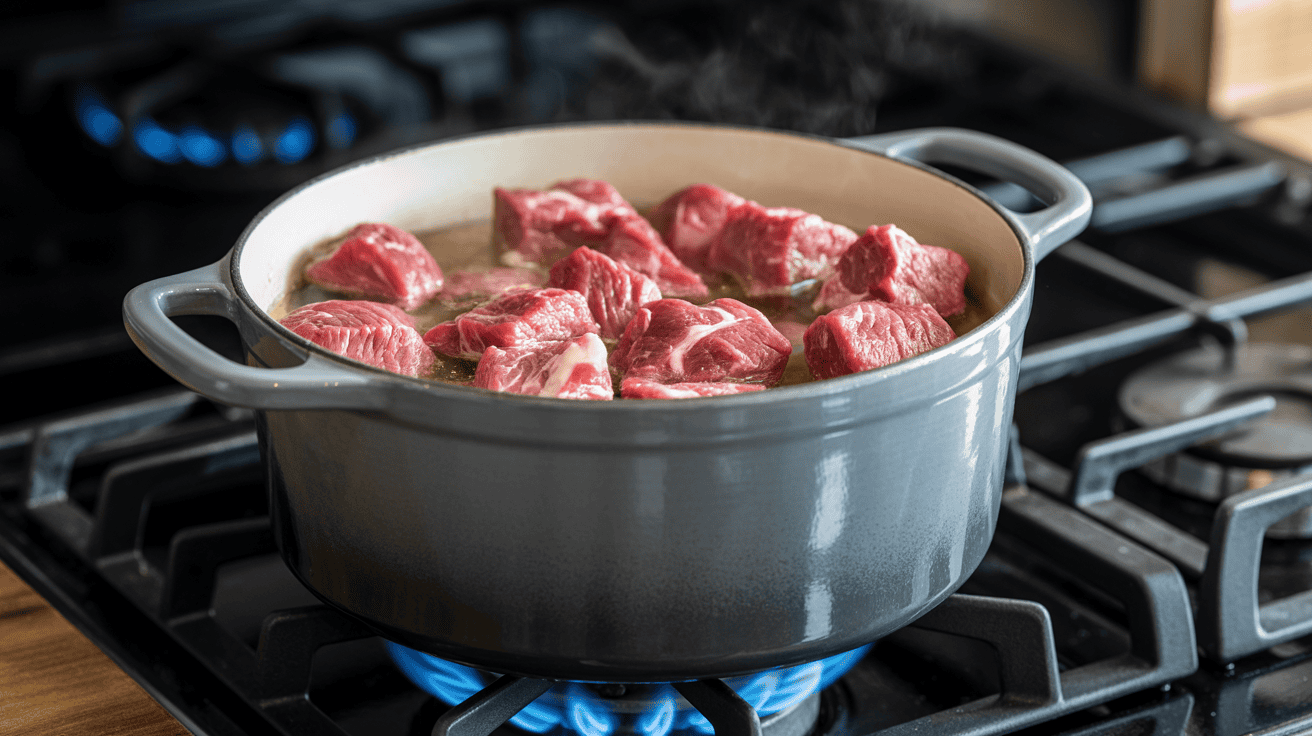
- Add the beef cubes and season with salt and pepper. Brown the beef on all sides for about 8-10 minutes. Remove the beef from the pot and set aside.
- Add the onions to the pot and cook until softened, stirring occasionally for about 8-10 minutes.
- Add the flour and brown sugar to the onions, and stir until the flour is well incorporated.
- Gradually pour in the beef broth and red wine while stirring constantly. Add the bay leaves, cloves, and thyme. Bring the mixture to a simmer and stir until the sauce thickens.
- Add the beef back to the pot, stir to combine with the sauce, and cover with a lid. Reduce the heat to low and let the stew simmer for 2-3 hours or until the beef is tender.
- After 2-3 hours, remove the bay leaves and cloves, and adjust the seasoning with salt and pepper.
- Serve hot with mashed potatoes or crusty bread.
Video