

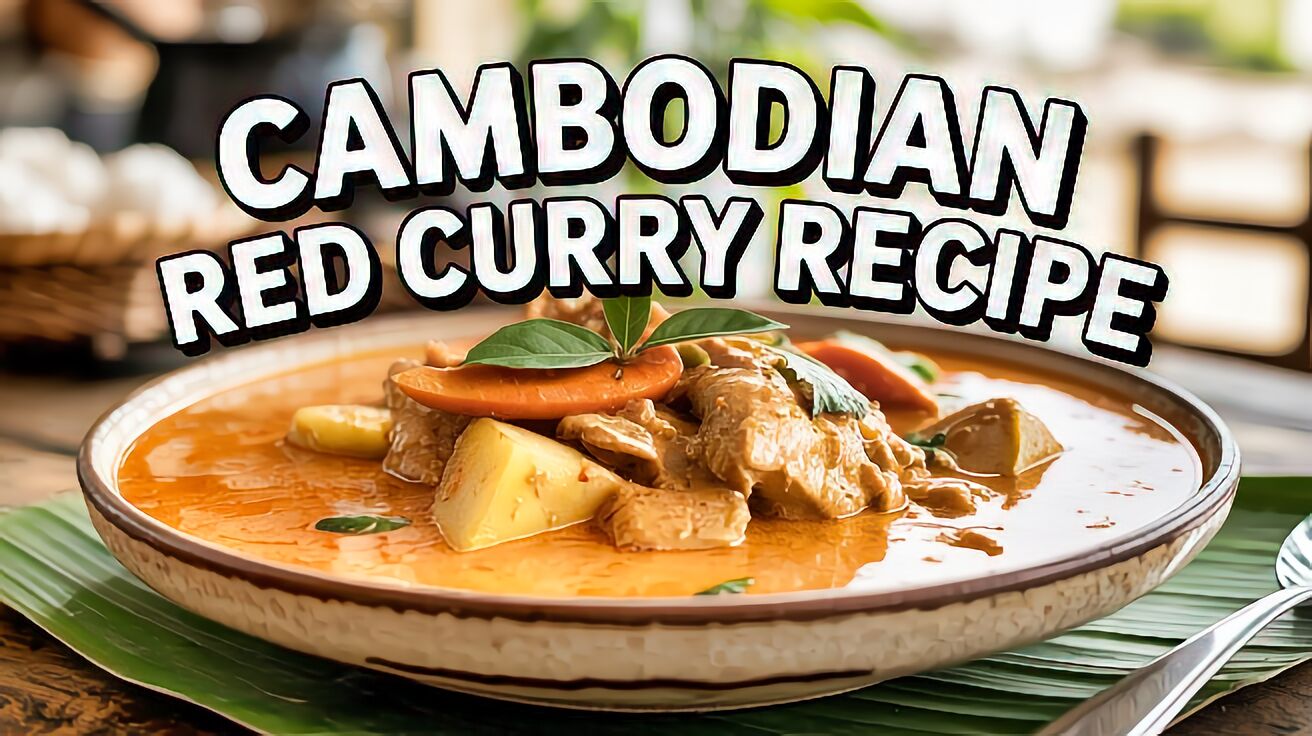
Cambodian red chicken curry stands apart from other Southeast Asian curries with its gentle heat and creamy coconut base. This fragrant Cambodian dish combines tender chicken with aromatic lemongrass, kaffir lime leaves, and a homemade spice paste called kroeung, creating a rich curry that’s flavorful without being too spicy. Unlike the fiery Thai versions, this Khmer curry focuses on balance and depth.
I’ve made this curry a bunch of times, and honestly, it always brings a cozy vibe to any meal. The trick? Fresh ingredients and a bit of patience to build up those flavors. While Cambodian chicken red curry usually has veggies like eggplant, green beans, and sweet potatoes, the real heart of the dish is the aromatic curry paste.
Making Cambodian red curry at home isn’t as intimidating as some might think. I’ll walk you through picking the right stuff, prepping the kroeung paste, and cooking everything just right. You’ll get tips for nailing this Cambodian red curry recipe every time.
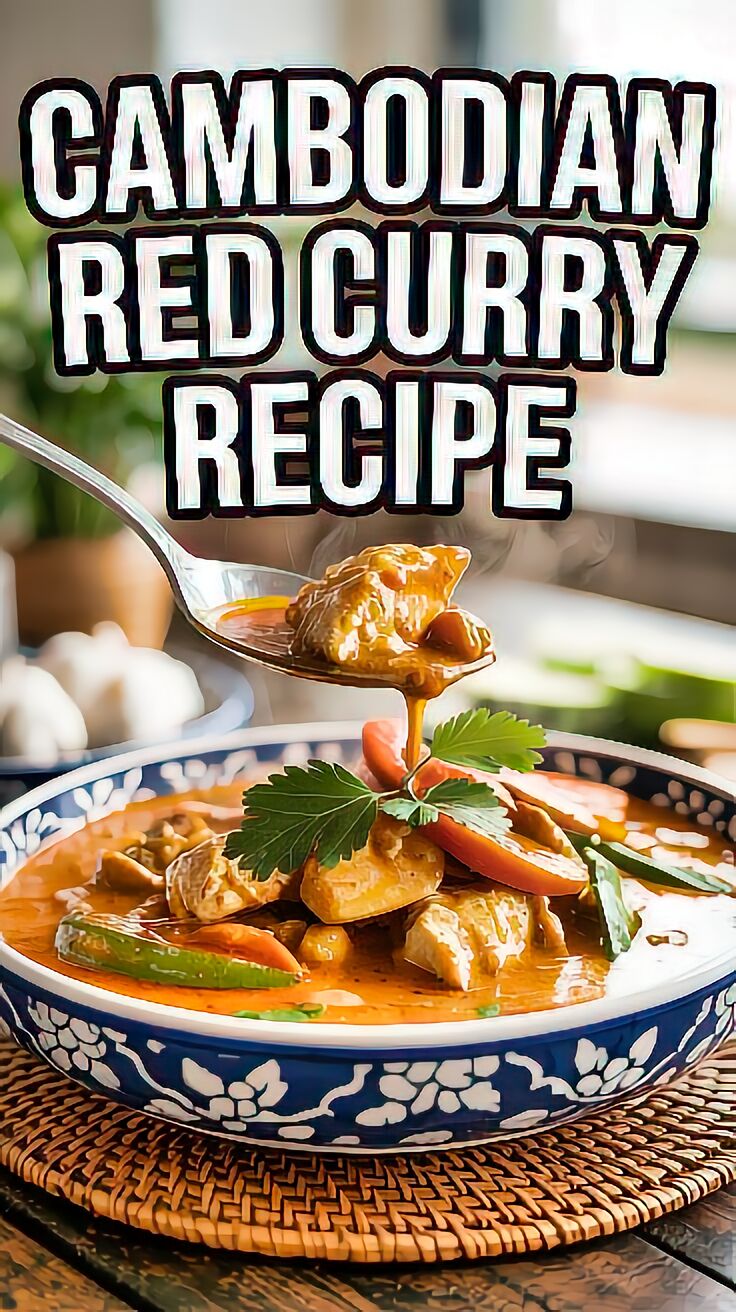
Essential Ingredients for Cambodian Red Chicken Curry
For an authentic Cambodian red chicken curry, you need a handful of key ingredients that give it that signature mild, aromatic flavor. The blend of fresh aromatics, spices, chicken, and veggies is what sets this Cambodian red curry recipe apart from its spicier Thai cousin.
Key Spices and Aromatics
I like to build flavor with aromatics, not just heat. Lemongrass is the backbone here, bringing a fresh citrus kick that screams Khmer curry. Fresh ginger and turmeric add warmth and earthiness—nothing too overpowering.
Kaffir lime leaves? Non-negotiable. They bring a floral, citrusy aroma you just can’t fake. Garlic and shallots round out the base and help balance out the coconut milk’s sweetness.
Red chili peppers show up in Cambodian red curry, but I only toss in one or two, deseeded, to keep things mellow. Fish sauce gives the dish that deep umami note, and a touch of sugar just pulls everything together.
Choosing the Best Chicken Cuts
I always reach for bone-in chicken thighs or legs—they stay juicy and make the curry sauce richer. The bones thicken the coconut milk a bit, which is a bonus.
If I’m in the mood for something leaner, I’ll use chicken breast, but I cut it into bigger pieces so it doesn’t dry out. For a classic Cambodian red curry recipe, about a pound of chicken feeds four. Sometimes I leave the skin on for flavor, but you can skip it if you want a lighter dish.
Traditional Cambodian Curry Paste
The curry paste—kroeung—is what gives Cambodian chicken curry its personality. I make it by grinding lemongrass, garlic, ginger, turmeric, galangal, and shallots into a smooth, fragrant paste.
Fresh is best. I skip the dried stuff when I can. The paste should be a little wet and super aromatic, not powdery.
I use a food processor or mortar and pestle—whatever’s handy. Sometimes I add a splash of oil to help it blend. The paste keeps in the fridge for about a week, or I freeze it for later.
Fresh Herbs and Vegetables
Veggies in this Cambodian red curry recipe soak up the curry flavors and add texture. Sweet potatoes and regular potatoes are a must—they balance the richness of the coconut milk.
Some go-to veggies:
- Japanese or Chinese eggplant
- Green beans
- Sweet potatoes
- White potatoes
- Bell peppers
Green beans add a nice crunch, even after cooking. I cut eggplant into big chunks so it doesn’t fall apart in the coconut curry sauce.
Fresh basil or Thai basil goes in at the end for a burst of herbal flavor. I always add it right before serving so it doesn’t wilt. For the base, I use both thick coconut cream and regular coconut milk to get the right consistency.
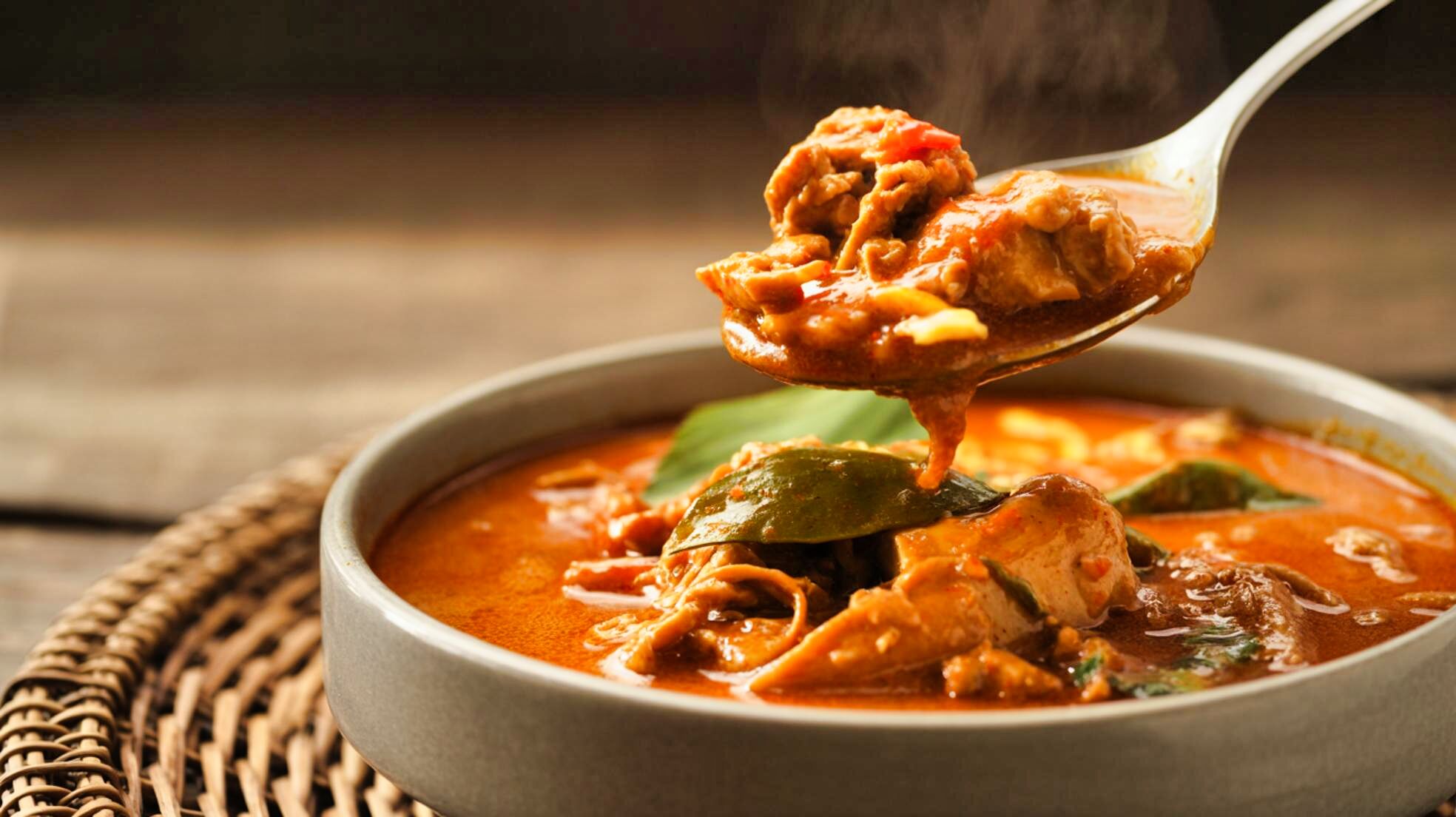
Step-by-Step Cooking Instructions
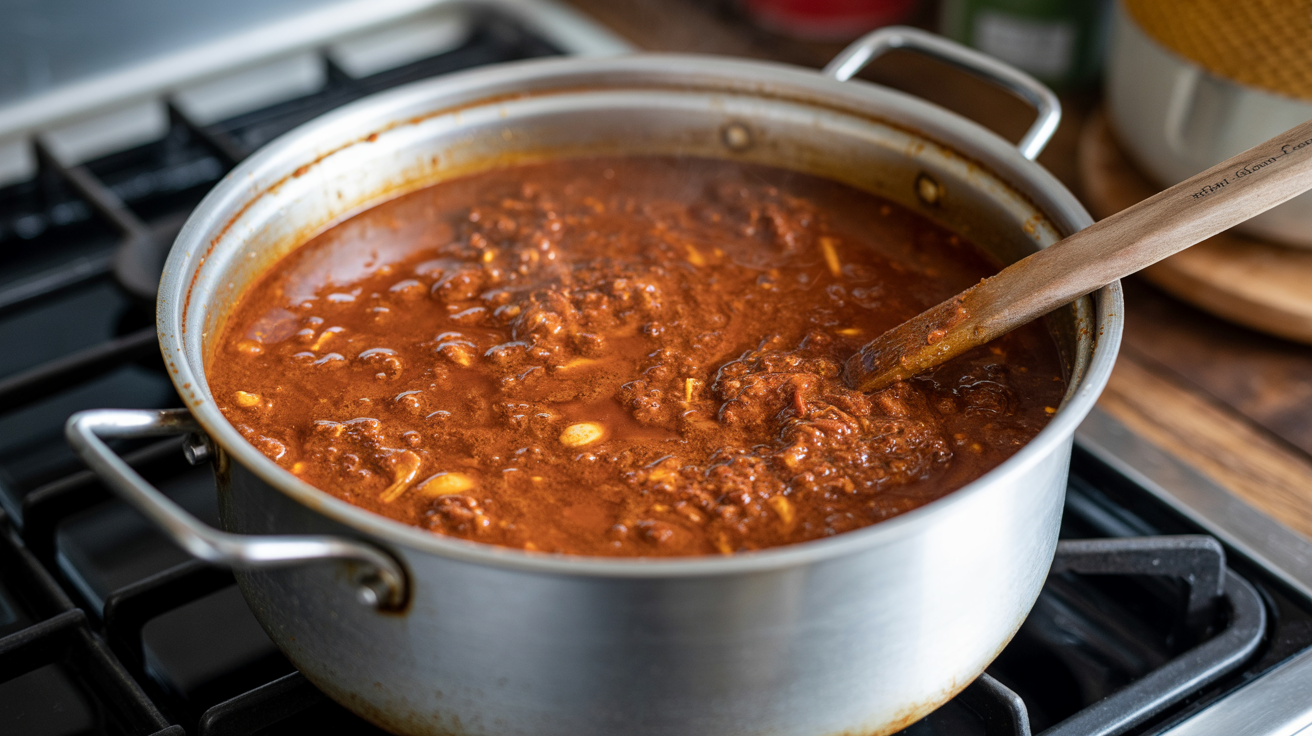
Step 1: Cook the kroeung paste: Place a large pot on the stove and heat it over medium temperature. Add a little oil, then spoon in the kroeung paste. Stir constantly for about 1 minute so the paste heats through, becomes fragrant, and loses its raw edge without burning.
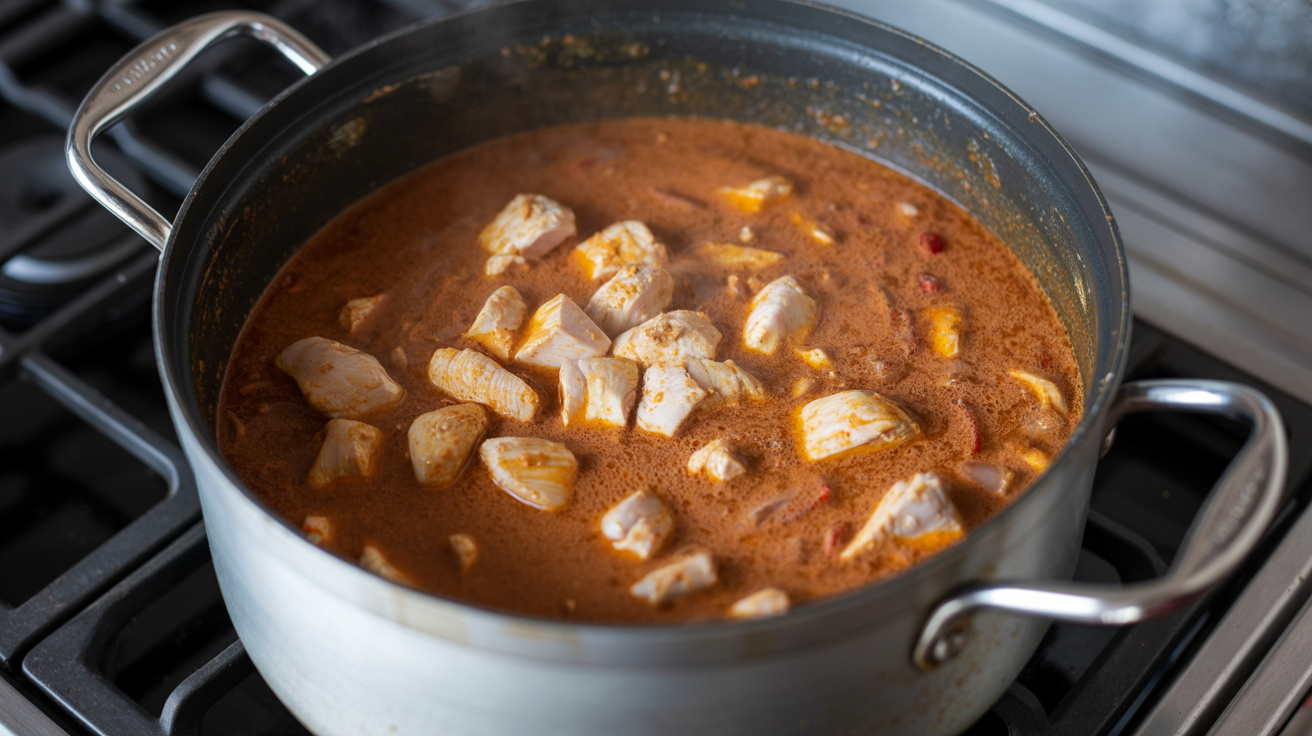
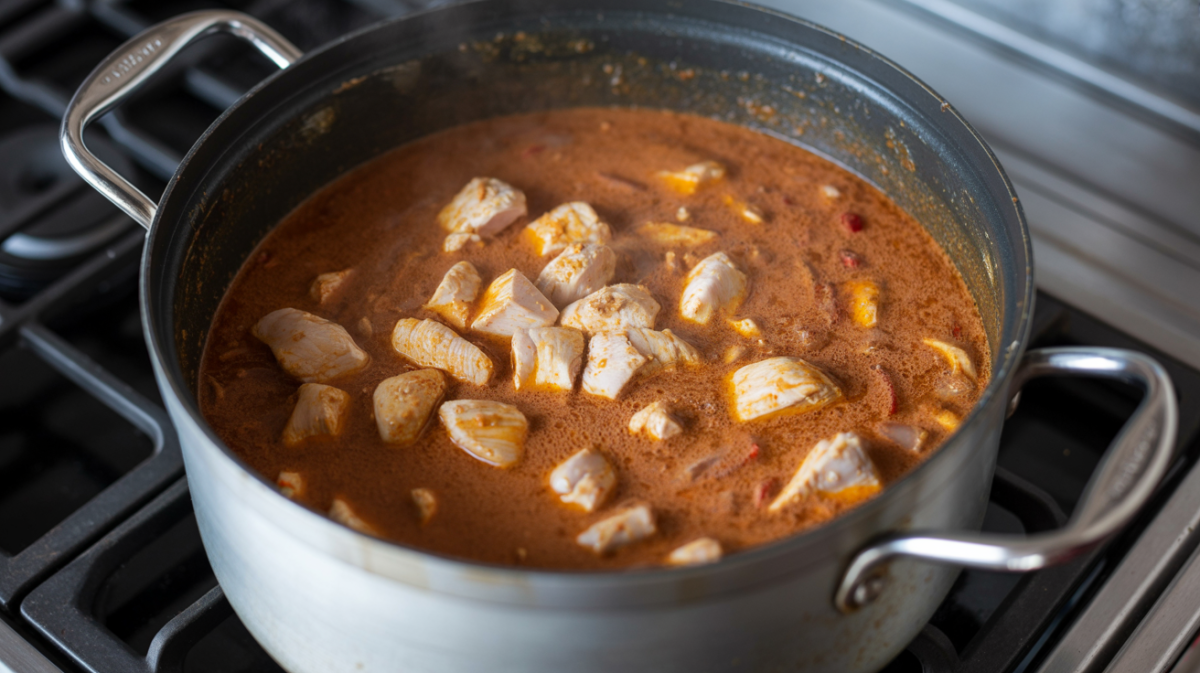
Step 2: Add chicken and first half of coconut: Add the Cambodia village chicken pieces to the pot along with half of the coconut (as specified in your recipe, e.g., coconut milk or cream). Stir well so the chicken is coated in the kroeung and coconut. Cook for about 2 minutes, allowing the outside of the chicken to begin cooking and the flavors to combine.
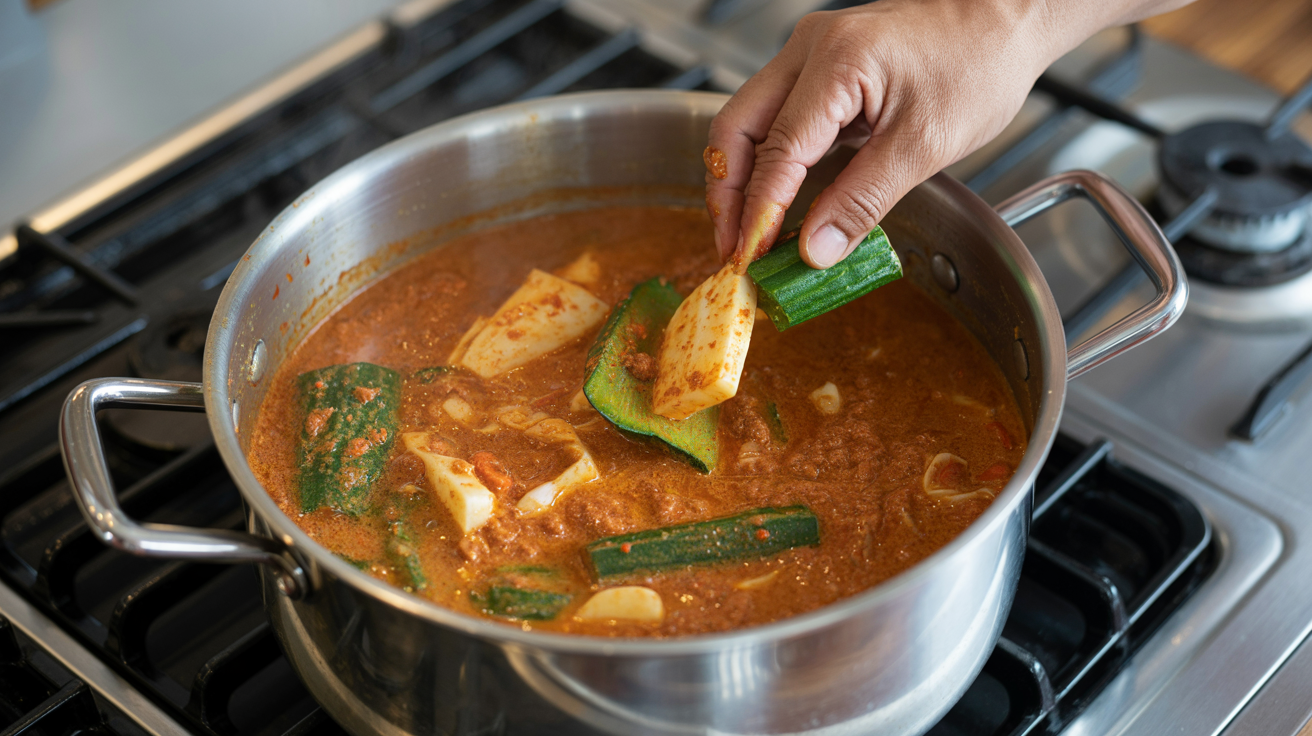
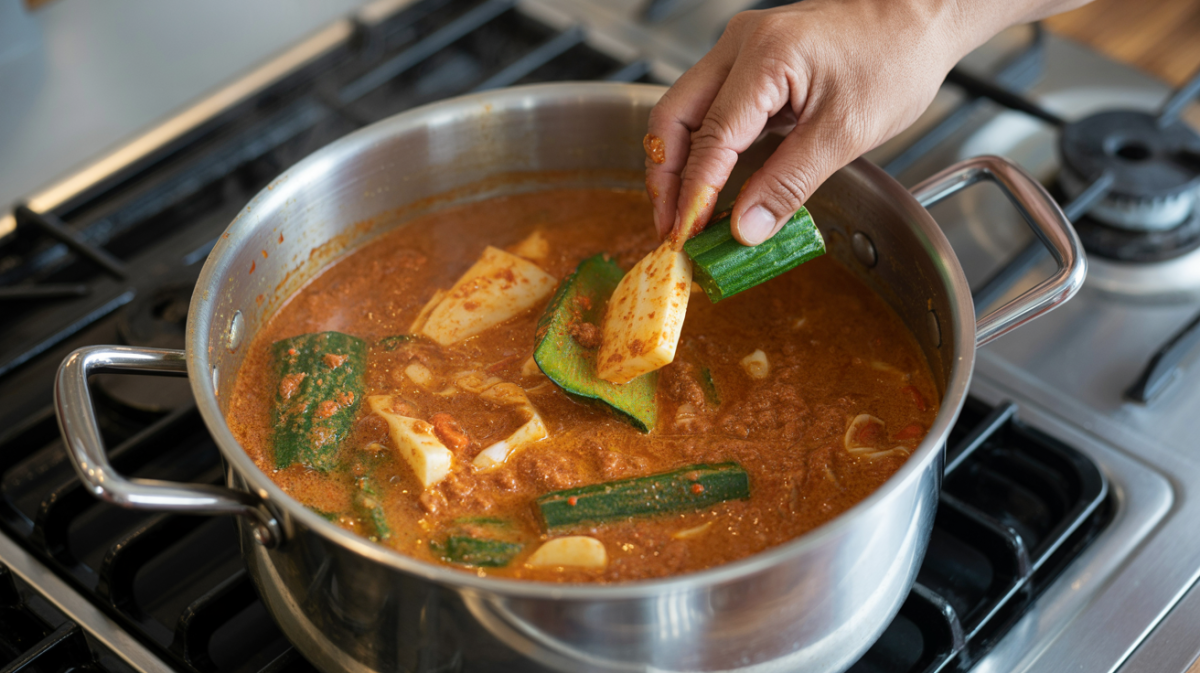
Step 3: Add vegetables: Add the potatoes, beans, aubergine, and onion to the pot. Stir everything together so the vegetables are well mixed with the chicken and curry paste.
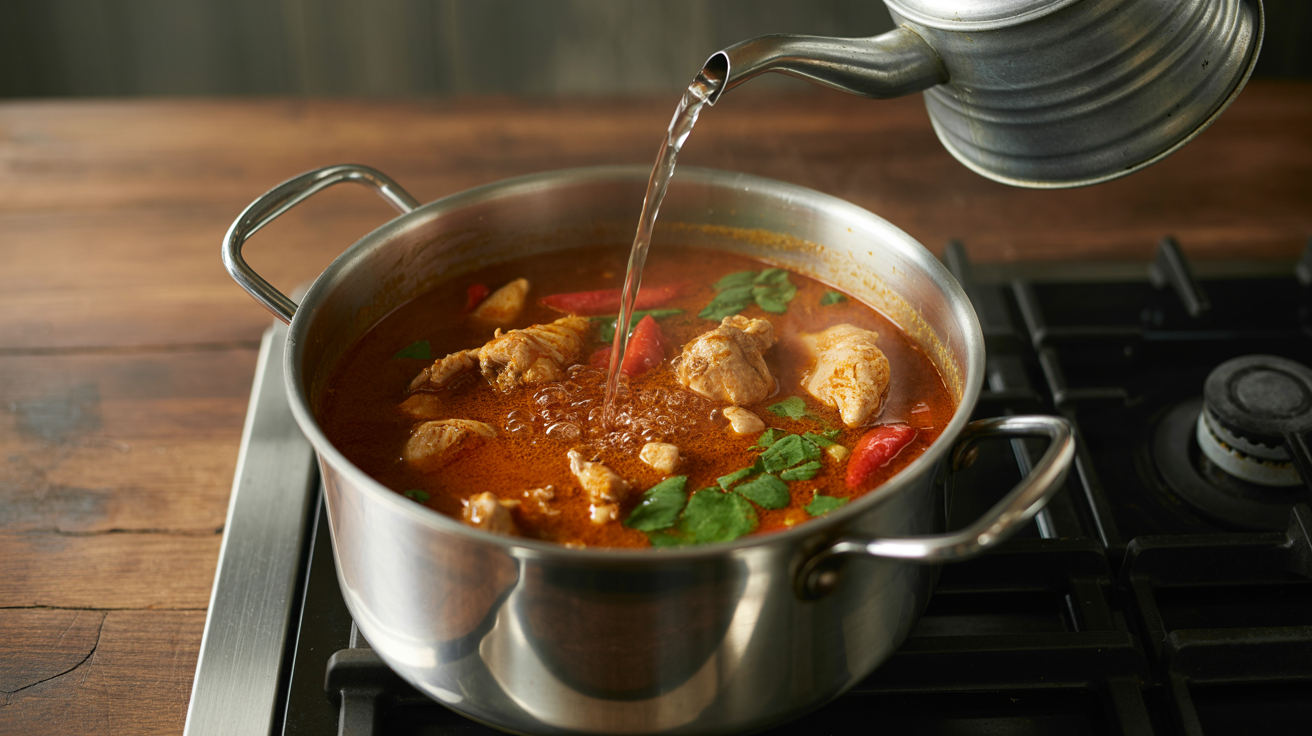
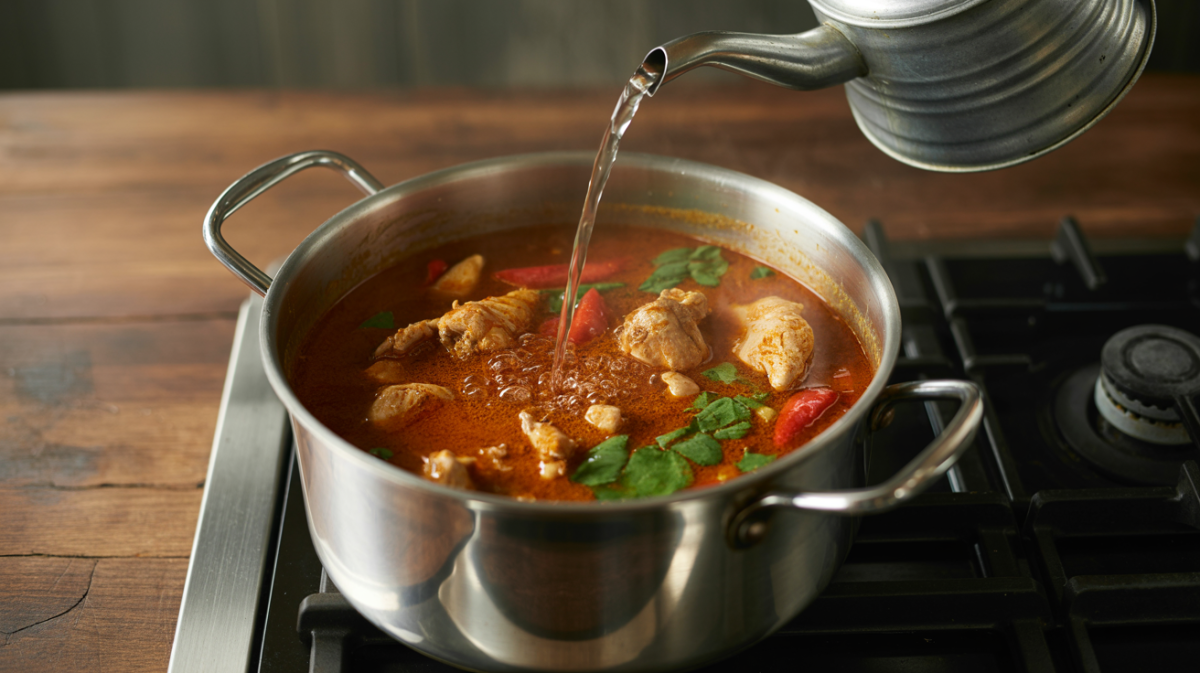
Step 4: Add liquid and seasonings: Pour in the water and the remaining half of the coconut. Season with fish sauce, salt, and sugar according to your recipe. Stir thoroughly to combine all the ingredients and dissolve the seasonings into the liquid.
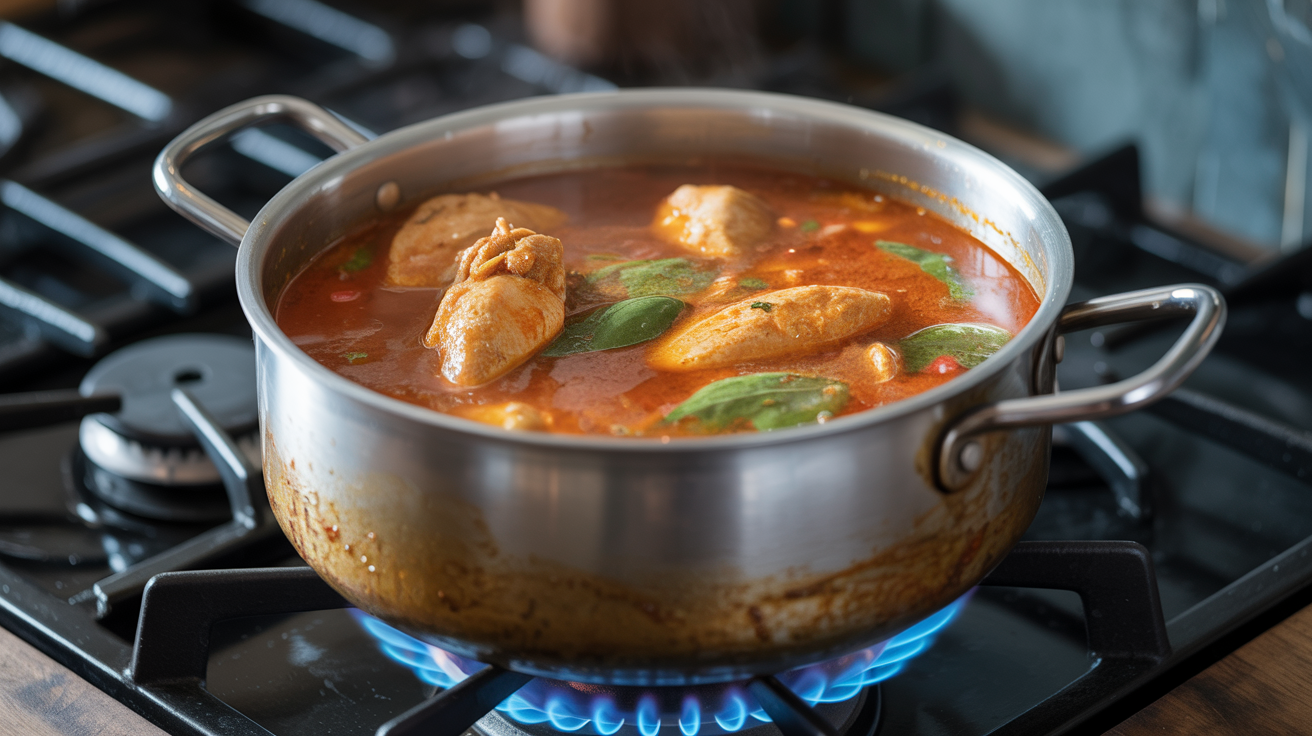
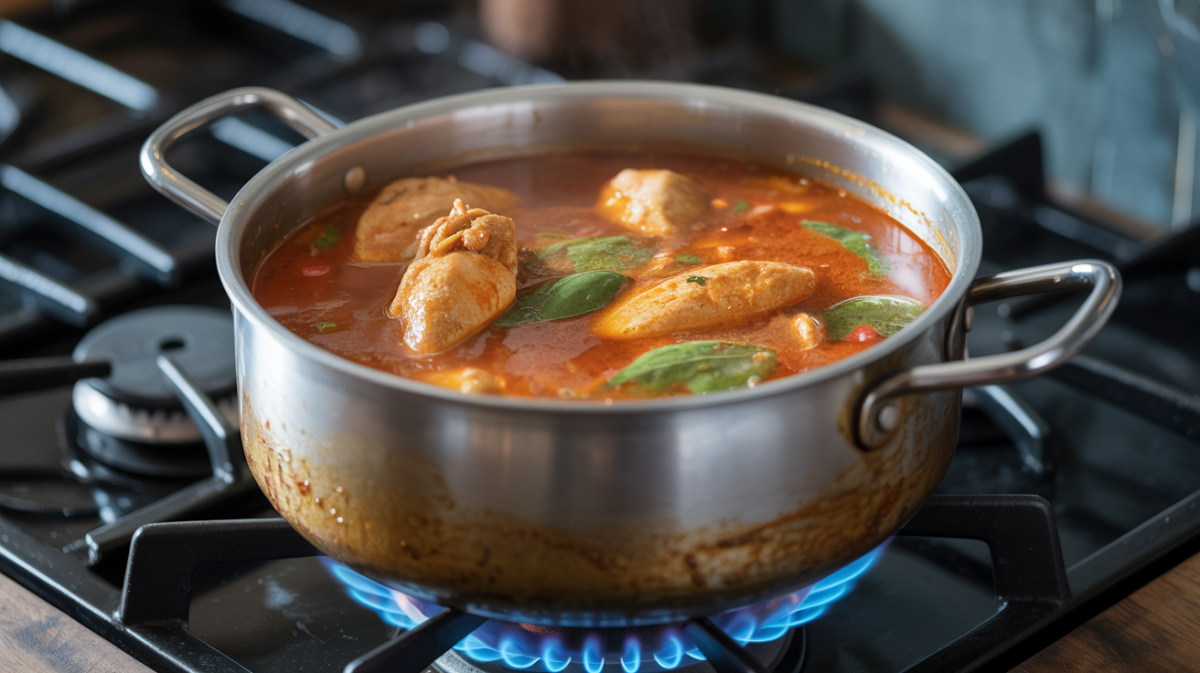
Step 5: Simmer until tender: Reduce the heat to low and let the curry simmer gently for about 20 minutes. Stir occasionally to prevent sticking, and cook until the chicken is cooked through and the vegetables are tender. Adjust seasoning if needed before serving.
Preparation of Ingredients
First, I gather all my ingredients. For the chicken, I cut 1 to 1.5 pounds of boneless breast or thigh into bite-sized pieces—helps the meat soak up the curry.
Next, I chop my veggies: potatoes and sweet potatoes into cubes, green beans into 2-inch pieces, and eggplant into rounds or chunks. I keep them in separate bowls to stay organized.
For the aromatics, I finely chop one lemongrass stalk (just the tender part), mince about 6 cloves of garlic, grate 2 tablespoons of fresh ginger, deseed and chop one red chili, tear up 2 kaffir lime leaves, and peel plus chop a shallot. Having everything ready makes cooking way less stressful.
Making the Curry Paste
To make the kroeung paste, I blend the chopped lemongrass, garlic, ginger, red chili, and shallot—plus a tablespoon of turmeric powder for that classic color and earthy taste.
It takes about 5 minutes by hand or 2 in a food processor. The paste should be smooth and fragrant, with no big chunks left. If it’s too dry, I add a splash of oil. This fresh kroeung is what makes this Cambodian red curry recipe stand out from Thai curries.
Cooking the Chicken and Vegetables
I heat 2 tablespoons of oil in a big pot or deep skillet over medium-high. When it shimmers, I throw in the kroeung paste and stir-fry for a couple of minutes until it smells amazing. That’s when you know the aromatics are doing their thing.
I add the chicken pieces and stir them around so they’re well-coated. I cook them for about 5-6 minutes until they turn white outside, but not fully cooked yet.
Then I add the potatoes and sweet potatoes, stirring them into the mix. These need a little extra time, so I let them cook for about 3 minutes before moving on.
Simmering and Final Adjustments
I pour in 2 cups of coconut milk and a cup of water or chicken stock. Then I add 2 tablespoons of sugar and a tablespoon of fish sauce. I stir it all together and bring it to a gentle boil.
Once it’s boiling, I drop the heat to low and let it simmer for 15 minutes so the potatoes get soft and the flavors blend.
After that, I toss in the eggplant and green beans. Another 10 minutes of simmering, and everything should be cooked through. I taste and adjust—maybe a splash more fish sauce or sugar. The curry should be creamy and balanced, never too spicy. It’s the soul of a good Cambodian red curry recipe.
Serving Suggestions and Accompaniments
I like to serve this curry with steamed jasmine rice and some fresh veggies. The right sides really highlight the lemongrass and kaffir lime leaves in the curry.
Best Ways to Serve Cambodian Red Chicken Curry
I usually dish up Cambodian red chicken curry in individual bowls over plenty of jasmine rice. The rice soaks up all that coconut goodness.
If I’m doing a family-style meal, I put the curry in a big bowl in the middle and let everyone serve themselves. Rice goes in a separate bowl so folks can take what they want.
The curry’s best hot, right after cooking. If I have leftovers, I add a splash of coconut milk when reheating to bring back the creamy texture.
Recommended Side Dishes
Steamed jasmine rice is my default since it’s simple and won’t fight with the curry. I cook it so it’s fluffy and a bit sticky.
Some favorite sides:
- Steamed or stir-fried bok choy
- Cucumber salad with rice vinegar
- Pickled vegetables
- Fresh lettuce leaves for wrapping
- Stir-fried green beans
Sometimes I whip up a quick cucumber salad—just thin slices tossed with rice vinegar, sugar, and a pinch of salt. The cool crunch is a nice match for the warm curry.
If I want to make it more of a feast, I’ll add some spring rolls or fried wontons on the side. This Cambodian red curry recipe is honestly one of my favorites to share.
Traditional Garnishes
When I serve Cambodian red curry, I like to finish each bowl with a handful of fresh herbs and aromatics. Chopped cilantro and Thai basil are my go-to garnishes—they just work so well with the lemongrass and kaffir lime flavors in a good Cambodian red curry recipe.
Traditional garnishes I use:
| Garnish | Purpose |
|---|---|
| Fresh cilantro | Adds freshness and color |
| Thai basil leaves | Provides aromatic sweetness |
| Sliced red chilies | Adds heat for those who want it |
| Lime wedges | Brightens the rich coconut sauce |
| Fried shallots | Adds crunch and savory depth |
I always put lime wedges on the side so people can squeeze a bit of juice over their curry if they want. That little bit of acidity really pops against the coconut milk. Fried shallots? Don’t skip them—they give a crunchy bite that’s perfect with the soft chicken and veggies in a Cambodian red curry recipe.
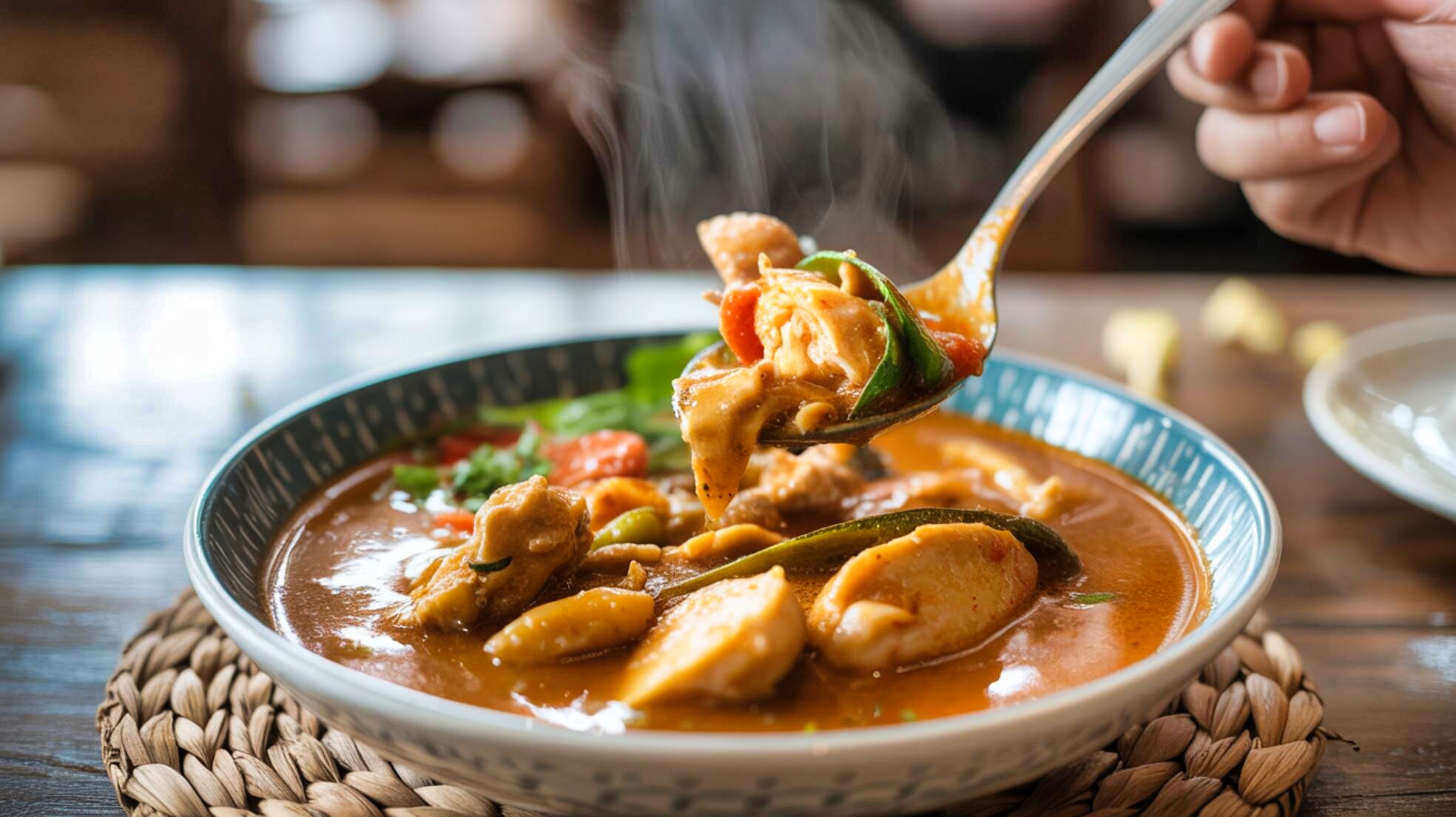
Tips for Perfecting Cambodian Red Chicken Curry
After making this dish so many times, I’ve realized that nailing a Cambodian red curry recipe is all about using fresh stuff, dialing in the spice for your own taste, and storing leftovers right. These details might seem small, but they totally change how the final curry turns out.
Common Mistakes to Avoid
If you ask me, skipping homemade kroeung paste is the biggest mistake. Sure, store-bought curry paste is convenient, but making a good kroeung paste is the heart of any real Cambodian red curry recipe.
Another thing: don’t overcook the chicken. I cook it just until it’s done—usually 15 to 20 minutes in the curry sauce. Any longer, and the meat gets dry and chewy, which nobody wants.
Take your time with the curry paste. I always cook it in oil for a couple minutes before adding anything else. That’s when the lemongrass, garlic, and spices start smelling amazing.
And please, don’t use low-fat coconut milk. I’ve tried it, and it just doesn’t cut it. The full-fat stuff gives the Cambodian red curry recipe its signature creamy texture. That richness is what makes it special.
Adjusting Spice Levels
When it comes to heat, I just tweak the amount of red chili I use. Cambodian red curry is much less spicy than Thai curry, so I usually start with one or two chilies and see how it goes.
Want it milder? Take out all the seeds from the chilies before tossing them in the kroeung paste. The seeds are where most of the heat hides. If you’re feeling bold, leave a few seeds in or add another chili for extra kick.
I always taste the curry before serving. Sometimes it needs a splash more fish sauce or a pinch of sugar. You should get a nice balance of spicy, sweet, and savory. If it ends up too fiery, I just stir in more coconut milk. Works every time.
Serving the Cambodian red curry recipe with plain rice and cucumber slices on the side is a good move. They help cool things down if you went a little heavy on the chilies.
Storing and Reheating Leftovers
I usually stash leftover Cambodian red curry recipe in an airtight container in the fridge—it keeps well for about 3 days. Honestly, I think the flavors mellow and get even better after a night or two. The way those spices settle in? Pretty great.
When I go to reheat it, I splash in a bit of coconut milk or water. Cambodian red curry recipe tends to thicken up in the fridge, so the extra liquid helps loosen things up. I keep the heat at medium-low and stir it now and then so nothing sticks or burns.
If I want to save Cambodian red curry recipe for longer, I portion it out and freeze it for up to 2 months. I let it cool first, then use freezer-safe containers. Don’t forget to leave a little room at the top—liquid expands and nobody wants a mess in the freezer.
When I’m ready to eat frozen Cambodian red curry recipe, I thaw it overnight in the fridge. After that, I warm it gently on the stove over low heat until it’s hot. I avoid the microwave, since it tends to make the chicken weirdly rubbery and unevenly heated. Cambodian red curry recipe deserves better than that, right?

Cambodian Red Curry vs Thai Red Curry
Cambodian red curry and Thai red curry share a similar name and coconut-based foundation, but they differ significantly in spice level, texture, and overall flavor balance.
Cambodian red curry, often made with chicken, is known for its mild and creamy profile. It uses kroeung—a fragrant paste of lemongrass, galangal, turmeric, and garlic—blended with coconut milk to create a rich yet gentle sauce. Unlike many Southeast Asian curries, it is not heavily spiced with chili, making it approachable and aromatic rather than fiery. The dish is often thicker and sometimes served with bread, highlighting its comforting, stew-like quality.
Thai red curry, by contrast, is much bolder and spicier. It uses red curry paste made with dried red chilies, garlic, and shrimp paste, resulting in a more intense flavor. The sauce is typically thinner but packed with heat and complexity, often balanced with ingredients like fish sauce, lime leaves, and Thai basil.
The key difference is heat and intensity: Cambodian red curry is mild, creamy, and aromatic, while Thai red curry is spicier, sharper, and more vibrant.
Choose Cambodian red curry if you prefer a gentle, comforting dish. Opt for Thai red curry if you want bold heat and a more intense flavor experience.
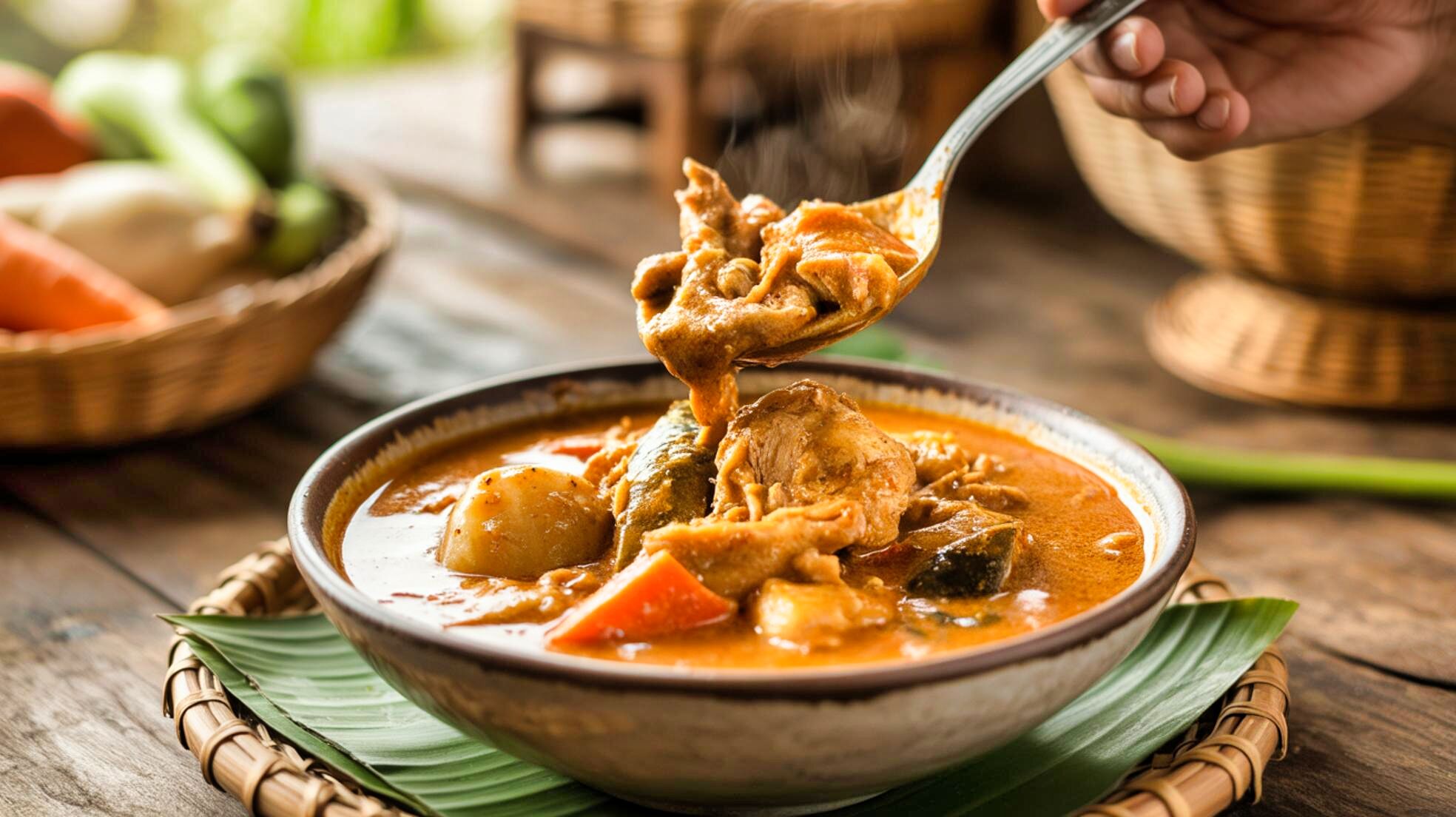
Cambodian Red Chicken Curry Recipe FAQ
1. What makes Cambodian red curry different from Thai red curry?
Cambodian red curry is milder and less spicy, with more emphasis on coconut milk and aromatic spices.
2. What ingredients are used in Cambodian red curry paste?
Common ingredients include lemongrass, galangal, garlic, turmeric, and chilies.
3. Is Cambodian red curry served with rice or noodles?
It is typically served with rice or sometimes with bread.
4. What vegetables are added to red curry?
Potatoes, carrots, and eggplant are commonly used.
5. Is this dish traditionally spicy?
No, it is usually mild compared to other Southeast Asian curries.
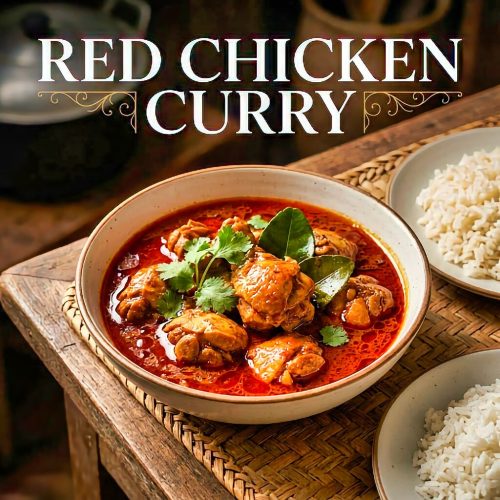
Cambodian Red Curry
Ingredients
- 2 lbs chicken cut into chunky pieces with bones
- 3 tsp vegetable oil
- 2 tsp red kreoung paste
- 1 tsp shrimp paste
- 3 tsp fish sauce
- 2 tsp palm sugar
- 1 tsp salt
- 1 cup coconut milk cream
- 3 cups water
- 2 onions brown cut into quarters
- 4 beans cut into 2 inch pieces
- 1 aubergine cut lengthwise into 2 inch pieces
- 1 potato sweet
- 1 potato white
Instructions
- Cook the kroeung paste: Place a large pot on the stove and heat it over medium temperature. Add a little oil, then spoon in the kroeung paste. Stir constantly for about 1 minute so the paste heats through, becomes fragrant, and loses its raw edge without burning.
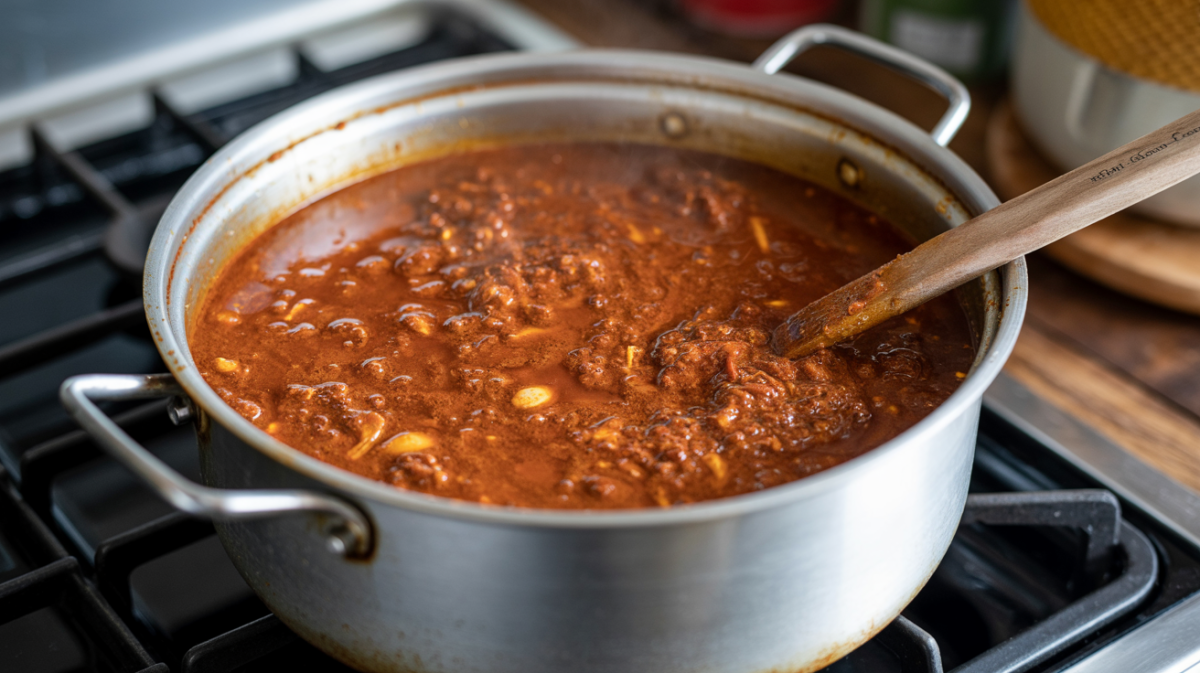
- Add chicken and first half of coconut: Add the Cambodia village chicken pieces to the pot along with half of the coconut (as specified in your recipe, e.g., coconut milk or cream). Stir well so the chicken is coated in the kroeung and coconut. Cook for about 2 minutes, allowing the outside of the chicken to begin cooking and the flavors to combine.
- Add vegetables: Add the potatoes, beans, aubergine, and onion to the pot. Stir everything together so the vegetables are well mixed with the chicken and curry paste.
- Add liquid and seasonings: Pour in the water and the remaining half of the coconut. Season with fish sauce, salt, and sugar according to your recipe. Stir thoroughly to combine all the ingredients and dissolve the seasonings into the liquid.
- Simmer until tender: Reduce the heat to low and let the curry simmer gently for about 20 minutes. Stir occasionally to prevent sticking, and cook until the chicken is cooked through and the vegetables are tender. Adjust seasoning if needed before serving.
Video


15 comments
Is it sacrilege to replace the chicken with tofu in this Cambodian Red Curry? Would that be a culinary faux pas?
Food evolves! If tofu makes the curry work for you, then its no sacrilege, its innovation!
Does using boneless chicken impact the depth of flavor in the Cambodian Red Curry compared to traditional chicken cuts?
Is it possible to substitute the chicken with tofu for vegetarians, without losing the authenticity of the Cambodian red curry flavor?
Absolutely! Tofu soaks up flavors brilliantly. It might even add a unique twist to the traditional curry.
Is there a way to make this red curry vegetarian? Swapping chicken for tofu perhaps? Just brainstorming alternative options here.
Sure, tofu works great. You can also use mushrooms or chickpeas for added texture.
Anyone else think using chicken thighs instead of breasts could enhance the flavor profile of this Cambodian Red Curry?
Isnt it true that substituting tofu for chicken in this Cambodian Red Curry recipe would make it equally appetizing for vegetarians?
Definitely not! Tofu cant replicate the unique texture and flavor chicken gives to the curry.
Does anyone else think using turkey instead of chicken might add an interesting twist to this Cambodian Red Curry recipe?
Does anyone else reckon that using bone-in chicken might enhance the flavor of this Cambodian Red Curry? Thoughts?
Absolutely not! Boneless chicken absorbs flavors better. Bones just get in the way!
Interesting read! But dont you think using tofu instead of chicken might give a unique twist to the traditional Cambodian Red Curry?
Interesting read! But isnt lemongrass essential in Cambodian Red Curry? The article didnt mention it. Anyone else noticed that?
Comments are closed.