


The Scottish Eggs recipe has earned a permanent spot on my favorite-food list, and honestly, I’m not even a little ashamed. A Scotch egg is a hard-boiled or soft-boiled egg wrapped in seasoned sausage meat, coated in breadcrumbs, and fried until golden and crispy. It’s everything good in life, rolled into one portable, crunchy package. Once you try a homemade Scottish eggs recipe, you’ll wonder why you ever bothered with the bland, cold, store-bought ones.
I’ll be straight with you—the first time I heard about a Scottish eggs recipe, I just assumed they came from Scotland. Spoiler: they don’t. But whether you call them scotch eggs or Scottish eggs, it’s the same delicious combo of protein and crunch that works for breakfast, lunch, picnics, or even late-night snacks when you want to feel a little fancy. The Scottish eggs recipe is surprisingly versatile.
Making a Scottish eggs recipe at home might sound intimidating, but it’s honestly much easier than you’d expect. I’ll walk you through the basics—from picking the right ingredients to mastering that runny yolk. I’ll also share some serving ideas that’ll make you look like a pub pro at your next get-together.

What Is a Scotch Egg and Why Isn’t It Scottish?
Hate to break it to you, but scotch eggs aren’t actually Scottish. Despite the name, this beloved British snack comes from England, not Scotland. The Scottish eggs recipe is a bit of a misnomer, but I love the confusion.
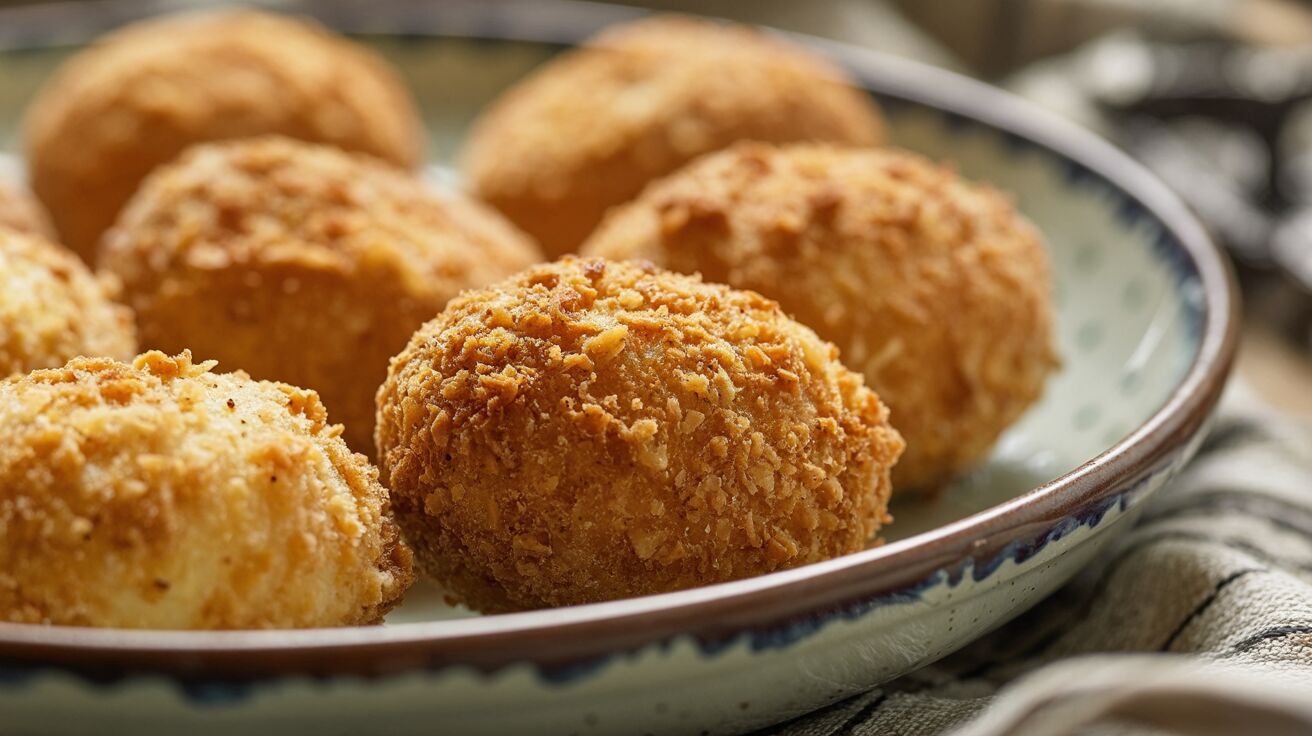
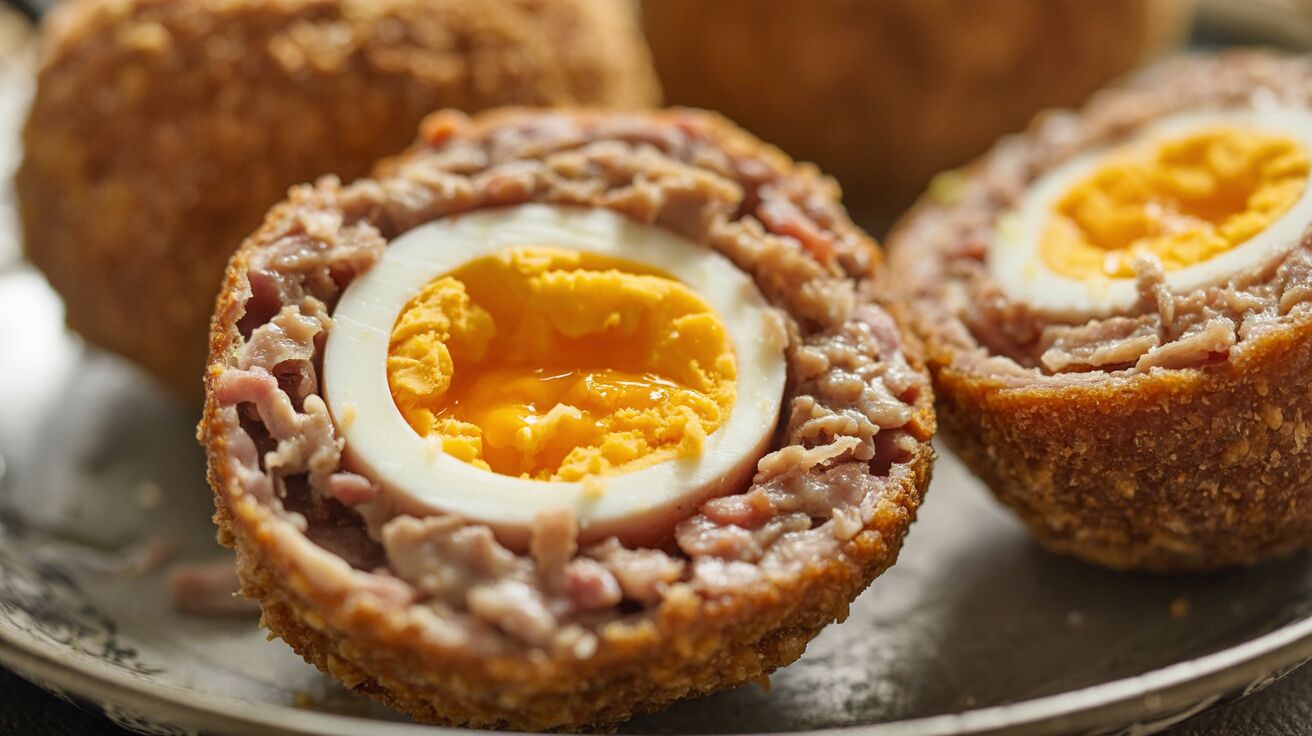
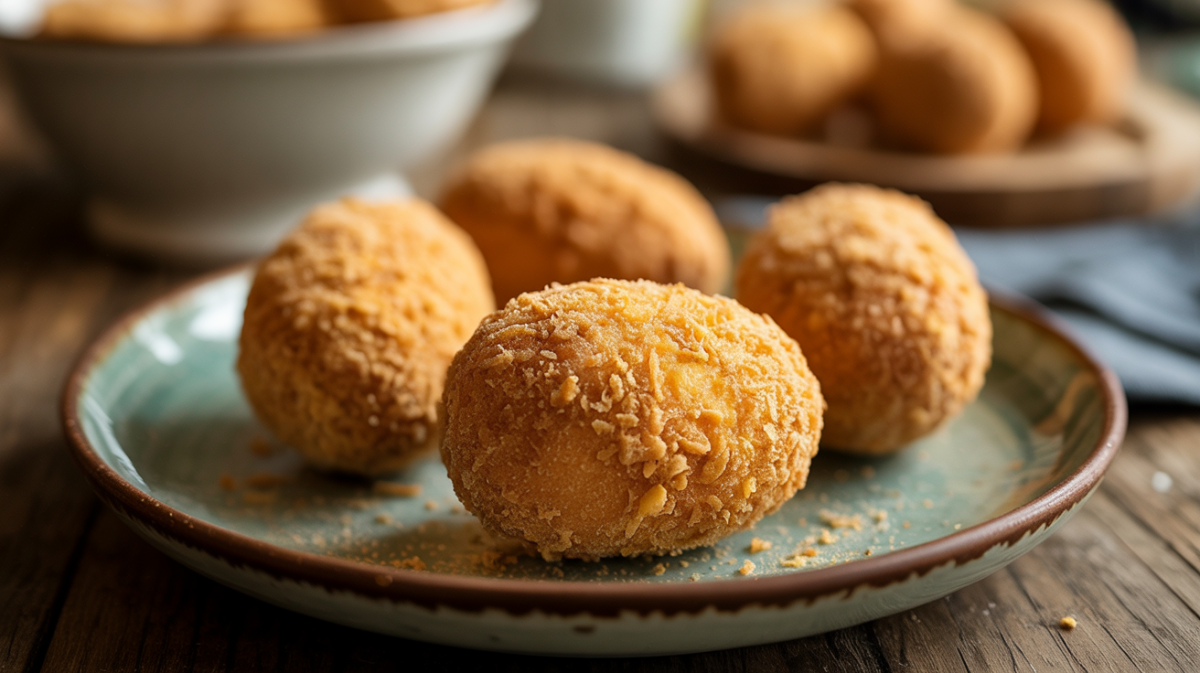
So, what’s a Scotch egg? It’s a hard-boiled or soft-boiled egg, wrapped in seasoned sausage meat, coated in breadcrumbs, and then deep-fried or baked until golden and crispy. It’s the ultimate finger food, honestly.
The first written Scottish eggs recipe I found dates back to 1809 in a British cookbook. Some food historians think the idea might have been inspired by nargisi kofta, an Indian dish with eggs in spiced meat. But the British version took on a life of its own.
Traditionally, people ate Scotch eggs cold, which made them perfect for picnics and travel. These days, you’ll spot them everywhere in the UK—from fancy restaurants with runny yolks to gas stations selling them in plastic wrap.
Here’s what you need for a classic Scottish eggs recipe:
- The egg: Boil it to your liking.
- The meat: Usually pork sausage, seasoned and shaped around the egg.
- The coating: Breadcrumbs for that signature crunch.
- The cooking method: Deep-fry or bake—up to you.
In Scotland, they just call them Scotch eggs. No drama, no fuss. It’s kind of funny—one of Britain’s most iconic snacks has such a misleading name, but that’s British food history for you.
Essential Ingredients for the Scottish Eggs Recipe
If you want to nail the Scotch eggs recipe, you’ve got to get three parts right: the egg center, the sausage wrapper, and the crispy outer shell. Each layer matters for that perfect bite.
Egg Selection: Soft-Boiled, Hard-Boiled, or Runny Yolk?
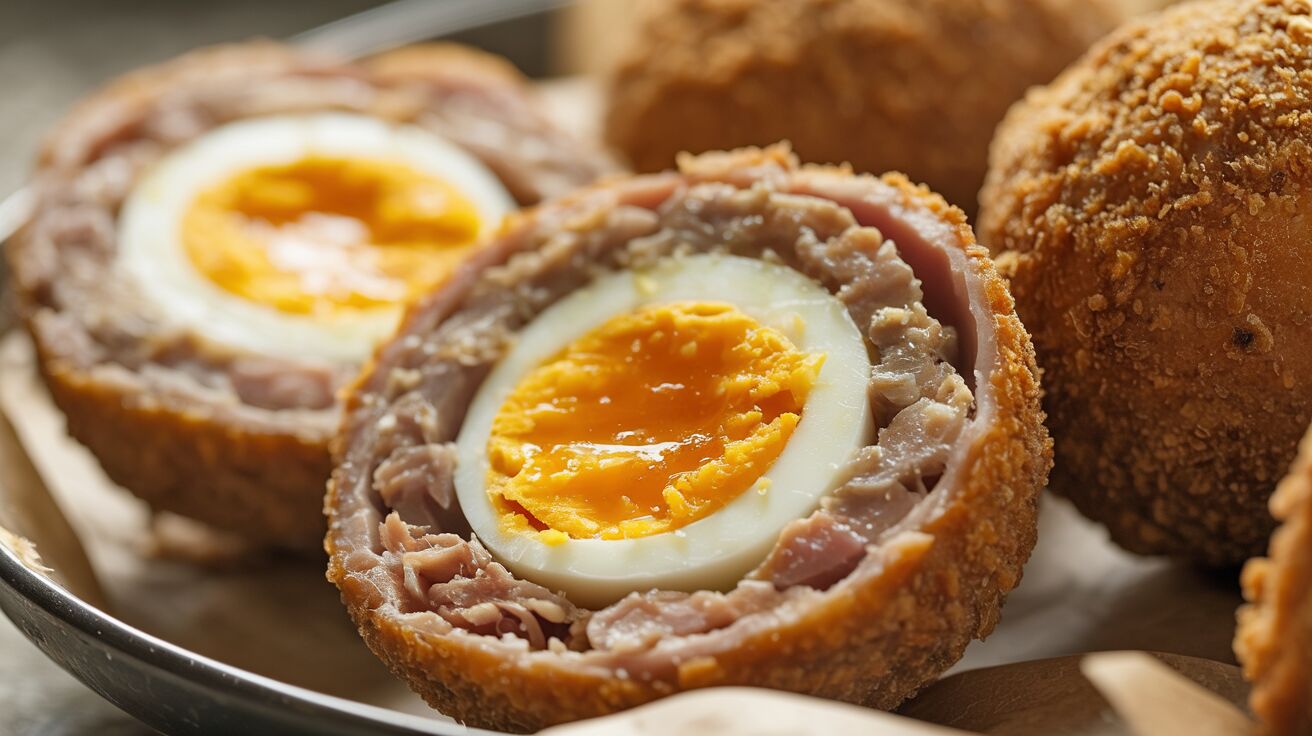
I usually start by picking what kind of egg center I’m in the mood for. Soft-boiled eggs give you that gorgeous runny yolk—boil them for about 6-7 minutes for set whites and a gooey center. If you want less mess (or you’re new to this), hard-boiled is easier—just cook for 9-10 minutes. Both work for a Scottish eggs recipe, but the vibe is totally different.
Large eggs are ideal for a Scottish eggs recipe—they’re just the right size for wrapping. After boiling, I plunge them straight into ice water. This stops the cooking and makes peeling way less annoying.
Choosing and Seasoning the Sausage Meat
For six eggs, I grab about a pound of sausage meat. Breakfast sausage is great because it’s already seasoned, but you can use plain pork sausage and add your own flair for your Scottish eggs recipe.
I like a teaspoon of English mustard, some fresh chives and parsley, and a pinch of nutmeg. I mix it all in by hand—messy but worth it.
The sausage needs some fat to keep your Scottish eggs recipe juicy. I aim for about 20% fat. If it’s too lean, your Scottish eggs recipe will end up dry and forgettable.
Breading and Crispy Coating Magic
I set up three shallow dishes for breading: plain flour in one, beaten eggs in another, and breadcrumbs in the last. Classic—but it works for a Scottish eggs recipe.
My breading station:
- Bowl 1: 1/2 cup plain flour with salt and pepper
- Bowl 2: 2 beaten eggs
- Bowl 3: 1 1/2 cups panko breadcrumbs
Panko breadcrumbs are my secret for extra crunch in my Scottish eggs recipe. Sometimes I mix in a bit of regular breadcrumbs for a sturdier crust.
I press the breadcrumbs on firmly so nothing falls off during cooking. The coating should cover every bit of sausage for the best Scottish eggs recipe crunch.
How to Make Scotch Eggs Like a Pub Pro
Creating The Eggs

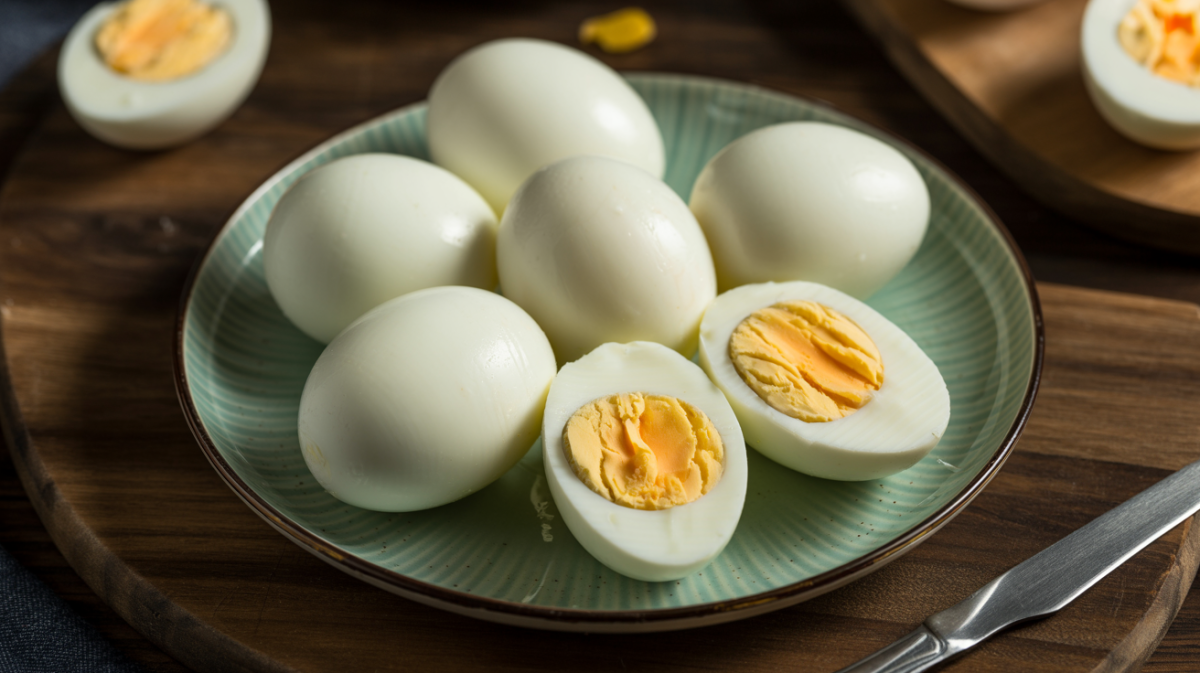
Step 1: Cook and cool the eggs: Boil the eggs to your preferred level of doneness (hard, medium, or soft). As soon as they are done, transfer them to a bowl of ice water to stop the cooking and cool them quickly. Shell the eggs under running lukewarm water. Set the peeled eggs aside until needed.
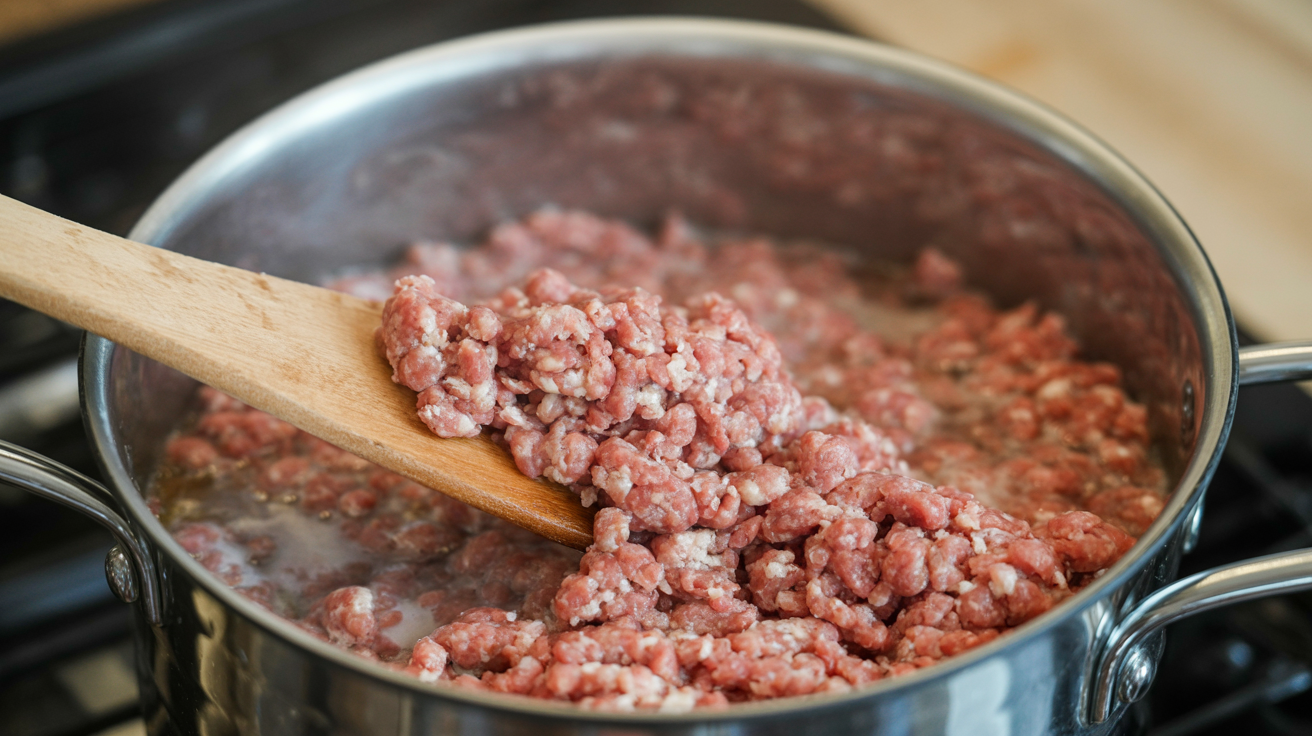
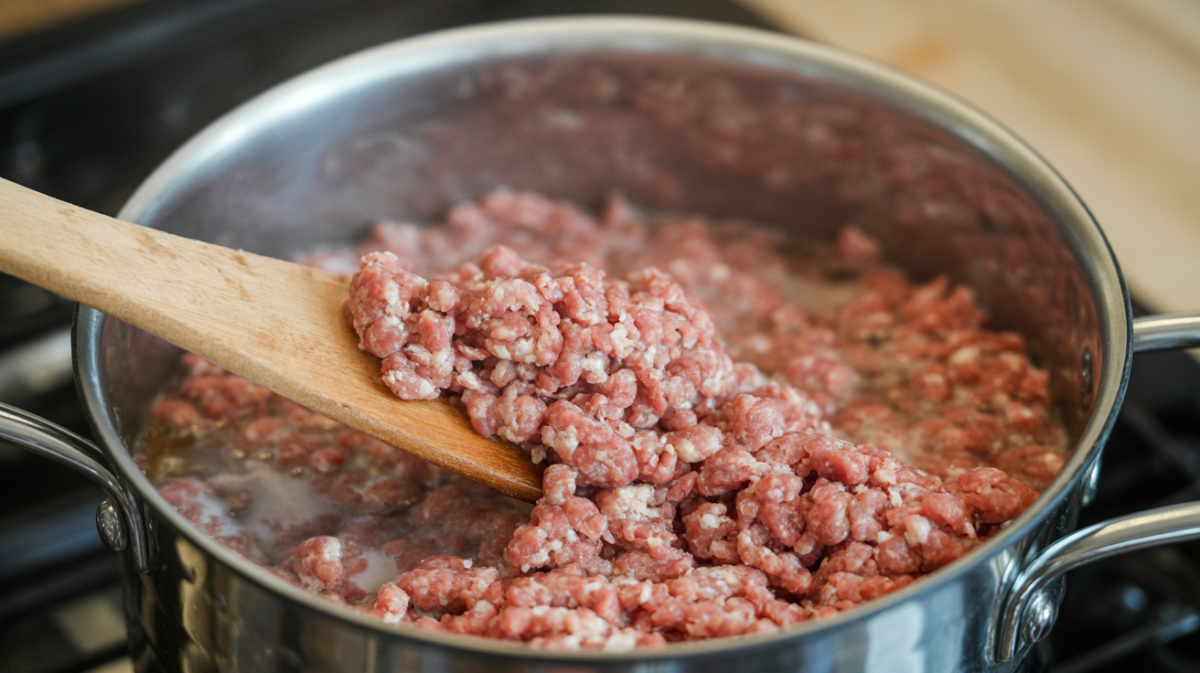
Step 2: Mix the sausage coating: In a large mixing bowl, combine the ground sausage with the chopped chives or parsley, mustard, and spices. Use your fingers to work everything together until the mixture is evenly combined.
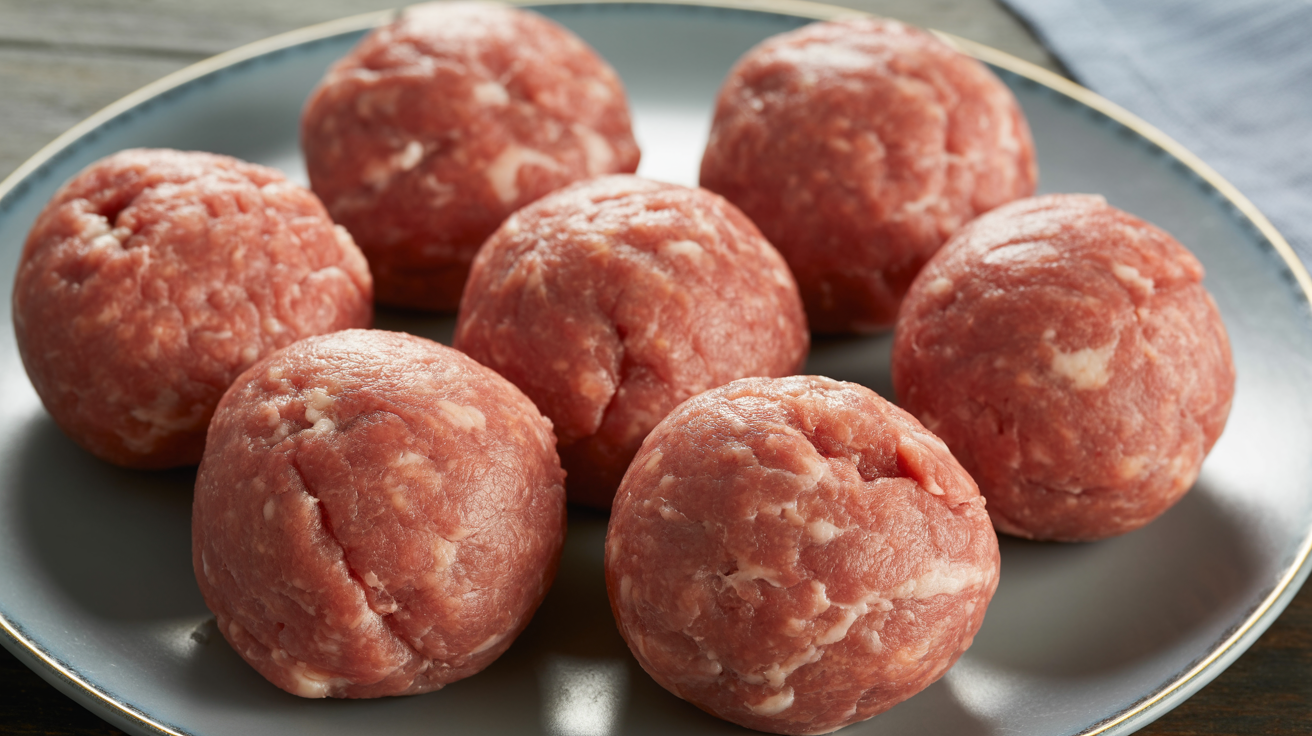
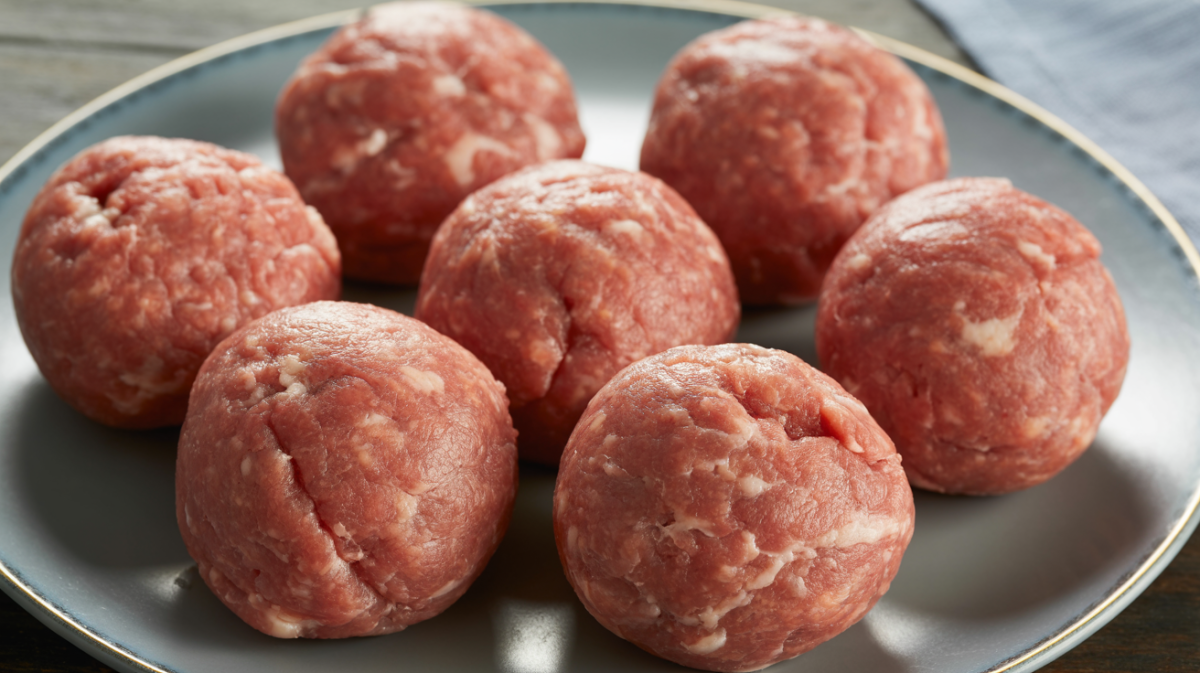
Step 3: Portion the sausage: Divide the sausage mixture into equal portions, one for each egg. You can weigh each portion if you want them to be very consistent in size.

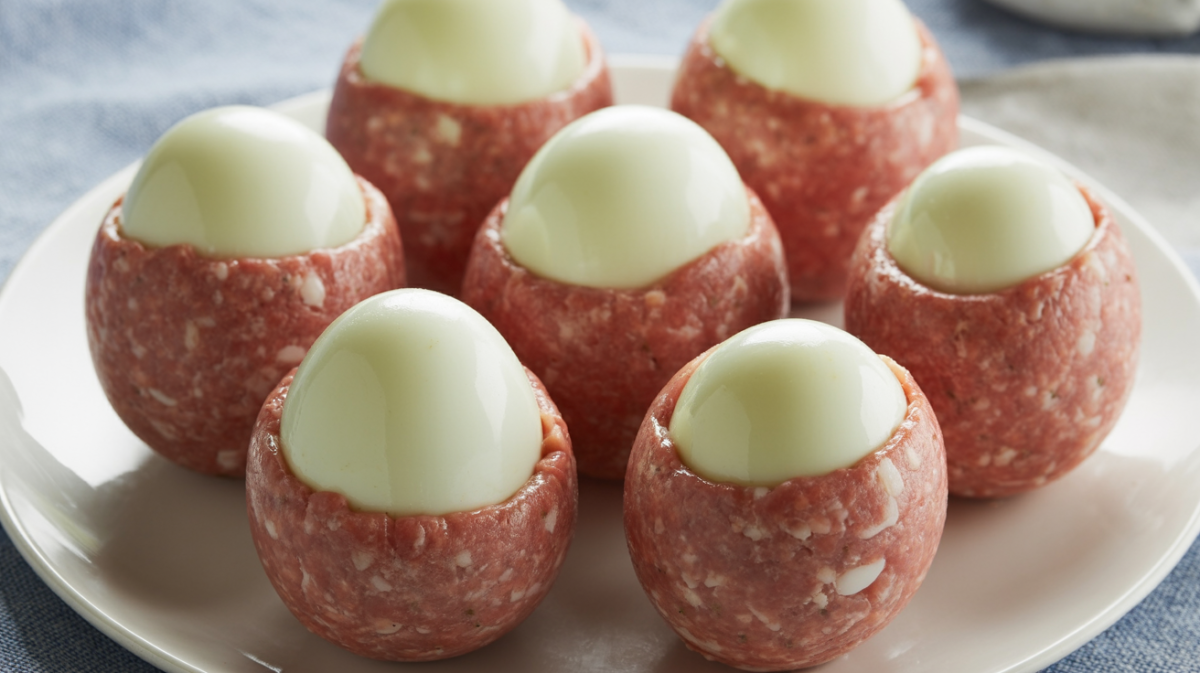
Step 4: Wrap the eggs in sausage: Lay a piece of plastic wrap on your work surface and lightly spray it with oil. Place one portion of sausage on the plastic wrap and press it out into a circle about 5–6 inches in diameter. Put one egg in the center. Lift the edges of the plastic wrap to bring the sausage up and around the egg. Press gently until the sausage completely encloses the egg in an even layer. Remove the sausage-covered egg from the plastic wrap. Repeat with the remaining portions and eggs.

Step 5: Set up the coating bowls: Place flour, whisked eggs, and breadcrumbs into three separate bowls. Season each bowl lightly with salt and pepper and mix so the seasoning is evenly distributed.

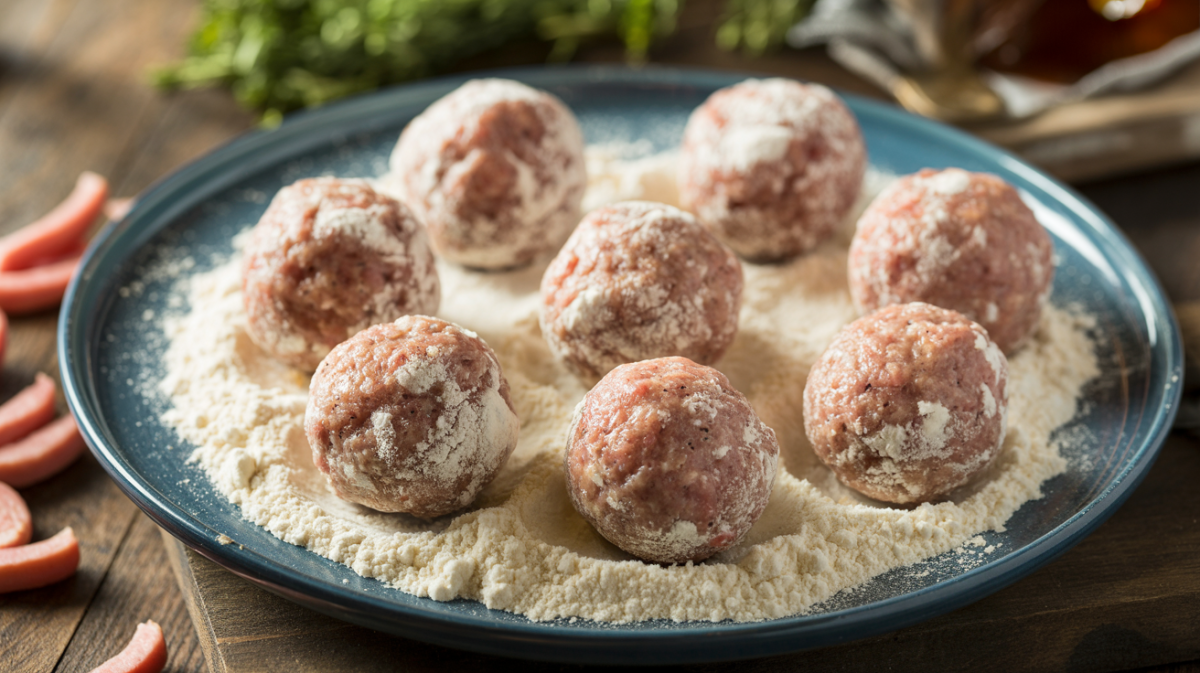
Step 6: Coat the Scotch eggs: Take one sausage-covered egg and roll it in the flour until fully coated. Dip it into the beaten egg, making sure it is covered on all sides. Then roll it in the breadcrumbs until it is evenly coated. Place the coated egg on a plate. Repeat this process for all of the eggs. Refrigerate the coated eggs while you heat the oil.
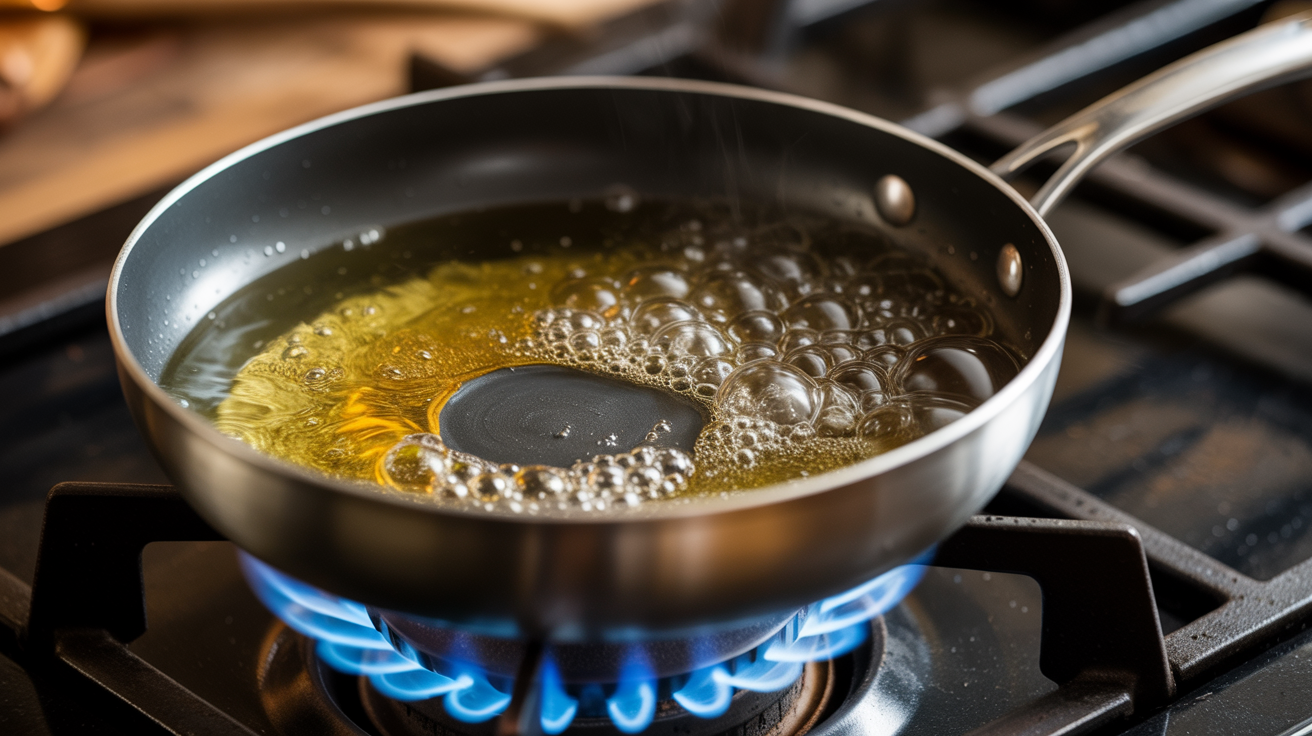
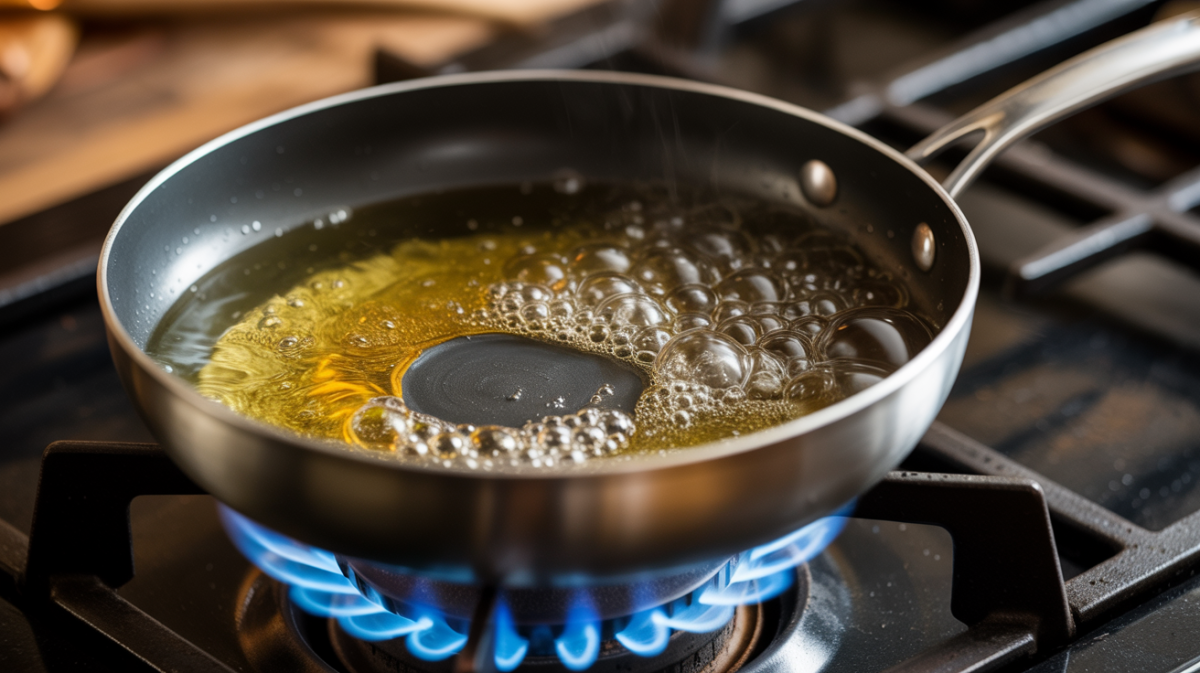
Step 7: Heat the frying oil: Pour oil into a small but deep saucepan, or use a dedicated deep fryer. Heat the oil to between 350–360°F.

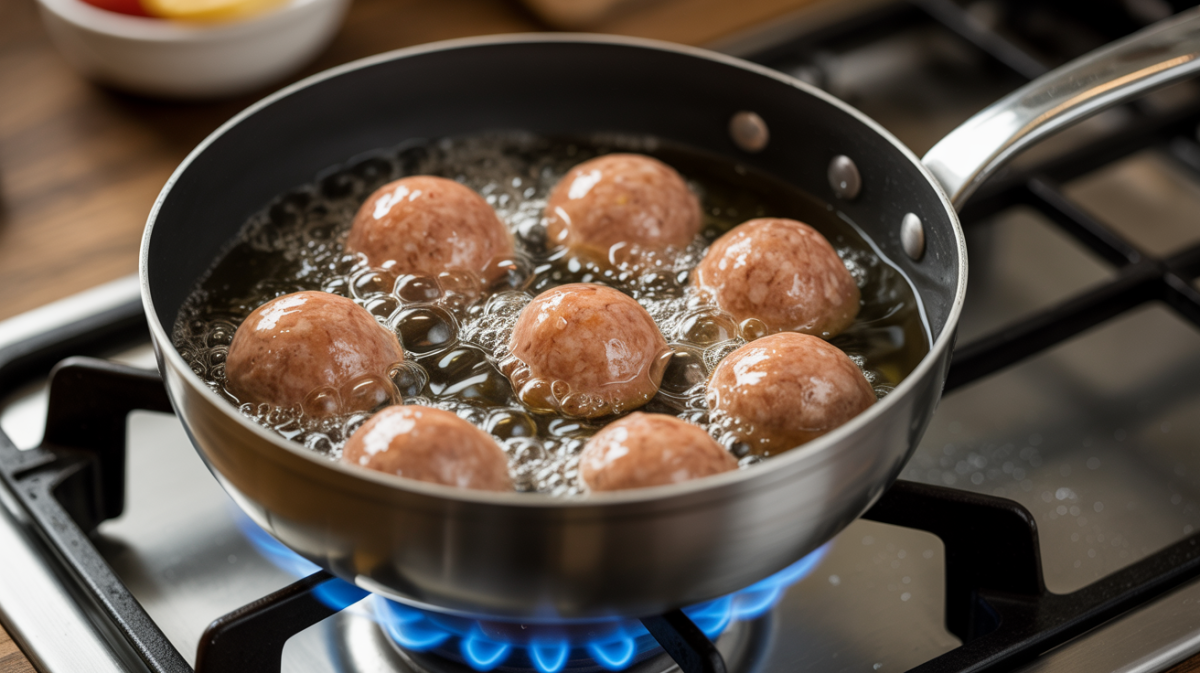
Step 8: Fry the Scotch eggs: Carefully lower one Scotch egg into the hot oil using a spoon. Hold it just under the surface for a few seconds before letting go. If the oil does not completely cover the egg, gently turn it with the spoon as it fries so it browns evenly on all sides. Fry until the outside is nicely browned and the sausage is cooked through. The internal temperature of the sausage should reach 145°F.

Step 9: Drain and keep warm: Use a slotted spoon to lift the cooked Scotch egg from the oil. Place it on a plate lined with paper towels to drain excess oil. Keep the plate in a warm oven while you repeat the frying process with the remaining eggs.
Step-by-Step Scotch Eggs Recipe
I start by boiling my eggs—6 minutes for a jammy yolk, 8 for something firmer. Straight into ice water they go. This makes peeling so much easier for your Scottish eggs recipe.
After peeling, I pat each egg dry. Moisture makes the sausage slide right off, which you definitely don’t want in your Scottish eggs recipe.
I take 3-4 ounces of sausage for each egg and flatten it into a thin patty. Egg goes in the center, then I gently wrap and seal everything up. Keep the sausage even for the best Scottish eggs recipe results.
My breading station includes:
- Flour with salt and pepper
- Two beaten eggs
- Panko breadcrumbs mixed with regular breadcrumbs
I roll each sausage-wrapped egg in flour, then egg, then breadcrumbs. I usually do this twice for double crunch in my Scottish eggs recipe.
Frying, Baking, or Air Frying: Cooking Techniques
Deep frying gives the crispiest Scottish eggs recipe—about 5-6 minutes at 350°F, turning occasionally until golden.
For baking, I preheat the oven to 400°F, place the Scottish eggs on a greased sheet, brush with oil, and bake for 25-30 minutes, rotating halfway. Not quite as crispy, but less mess.
Air frying is my go-to when I want lighter Scottish eggs. A quick spray of oil, 400°F for 15-18 minutes, flipping halfway. Shockingly crispy, barely any oil.
I always let them rest for 5 minutes before cutting. That way, the layers of your Scottish eggs recipe stay together instead of falling apart.
Scotch Egg Variations and Upgrades
Over time, I’ve gotten creative with my Scottish eggs recipe. Mixing in fresh herbs like sage and thyme gives you that classic British pub flavor. Sometimes I swap in chorizo or Italian sausage for a spicy Scottish eggs recipe twist.
Here are my favorite Scottish eggs recipe variations:
| Variation | What I Change |
|---|---|
| Haggis Scotch Egg | Use haggis instead of sausage |
| Curry Spiced | Add curry powder to breadcrumbs |
| Bacon Wrapped | Wrap in bacon before breading |
| Black Pudding | Mix black pudding with sausage meat |
For a fancier Scottish eggs recipe, I sometimes add a thin layer of herb cream cheese between the egg and sausage. Or I’ll use pickled eggs for a tangy twist. That sharpness really cuts through the richness of a Scottish eggs meal.
My kids go wild for mini Scottish eggs recipe versions made with quail eggs. They cook faster and are perfect for parties.
Serving Ideas and Sassy Sidekicks
Scottish eggs recipe really shines when you pair it with the right sides. Tangy sauces, crisp salads, or crunchy snacks all work. I’ve found these golden orbs fit in at picnics, pub nights, or even fancier parties.
What to Serve With Scotch Eggs
I love serving Scottish eggs recipe with a crisp green salad, especially watercress. The peppery bite balances the rich sausage layer.
Coleslaw is another top pick. The creamy, tangy crunch makes each bite of Scottish eggs recipe a little more interesting.
If you’re hungrier, homemade baked beans work perfectly with a Scottish eggs recipe. The sweet and savory combo is just right.
Other excellent pairings for Scotch eggs recipe:
- Potato chips or crisps
- Pickled veggies—onions or cabbage are my favorites
- Caesar salad for a garlicky punch
- Onion rings if you’re really leaning into the pub mood
Must-Try Dipping Sauces
Piccalilli is my absolute favorite for Scottish eggs recipe. This mustardy, chunky British pickle relish brings tang and a bit of spice.
English mustard is a close second. The strong, nose-tingling kind—just a dab is enough for your Scottish eggs recipe.
Other sauces I like for Scottish eggs recipe:
- HP Sauce or brown sauce for that classic British vibe
- Honey mustard for a milder option
- Aioli or garlic mayo for creamy richness
- Sweet chili sauce if you want something different
Picnic, Pub, and Party Presentations
For picnics, I wrap each Scottish eggs recipe in parchment. They travel well at room temp and don’t need plates or forks.
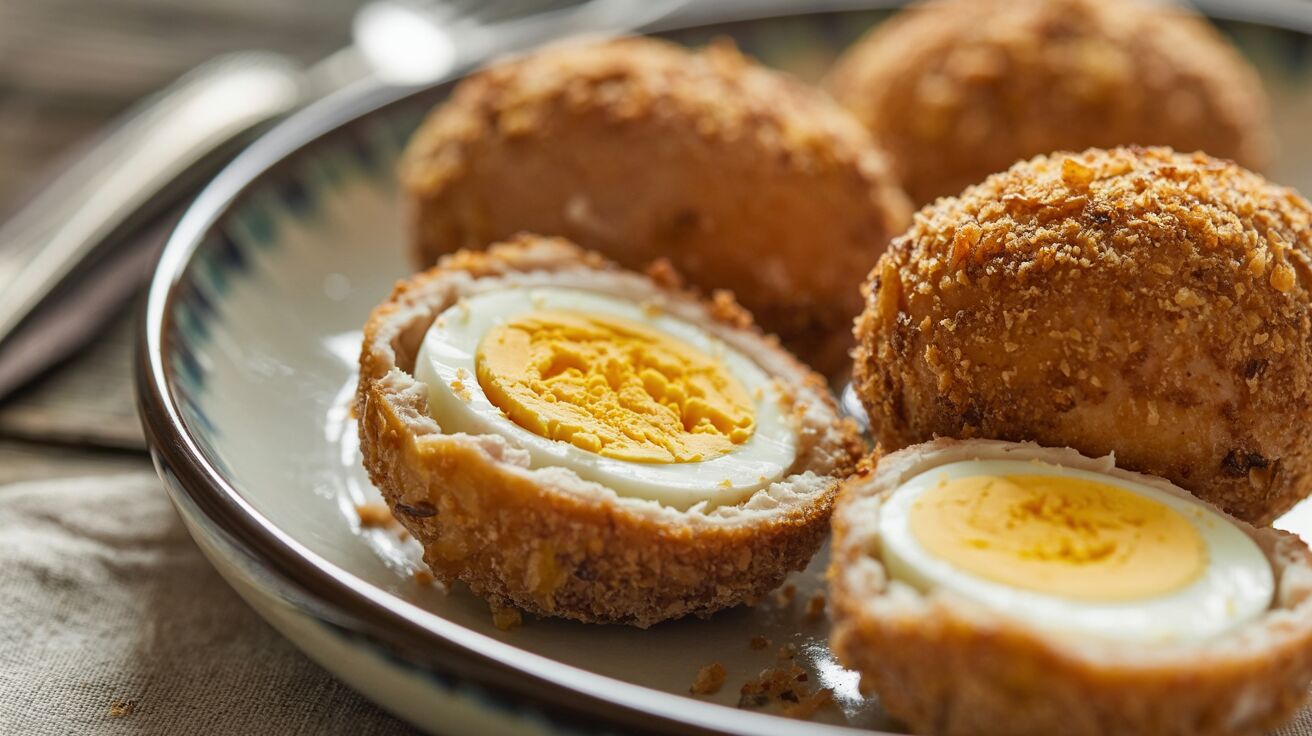
At pub-style hangouts, I slice Scottish eggs recipe in half to show off that golden yolk. I set them on a wooden board with little bowls of mustards and pickles.
For parties, mini Scottish eggs recipe made with quail eggs are my go-to. They look fancy and are easy for guests to grab while mingling. Scottish eggs recipe always gets people talking, no matter how you serve it.
Storing, Reheating, and Making Ahead
Stash your scotch eggs in an airtight container in the fridge—they’ll last about three days, maybe a little longer if you’re lucky. When you want to revive them, toss them in a 350°F oven for 10-15 minutes. They crisp up nicely, almost like you just made them. If you’re planning ahead, you can wrap sausage around boiled eggs and chill those in the fridge before frying. That’s a huge time-saver, honestly, especially if you’re making a big batch of your favorite Scottish eggs recipe.
Keeping Your Eggs Fresh
I always throw my leftover scotch eggs into an airtight container—no exceptions. They keep well for up to three days, so you don’t have to rush through them. This is my go-to move whenever I whip up a Scottish eggs recipe, just in case I go overboard (which happens more than I’d like to admit).
When it’s time to reheat, I don’t even look at the microwave. Every time I’ve tried, the breadcrumb coating just turns limp and disappointing. The oven is where it’s at. I crank it up to 350°F, spread the eggs out on a baking sheet, and wait about 10-15 minutes. They come out piping hot and the crust is back to being satisfyingly crisp. I’ve found that sprinkling a pinch of salt on top before reheating really brings the flavor back to life—kind of a small trick but it works like a charm, especially for a Scottish eggs recipe fan like me.
If I’m feeling impatient and the egg’s already cut in half, I’ll sometimes microwave it anyway. I just wrap it loosely in a damp paper towel. It’s not perfect, but it keeps things from drying out. Still, for the best texture and taste, the oven wins every time, especially when you’re working with a Scottish eggs recipe you actually care about.
If you want to make your Scottish eggs recipe ahead of time, just prep the sausage-wrapped eggs and refrigerate them. That way, when you’re ready to fry, most of the work’s already done. I can’t recommend this enough if you’re hosting or meal-prepping. And honestly, once you get the hang of a solid Scottish eggs recipe, it’s hard not to want them on hand all the time.
Just remember: all Scottish eggs tastes best fresh, but with the right storage and reheating, you can stretch out that magic for a few days. I’d say experiment a little—find what works for your own Scottish eggs recipe routine. Sometimes, the little tweaks make all the difference.
And hey, if you come up with a Scottish eggs tip I haven’t tried, send it my way. I’m always looking for an excuse to make another batch.
Advance Prep and Leftover Bragging Rights
Honestly, making Scottish eggs ahead of time saves me a ton of stress when I’m having people over. I’ll usually boil the eggs, wrap them up in sausage, and stash them in the fridge until I’m ready to bread and cook. It’s just so much easier that way.
I’ve also tried cooking the entire Scottish eggs recipe in advance and just reheating them later—surprisingly, that works out really well. Pop them in the oven at 350°F and you’re good to go. If you haven’t tried this Scottish eggs recipe trick yet, I totally recommend it.
My Scottish eggs recipe stays fresh in the fridge for up to three days after cooking. That means I can make a big batch on Sunday and snack on them all week. The secret? Store them in an airtight container so they don’t dry out or start smelling like fridge funk. I’m always amazed at how well this Scottish eggs recipe holds up, honestly. If you’re into meal prepping, the Scottish eggs recipe is a game changer. I mean, who doesn’t want a Scottish eggs recipe ready for a quick snack or breakfast? It’s honestly one of those things where the Scottish eggs recipe just keeps on giving. Try making a Scottish eggs recipe once and you’ll probably get hooked too.
Scotch Eggs vs Deviled Eggs
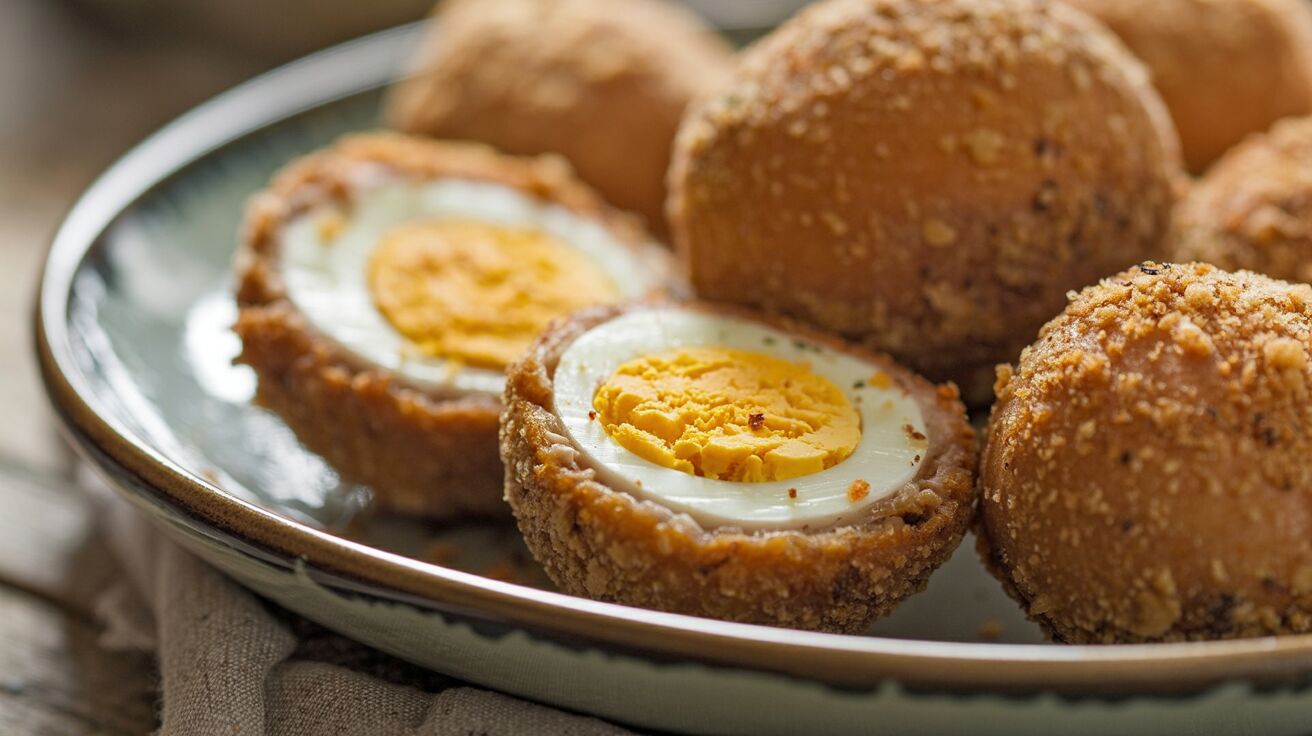
Scotch eggs are hard-boiled eggs wrapped in seasoned sausage meat, coated in breadcrumbs, and fried or baked until crispy. They are hearty, protein-rich, and commonly served as a snack, picnic food, or pub favorite.
Deviled eggs, in contrast, are boiled eggs filled with a creamy, seasoned yolk mixture. They are lighter and typically served as appetizers at gatherings or parties.
Comparing Scotch eggs vs deviled eggs highlights richness versus lightness. Scotch eggs are filling, crispy, and substantial, while deviled eggs are smooth, creamy, and bite-sized.
Scottish Eggs Recipe FAQ
1. What makes a Scotch egg different from other egg dishes?
A Scotch egg is a boiled egg wrapped in sausage meat, coated in breadcrumbs, and then fried or baked, creating a layered texture.
2. Should the egg yolk be runny or fully cooked?
Both versions exist—some prefer a soft yolk for richness, while others cook it fully for convenience and storage.
3. What type of sausage is used in Scotch eggs?
Traditional pork sausage meat is used, often seasoned with herbs and spices.
4. Can Scotch eggs be baked instead of fried?
Yes, baking is a lighter alternative, though frying gives a crispier coating.
5. Are Scotch eggs served hot or cold?
They can be enjoyed both ways, making them a versatile snack or picnic food.

Traditional Scottish Eggs
Ingredients
- 8 large eggs
- 1 1/2 lb sausage fine grind
- 1 1/2 tbsp mustard Dijon
- 3 tbsp chives
- 1/2 tsp black pepper freshly ground
- 1/4 tsp nutmeg ground
- 1 cup all-purpose flour
- 3 eggs whisked
- 1 cup breadcrumbs plain
Instructions
- Cook and cool the eggs: Boil the eggs to your preferred level of doneness (hard, medium, or soft). As soon as they are done, transfer them to a bowl of ice water to stop the cooking and cool them quickly. Shell the eggs under running lukewarm water. Set the peeled eggs aside until needed.
- Mix the sausage coating: In a large mixing bowl, combine the ground sausage with the chopped chives or parsley, mustard, and spices. Use your fingers to work everything together until the mixture is evenly combined.
- Portion the sausage: Divide the sausage mixture into equal portions, one for each egg. You can weigh each portion if you want them to be very consistent in size.
- Wrap the eggs in sausage: Lay a piece of plastic wrap on your work surface and lightly spray it with oil. Place one portion of sausage on the plastic wrap and press it out into a circle about 5–6 inches in diameter. Put one egg in the center. Lift the edges of the plastic wrap to bring the sausage up and around the egg. Press gently until the sausage completely encloses the egg in an even layer. Remove the sausage-covered egg from the plastic wrap. Repeat with the remaining portions and eggs.
- Set up the coating bowls: Place flour, whisked eggs, and breadcrumbs into three separate bowls. Season each bowl lightly with salt and pepper and mix so the seasoning is evenly distributed.
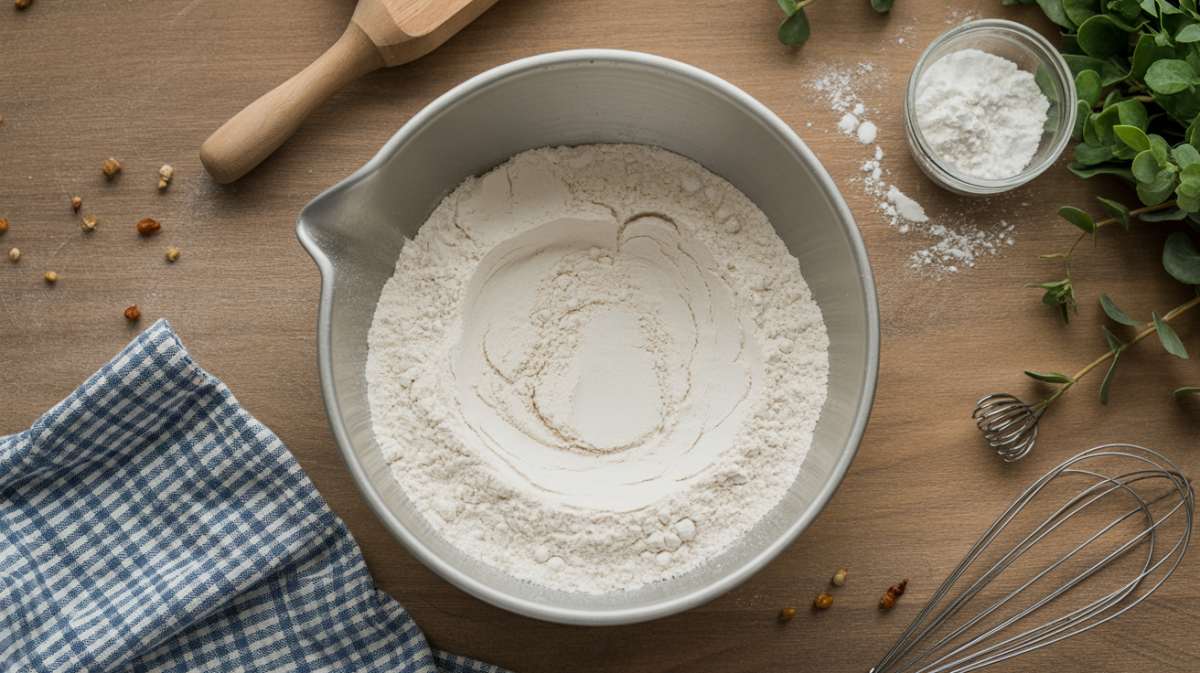
- Coat the Scotch eggs: Take one sausage-covered egg and roll it in the flour until fully coated. Dip it into the beaten egg, making sure it is covered on all sides. Then roll it in the breadcrumbs until it is evenly coated. Place the coated egg on a plate. Repeat this process for all of the eggs. Refrigerate the coated eggs while you heat the oil.
- Heat the frying oil: Pour oil into a small but deep saucepan, or use a dedicated deep fryer. Heat the oil to between 350–360°F.
- Fry the Scotch eggs: Carefully lower one Scotch egg into the hot oil using a spoon. Hold it just under the surface for a few seconds before letting go. If the oil does not completely cover the egg, gently turn it with the spoon as it fries so it browns evenly on all sides. Fry until the outside is nicely browned and the sausage is cooked through. The internal temperature of the sausage should reach 145°F.
- Drain and keep warm: Use a slotted spoon to lift the cooked Scotch egg from the oil. Place it on a plate lined with paper towels to drain excess oil. Keep the plate in a warm oven while you repeat the frying process with the remaining eggs.
Video

6 comments
Anyone tried this recipe with turkey sausage? Curious if it compromises the authenticity or flavor too much!
Interesting article, but why isnt the Scotch egg actually Scottish? Also, any tips for seasoning veggie sausage for this recipe?
Interesting article! Curious though, why isnt Scotch Egg Scottish? Also, isnt soft-boiled egg a game-changer here?
Is it heresy to suggest turkey sausage for a leaner Scotch egg or does that ruin the authentic vibe?
So, is a Scotch egg more about the perfect egg or the right sausage? Curious minds need to know!
Why isnt the Scotch egg Scottish though? Id love a good history lesson alongside the recipe!
Comments are closed.