

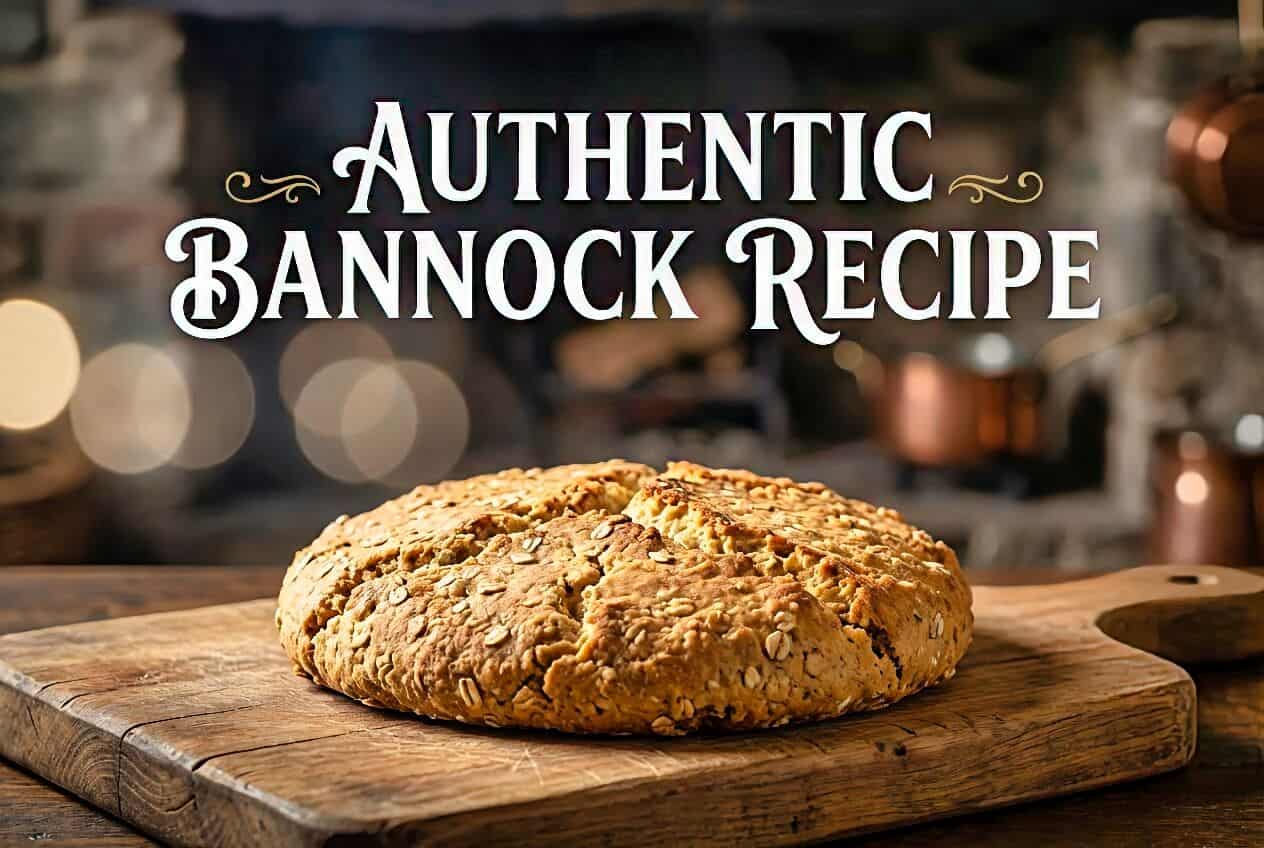
Scottish bannock recipes are simple flatbreads that’s been feeding hungry Scots for over a thousand years, and honestly, if our ancestors could survive on it through Highland winters, we can probably manage to whip up a Scottish bannock recipe or two in our modern kitchens. This traditional oat-based bread needs just four basic ingredients—flour, oatmeal, salt, and milk or buttermilk—and cooks up fast on a griddle or in a skillet. No yeast. No waiting around. Just good bread.
The first time I heard about a Scottish bannock recipe, I figured it was something out of Lord of the Rings. Turns out, it’s a rustic flatbread that’s real and actually easy to make. Serve it for breakfast with butter and jam, or pile it high with smoked fish and cheese—bannock works for both.
So, let’s get into how to make a Scottish bannock recipe that’s as close to authentic as you can get. What makes it different from regular bread? Which ingredients do you actually need? And how do you avoid turning your Scottish bannock recipe into a hockey puck?

What Is Scottish Bannock?
Scottish bannock is a traditional flatbread that’s been warming Scottish bellies for centuries. This bread mixes oatmeal and flour into a griddle-cooked staple that can be simple or dressed up for festive treats—sometimes even with fruit tossed in.
Origins and History
It’s kind of wild how a Scottish bannock recipe has survived for so long. Bannock is one of Scotland’s oldest breads, dating back well over a thousand years. The name comes from the Gaelic “bannach,” meaning morsel.
Back then, nobody had ovens in their kitchens. People cooked their Scottish bannock recipe on a flat griddle stone called a bannock stane over an open fire. They used whatever grain was handy, but oats became the go-to since they handled Scotland’s tough weather better than most crops.
Each region put its own spin on the Scottish bannock recipe. Some made them thick, others thin and crispy. Special occasions meant special bannocks—different Scottish bannock recipes for Hogmanay, Burns Night, and all sorts of seasonal celebrations.
Bannocks in Scottish Culture and Outlander
Honestly, you can’t talk about a Scottish bannock recipe without mentioning its Outlander cameo. That show put these oatcakes in the spotlight, and suddenly everyone wanted to try making a Scottish bannock recipe at home.
Bannocks meant more than just food in Scotland. They stood for hospitality, for home. Families handed down their Scottish bannock recipe for generations, each swearing theirs was the real deal. Bannocks showed up at weddings, funerals, and harvest feasts.
Scottish folklore is full of bannock superstitions. Breaking a bannock? Bad luck. Sharing one with a stranger? Good fortune. At certain festivals, people decorated bannocks and used them as offerings—so a Scottish bannock recipe was more than just a meal.
Scottish Bannock vs. Selkirk Bannock
Not all bannocks are equal. The traditional Scottish bannock recipe is an unleavened flatbread made with oatmeal, flour, salt, and milk or buttermilk. It’s dense and earthy, somewhere between a cracker and a biscuit.
Selkirk bannock is the fancy cousin. It started in the town of Selkirk and, honestly, it’s a different thing altogether. It’s a rich, buttery, yeast-leavened bread loaded with raisins—think fruitcake meets sweet bread. The texture? Regular Scottish bannock recipe is flat and chewy, while Selkirk is round, spongy, and sweet. If you ask me, the Scottish bannock recipe is for everyday eating; Selkirk is for parties.
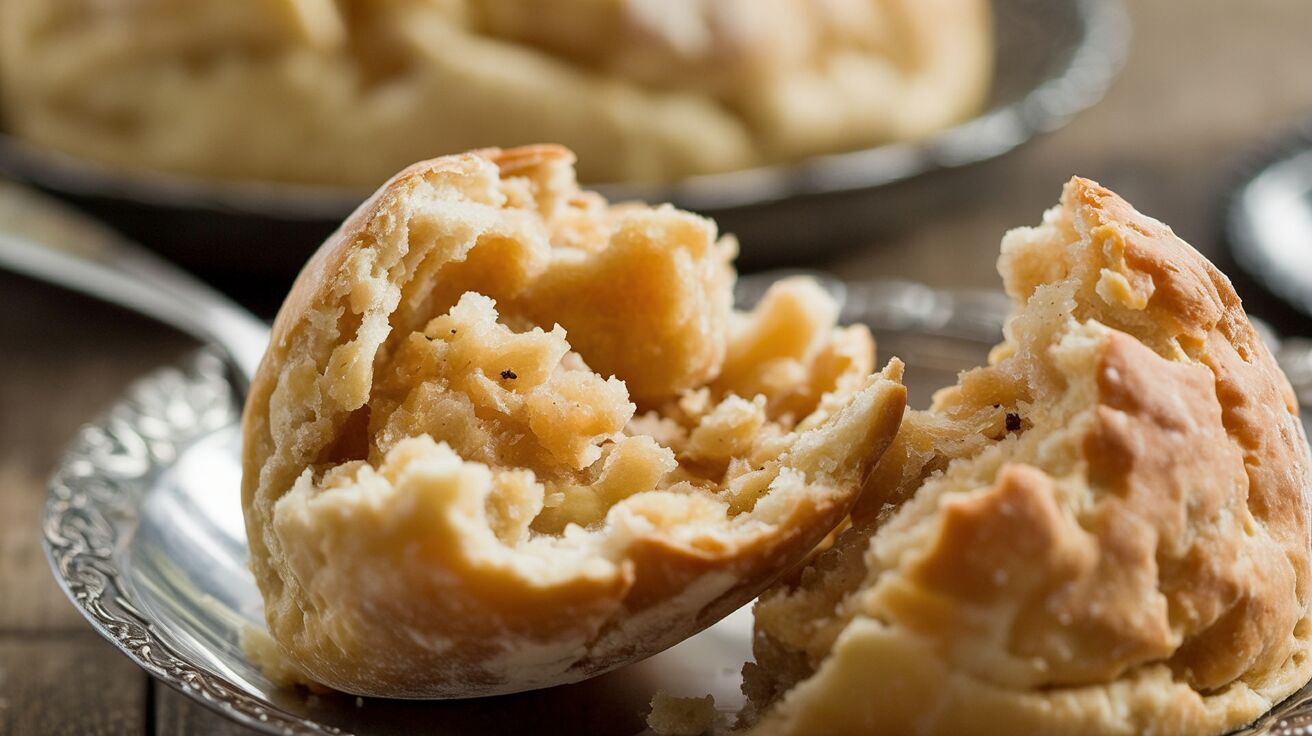
Ingredients You’ll Need
The Scottish bannock recipe keeps things simple—just four main ingredients, but you can get creative once you nail the basics. Oats, flour, salt, and a liquid come together for a flatbread that’s been a staple for centuries.
Key Ingredients for Traditional Bannock
The backbone of a Scottish bannock recipe is Scottish oatmeal or pinhead oatmeal—about 2 cups. This coarse oat gives you that rustic, earthy vibe that makes the Scottish bannock recipe taste like, well, Scotland. Seriously, skip the instant oats if you want your Scottish bannock recipe to make your ancestors proud.
Add 1½ to 2 cups of all-purpose flour to hold everything together. Some bannock recipes use more oats, others more flour, but I like an even split. Toss in a good pinch of salt (½ to 1 teaspoon) because bland bread is just sad.
For liquid, go with milk or buttermilk—about ¾ to 1 cup. Buttermilk adds a little tang, which I love. Water works if you’re keeping it super simple, but milk makes a softer Scottish bannock recipe.
Oats, Flours, and Modern Variations
Traditionally, the Scottish bannock recipe calls for Scottish oatmeal, but I’ve used rolled oats pulsed in a food processor when I’m out of the real stuff. Oat flour can swap in for some or all of the all-purpose flour if you want a stronger oat flavor or need a gluten-free Scottish bannock recipe.
Some folks throw in baking powder—about 1 to 2 teaspoons—for a fluffier Scottish bannock recipe. I won’t judge, though purists might. The old-school Scottish bannock recipe relies on just oats and flour for texture.
Barley flour pops up in some old recipes. My gran swore by it, but good luck finding it these days for your Scottish bannock recipe.
Savory and Sweet Additions
Once you’ve got the basic Scottish bannock recipe down, you can have a little fun. I like tossing in shredded cheese, crispy bacon bits, or some fresh rosemary right into the dough. If you want a kick, chili flakes do the trick.
For sweet, nothing beats butter and jam on a hot Scottish bannock recipe. I keep unsalted butter around just for this—about 2 tablespoons melted into the dough makes it richer and more tender.
Dried fruit, honey, even chocolate chips have found their way into my Scottish bannock recipe. Not exactly traditional, but come on, it’s tasty.

How to Make Bannock: Step-by-Step
The Bannock Twists

Step 1: Prepare the dry ingredients: Finely grind the oatmeal in a food processor or blender, then transfer it to a medium mixing bowl. Whisk in the flour, baking soda, and salt until evenly combined.

Step 2: Add the buttermilk and form the dough: Pour in the buttermilk and stir until a soft dough forms and no dry patches remain.

Step 3: Shape the dough: Turn the dough out onto a lightly floured surface. Knead it just once or twice to bring it together, then pat and shape it into a flat disc about 8 inches in diameter.

Step 4: Cook the first side: Heat a skillet over low heat and add a light coating of oil. Place the dough disc in the skillet and cook for about 10–15 minutes, or until the bottom is nicely browned.

Step 5: Cook the second side: Carefully flip the bannock and cook the other side for another 10 minutes or so, until it is browned and cooked through.
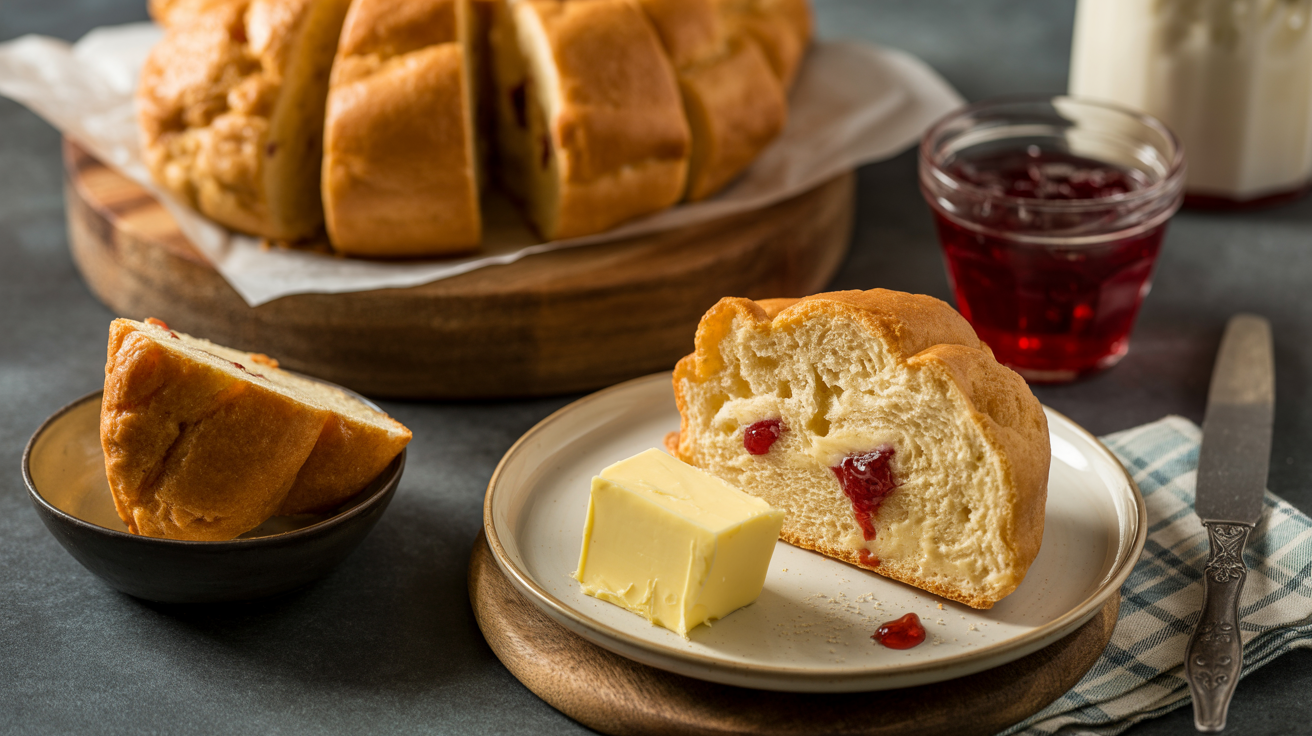
Step 6: Serve and store: Remove from the skillet, cut into wedges, and serve warm with butter and jam. Store any leftovers in an airtight container at room temperature for up to 3 days
Mixing the Dough
First, I grab my ingredients: 2 cups all-purpose flour, 1 cup oatmeal, 1 teaspoon salt, 1 teaspoon baking powder, and about 3/4 cup milk or buttermilk. No yeast, so no waiting for dough to rise—Scottish bannock recipe keeps things quick.
I whisk the dry stuff together in a big bowl, make a well, and pour in the milk.
With a wooden spoon, I mix it until it forms a shaggy dough. Overmixing? Nope, that’s how you get tough bannocks. The dough should feel soft, not sticky.
If it’s dry, I add a splash more milk. Too wet? A bit more flour. Then I turn it out onto a floured counter and knead gently for maybe 30 seconds, just until it comes together. That’s it—the Scottish bannock recipe doesn’t need fancy technique.
Shaping and Scoring
I pat the dough into a circle, about 3/4 inch thick and 8 inches across. My circles aren’t perfect, and honestly, I think rustic looks better anyway.
I score the top with a cross, cutting halfway through. This isn’t just for looks—it helps heat get to the center and makes breaking the Scottish bannock recipe into quarters easier.
If I’m feeling like smaller portions, I’ll divide the dough into mini bannocks. Works great if you’ve got a small skillet for your Scottish bannock recipe.
Cooking Methods: Skillet, Stane, or Oven
Cast Iron Skillet Method (my go-to): I heat my cast iron skillet on medium-low, grease it lightly, and cook the Scottish bannock recipe for about 15-20 minutes per side. Patience is key—keep the heat moderate so the inside cooks through without scorching the outside.
Griddle or “Stane” Method: For the traditionalists, I heat a flat griddle stone and cook the Scottish bannock recipe like the skillet version, flipping once.
Oven Method: I preheat the oven to 375°F, line a baking sheet with parchment, and bake the Scottish bannock recipe for 25-30 minutes, or until the top turns golden and it sounds hollow when tapped.
Serving Suggestions
I break my Scottish bannock recipe into quarters along those score marks. It’s best warm, especially with a bowl of soup or stew—I love using it to mop up every last bit.
For a savory bannock breakfast, I load it up with butter and maybe smoked salmon or cheese. Sweet tooth acting up? Jam or honey on a hot bannock recipe is hard to beat.
The Scottish bannock recipe also makes solid sandwich bread. I slice them horizontally and fill them with whatever leftovers I have. They’re best fresh but will keep wrapped in a towel for a day or two.

Tips, Tricks, and Troubleshooting
Honestly, the Scottish bannock recipe is forgiving, but I’ve learned a few tricks. Getting the dough just right and knowing your swaps can save you from disappointment. If your Scottish bannock recipe comes out dense, try adding a touch more liquid or mixing less. And if you want to experiment, go for it—that’s half the fun of a good Scottish bannock recipe.
Getting the Texture Right
The dough for a bannock recipe should feel soft and a bit sticky—not so wet it glues itself to your hands, but not dry either. I go for a texture that sticks together when pressed, yet still feels slightly tacky.
If my dough gets dry and crumbly, I’ll splash in buttermilk, just a teaspoon at a time. Too wet? I toss in a little flour and knead gently. You really don’t want to overwork it. Otherwise, the Scottish bannock recipe ends up tough and chewy instead of soft and tender.
When I’m cooking on the griddle, I test the heat by hovering my hand above it. If I can count to five without flinching, it’s about right. If it’s hotter, the outside burns before the inside cooks—nobody wants that. Bannocks from any Scottish bannock recipe are ready when they sound hollow after a tap and show those golden-brown spots on both sides.
No Buttermilk? No Problem!
I’ve used regular milk mixed with a tablespoon of lemon juice or vinegar for my Scottish bannock recipe. Just let it sit for five minutes until it curdles a bit—works just as well as buttermilk. Plain yogurt thinned with water does the trick too. Some folks mix unsalted butter into milk, but honestly, I think the tang from buttermilk or its stand-ins gives the Scottish bannock recipe a better texture.
The acid is key. It reacts with the baking soda, making those little air pockets that keep bannocks from turning into dense hockey pucks. A Scottish bannock recipe really needs that lift.
Make-Ahead, Storage, and Leftovers
Fresh is best, but I’ve wrapped bannocks from my bannock recipe in a clean towel and kept them at room temp for a couple days. They lose a bit of tenderness but still taste good, especially if you warm them up.
To reheat, I toss them in a dry skillet for about 30 seconds per side. Wrapping them in foil and putting them in a 300°F oven for five minutes works too. The microwave? It’s okay in a pinch, but the Scottish bannock recipe gets a little rubbery that way.
If I want to keep them longer, I freeze them with parchment between each one in a freezer bag. They’ll last about three months and thaw pretty quickly on the counter. Leftover bannocks from any Scottish bannock recipe are awesome with smoked salmon, cream cheese, or sharp cheddar. I’ve sliced them into wedges and made little sandwiches, too.
Creative Variations and Toppings
Bannock is basically a blank canvas. The Scottish bannock recipe is just the start—get creative! Whether you’re into salty, smoky, or sweet, there’s a Scottish bannock recipe variation for you.
Savory Bannocks for Brave Hearts
I like tossing chopped herbs—rosemary or thyme—right into the bannock recipe dough. Suddenly, it’s perfect with soups and stews. For toppings, I’ll slather on Scottish butter and pile on smoked salmon or other smoked fish. That combo? Magic.
Cheese lovers, you’re in luck. Grate sharp cheddar or crumble blue cheese over a hot bannock and you’ve got a winner. Sometimes, I’ll mix the herbs right into the dough before cooking the Scottish bannock recipe.
Some favorite savory add-ins for a Scottish bannock recipe:
- Fresh herbs: Rosemary, thyme, or chives mixed in
- Cheese: Sharp cheddar, blue cheese, or Scottish crowdie
- Smoked fish: Salmon, mackerel, or trout
- Savory spreads: Butter with sea salt, garlic butter, or cream cheese with chives
Savory bannocks from a bannock recipe make a fantastic side for dinner or a hearty breakfast with fried eggs. Anyone else hungry yet?
Sweet Bannocks for the Sassenach in You
My sweet tooth just won’t quit, so I toss cinnamon and chopped apples into my Scottish bannock recipe for a breakfast that always hits the spot. The warm spices fill my kitchen with an amazing aroma—honestly, it’s hard not to sneak a bite before they’re done.
I love to drizzle honey over hot bannocks, then pile on fresh berries and cream. It’s so simple, but somehow it feels like something you’d serve at a fancy brunch. I mean, why not make breakfast a little special?
Sometimes, I throw in a handful of raisins or dried cranberries for extra sweetness in my Scottish bannock recipe. If I’m feeling indulgent, I’ll sprinkle brown sugar on top before cooking, and it turns into this caramelized crust that’s just… wow.
Here are a few of my favorite sweet combos using my bannock recipe:
- Classic: Butter, honey, and fresh berries
- Decadent: Whipped cream, strawberries, and a dusting of powdered sugar
- Cozy: Cinnamon sugar butter with sliced bananas
- Traditional: Scottish marmalade or raspberry jam
Honestly, I keep this Scottish bannock recipe in my breakfast rotation because it’s quick, satisfying, and doesn’t make me mess around with yeast or long waits. Sometimes, I wonder why I ever bother with regular pancakes when a Scottish bannock recipe is just so much easier. If you haven’t tried a Scottish bannock recipe yet, you might be missing out—it’s one of those recipes that just fits into busy mornings and lazy weekends alike. And yeah, a Scottish bannock recipe is perfect for sharing, but I won’t judge if you keep them all to yourself.

Bannock vs Soda Bread
Bannock and soda bread are both traditional quick breads with simple ingredients, but they differ in texture, preparation, and overall character.
Bannock is a rustic Scottish flatbread that can be baked, pan-cooked, or griddled. It’s typically made with basic ingredients like flour, water, salt, and sometimes fat such as butter. Because it often lacks strong leavening, bannock has a denser, more compact texture. It can range from soft to slightly crisp on the outside, depending on how it’s cooked, and is often served alongside savory dishes or enjoyed with simple toppings.
Soda bread, most commonly associated with Ireland, uses baking soda as a leavening agent along with buttermilk. This creates a lighter, slightly airy crumb with a tender interior. Soda bread often has a subtle tang from the buttermilk and is typically baked in a loaf rather than cooked flat.
The key difference is density versus lightness: bannock is hearty and rustic, while soda bread is softer and more airy.
Choose bannock if you want a simple, traditional bread with a dense, satisfying bite. Opt for soda bread if you prefer a lighter texture and slightly tangy flavor.

Scottish Bannock Recipe FAQ
1. What is bannock and how is it traditionally made?
Bannock is a simple flatbread made from flour, water, and sometimes fat, cooked on a griddle or in a pan.
2. Is bannock considered bread or a type of cake?
It sits somewhere in between—denser than bread but not as sweet as cake unless sugar is added.
3. Can bannock be cooked over an open fire?
Yes, it has a long history of being cooked over open flames, especially in outdoor settings.
4. Are there sweet versions of bannock?
Yes, some versions include sugar, dried fruit, or honey for a sweeter variation.
5. What is bannock typically served with?
It’s often served with butter, jam, or alongside soups and stews.

Traditional Scottish Bannocks
Ingredients
- 2 cups oats old fashioned rolled oats
- 1 cup all-purpose flour
- 1 tsp baking soda
- ¾ tsp salt
- ¾ cup buttermilk
- cooking oil
Instructions
- Prepare the dry ingredients: Finely grind the oatmeal in a food processor or blender, then transfer it to a medium mixing bowl. Whisk in the flour, baking soda, and salt until evenly combined.

- Add the buttermilk and form the dough: Pour in the buttermilk and stir until a soft dough forms and no dry patches remain.

- Shape the dough: Turn the dough out onto a lightly floured surface. Knead it just once or twice to bring it together, then pat and shape it into a flat disc about 8 inches in diameter.

- Cook the first side: Heat a skillet over low heat and add a light coating of oil. Place the dough disc in the skillet and cook for about 10–15 minutes, or until the bottom is nicely browned.

- Cook the second side: Carefully flip the bannock and cook the other side for another 10 minutes or so, until it is browned and cooked through.

- Serve and store: Remove from the skillet, cut into wedges, and serve warm with butter and jam. Store any leftovers in an airtight container at room temperature for up to 3 days

Video


7 comments
Has anyone tried using gluten-free flour for this Bannock recipe? Curious if it affects the traditional taste or texture?
Tried it, results were disastrous. Stick to the original recipe if you value taste and texture.
Really? No mention of the impact of modern baking methods on the authenticity of Bannock? Missed opportunity!
Does anyone know if Outlander accurately portrays bannocks role in Scottish culture? Or is it a bit Hollywood?
Outlanders portrayal is Hollywood, mate. Bannocks were humble everyday food, not feast-worthy showpieces!
Interesting read! Has anyone tried substitifying blueberries in a traditional Scottish Bannock? Does it compromise the authenticity?
Anyone else thinks Selkirk Bannocks richness beats the traditional Scottish Bannocks simplicity? The dried fruits add a unique touch, dont they?
Comments are closed.