


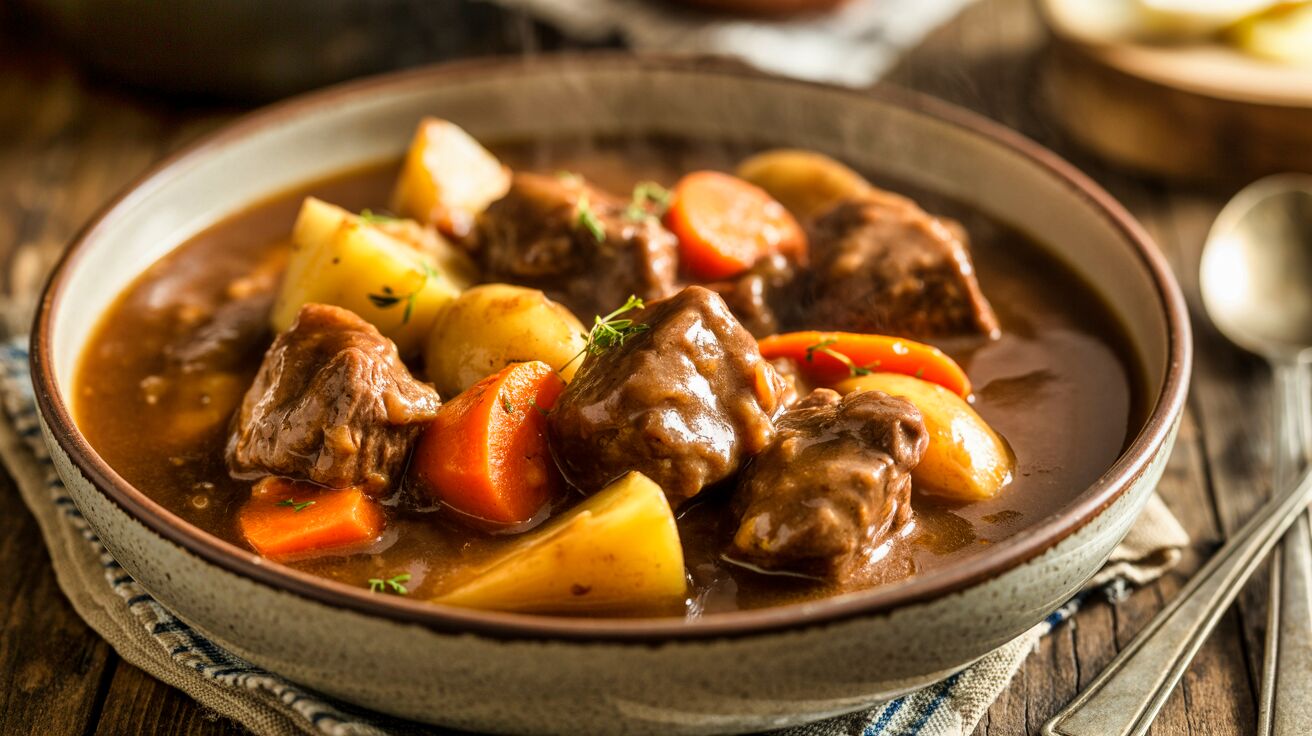
Let’s talk about a Scottish Beef Stew recipe that doesn’t just warm your bones—it might even make your kilts twirl. I’ve cooked this more times than I can count, and every batch comes out a little different, which is kind of the charm. If you’re after something hearty, rich, and deeply comforting, this is it. (And yes, I’ll sprinkle in some tips you won’t find in every Scottish Beef Stew recipe.)

Essential Ingredients and Their Tasty Roles
When I make a Scottish Beef Stew recipe, I go for ingredients that do the work: beef that gets meltingly tender, root veggies that hold their own, and liquids that build a proper, deep flavor. A little beef dripping or a glug of wine? That’s how you take it from good to unforgettable. If you’re curious about ingredient swaps, check out our winter stew guide for more ideas.
The Best Cuts of Beef: Chuck, Shin, and Stewing Steak
My go-to for a Scottish Beef Stew recipe is beef shin or chuck. Beef shin’s got all that connective tissue—let it cook low and slow, and it turns silky, adding real body to the sauce. Chuck is a bit more forgiving, with a nice mix of fat and muscle, so it stays tender but doesn’t fall apart into mush.
Stewing steak or braising beef will do if you’re in a hurry, but try to cut everything to roughly the same size so it cooks evenly. Browning the meat in beef dripping or oil is non-negotiable for me—those caramelized bits? That’s where the flavor lives.
If you’re feeling bold, toss in a marrow bone or a strip of oxtail. They melt into the sauce, making the whole Scottish Beef Stew recipe even richer.
Rooting For Vegetables: Carrots, Swede, and Other Seasonal Stars
Carrots and swede (that’s rutabaga for some of you) are musts in my Scottish Beef Stew recipe. Carrots keep their shape and add color, while swede brings a nutty, earthy vibe that’s just perfect with beef.
Onions and parsnips are regulars too, for sweetness and aroma. I’ll use whatever’s in season—sometimes turnips, celery root, or even little waxy potatoes. Just chop everything about the same size so nothing turns to mush before the rest is done.
If you want your veg to stand out, add them later. If you like things soft and melded, throw it all in early and let time do its thing.
Stock Talk: Beef Stock, Wine, and Secret Sauciness
Good beef stock is the backbone of any proper Scottish Beef Stew recipe. I usually use homemade or a strong store-bought one, and I’ll reduce it a bit for that extra punch. A splash of red wine or fortified stock brings some tang—just don’t drown it, or you’ll lose the beefy soul of the dish.
I thicken with a roux or by reducing. Sometimes I finish with a knob of butter or beef dripping for gloss and richness. Season as you go: salt the meat before browning, taste after reducing, and adjust at the end. That’s how you avoid a bland Scottish Beef Stew recipe.
If you want to get classic, toss in a bay leaf and a sprig of thyme at the start, then fish them out before serving. Herbal but not grassy—trust me.
The Dumpling Dilemma and Other Classic Sides
Fluffy dumplings on a Scottish Beef Stew recipe? Yes, please. I make them with suet or butter, drop spoonfuls on top, and steam them for about 15–20 minutes. They soak up gravy like little clouds.
Mashed potatoes, potato cakes, or skirlie potato cakes are all fair game. Mash thickens up the sauce when you eat them together, and potato cakes bring that crisp edge. If you use beef dripping in the dumplings or for frying, you get that old-school flavor that just feels right.
Sometimes I just serve crusty rolls for dunking. Simple, but nobody complains.
Step-By-Step Cooking: Bringing Your Stew to Life
The Traditional Recipe

Step 1: Preheat the oven and prepare the pan: Preheat your oven to325°F. Set a large, ovenproof pan or Dutch oven on the stove and have it ready for browning the meat.

Step 2: Brown the beef: Heat2 tablespoons vegetable oil in the pan over medium-high heat. Toss 2.2 pounds Aberdeen Angus braising/stewing beef chunks in 2 tablespoons all-purpose flour until lightly coated. Add the beef in batches and cook for 7–8 minutes, turning often, until browned on all sides.

Step 3: Cook the onions and garlic: Add 2 large onions (sliced or chopped) to the browned beef. Cook for about 5 minutes, stirring occasionally, until the onions soften. Stir in 3 cloves garlic, finely chopped, and cook for about 1 minute more.

Step 4: Add red currant jelly and red wine: Stir in2 tablespoons red currant jelly until it melts and coats the meat and onions. Pour in2 cups plus 1 tablespoon red wine. Bring to a gentle simmer and cook for 5 minutes to start reducing the liquid.

Step 5: Add vegetables and liquids: Add 2 large carrots (chunked), 2 medium potatoes (chunked), and1/2 small swede/rutabaga (peeled and diced). Pour in3 cups minus 1 tablespoon beef stock. Stir in2 tablespoons tomato puree, 1 tablespoon Worcestershire sauce, 4 bay leaves, 2 teaspoons dark brown sugar, 3/4 teaspoon salt, and 3/4 teaspoon crushed black pepper. Mix everything well so the ingredients are evenly distributed.

Step 6: Bring to a boil and transfer to the oven: Bring the mixture up to a gentle boil on the stove. Once it is just bubbling, cover the pan with a lid and place it in the preheated oven. Cook for 3–4 hours, stirring a couple of times during cooking and adding a little extra stock if it starts to look too dry.

Step 7: Slow cooker option (instead of oven): If you prefer, transfer everything to a slow cooker instead of using the oven. Cook onhigh for 5–6 hours or onlow for 7–8 hours, until the beef is very tender and the vegetables are soft.

Step 8: Finish and adjust seasoning: When the cooking time is up, the beef should be very tender and the sauce should be thick and rich. Remove and discard the4 bay leaves. Taste the stew and add a little more salt or pepper if needed.

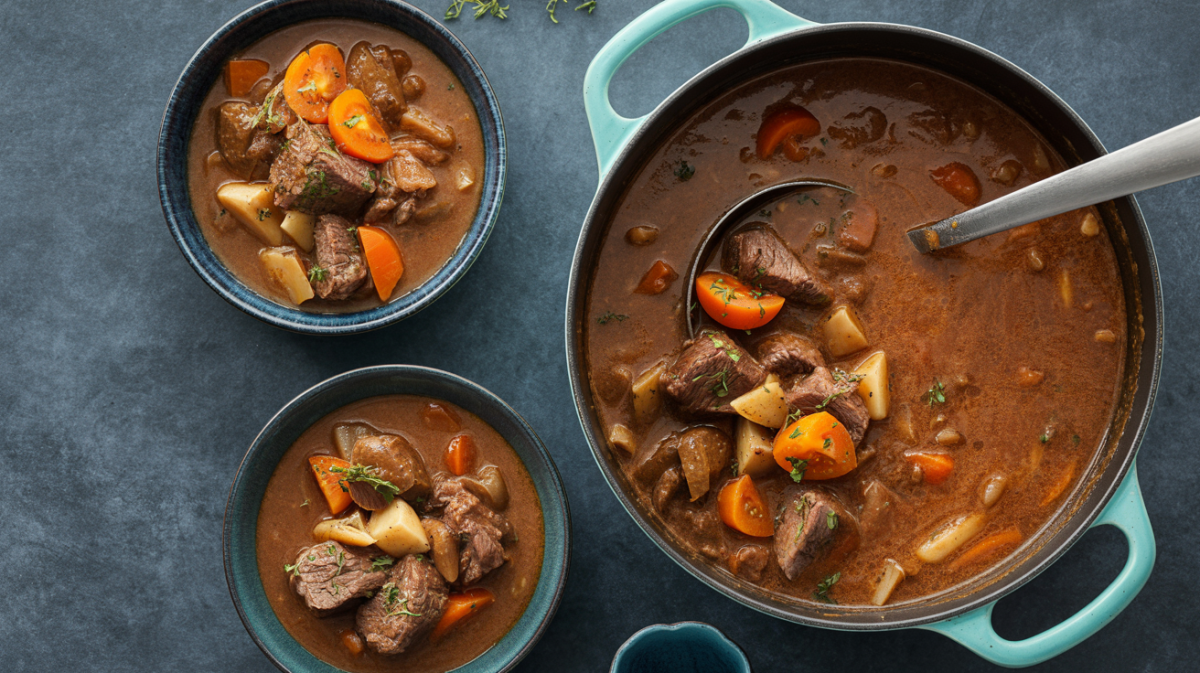
Step 9: Serve: Ladle the hot stew into bowls. Top each serving withfresh thyme sprigs and serve with chunks offresh bread on the side.
How to Brown and Braise Like a Pro
I dry off the beef, season it with salt and pepper, and get a heavy pot screaming hot. In goes a spoon of beef dripping, then I brown the meat in batches. Don’t crowd the pan—otherwise, you’ll just steam it.
Once the beef is browned, I take it out and soften onions and carrots in the same pot. I scrape up all those brown bits (fond!) with a wooden spoon. Then beef goes back in, along with a splash of stock and maybe a bit of red wine. Bring it to a simmer, cover, and either pop it in the oven or slow cooker.
Mastering the Slow Cook—Oven vs. Slow Cooker
For oven cooking, I go low and slow—about 150–160°C (300–325°F) for 2.5–3.5 hours. Oven braising gives you a glossy gravy and those caramelized edges. Pop the pot on the middle rack and let time do its thing.
If I’m out and about, I use a slow cooker. I move the browned meat and veg over, pour in enough stock to just cover, and set it to Low for 7–8 hours. The slow cooker makes everything silky, but the sauce won’t brown as much. If it’s a bit watery at the end, I take the lid off and crank it to High for 30–45 minutes to reduce.
Thickening and Balancing Flavors
For a thicker sauce in my Scottish Beef Stew recipe, I go for a roux or beurre manié. Melt equal parts butter and flour, cook it for a minute, then whisk it into the stew. Or, knead cold butter and flour, then drop in little pieces and whisk until it thickens.
I taste and tweak at the end. If it’s flat, I’ll add a splash of vinegar, a bit of Worcestershire, or a squeeze of lemon. For sweetness, maybe a grated carrot or a tiny bit of brown sugar. Salt gets fixed last so I don’t overdo it while things reduce.
Timing for Perfectly Tender Beef
I trust a fork more than a timer. Beef shin should pull apart easily. In the oven at 150–160°C, 2–3 cm cubes need about 2.5–3.5 hours. In a slow cooker on Low, plan for 7–8 hours.
If the meat’s still tough, I just keep going and check every half hour. If veggies are getting mushy, I add them in the last hour or so. Parsnips, turnips, and potatoes hold up; peas or greens go in at the end.

Serving Traditions and Creative Twists
When I serve this Scottish Beef Stew recipe, I keep it relaxed. Hearty sides, clever leftover tricks, and little tweaks by season or mood keep things interesting. If you’re after more Scottish classics, see our Scottish recipes collection.
Mash It, Cake It, or Bread It: The Best Accompaniments
Most days, I serve my Scottish Beef Stew recipe with mashed potatoes. They soak up gravy and mellow out the richness. Figure about a pound of potatoes for every two people, mash with butter and a splash of milk—don’t overthink it.
For texture, I fry up Skirlie potato cakes or regular potato cakes. Crispy edges, a bit of oatmeal for nuttiness—they’re a nice change. Just pan-fry for a few minutes per side until golden.
Sometimes, I just rip up some oat or soda bread. It’s rustic and perfect for mopping up every last bit. Plus, bread stretches the meal when you’ve got extra mouths to feed. For more on traditional breads, check out this roundup of Scottish breads.
- Mashed potatoes: creamy, buttery, ready for gravy.
- Skirlie/potato cakes: crisp, nutty, good contrast.
- Oat or soda bread: hearty, soakable, budget-friendly.
Leftovers: Stew, Pie, or Stovies?
The day after making a Scottish Beef Stew recipe? It’s even better. I reheat it gently so the beef doesn’t toughen up.
If I want to switch things up, I’ll spoon leftover stew into a pie dish, top with pastry or mash, and bake at 200°C (400°F) until golden. Suddenly, it’s comfort food with a little flair.
Or I’ll make stovies—just dice up some potatoes, mix with leftover stew, and bake or fry until the potatoes crisp up. Stovies are pure Scottish comfort and perfect for a filling lunch. For more ideas on using leftovers, see our leftover beef recipes page.
So there you have it—a Scottish Beef Stew recipe that’s flexible, forgiving, and always satisfying. Honestly, it’s hard to mess up, and there’s something satisfying about making a big pot that gets better each day. If you want even more tips, check out BBC Good Food’s Scottish beef stew or our ultimate stew tips for more inspiration. Happy cooking—and don’t forget to enjoy the leftovers.
Tuning Up with Seasonal and Regional Variations
I like to swap out herbs and extras in my Scottish Beef Stew recipe depending on the season. When it’s cold, a splash of ale or a bay leaf makes things cozy. Once spring rolls around, I’ll toss in fresh thyme and a handful of chopped leeks to lighten it up a bit.
Region matters, too. If I’m channeling the Highlands, I’ll throw in barley for a bit of chew—it’s classic in any Scottish Beef Stew recipe. Down in the Lowlands, I lean on root veggies like turnips or swede instead. Sometimes, I even sneak in a bit of smoked bacon or just a drop of liquid smoke for that subtle, campfire note. You can check out some regional ingredient ideas over at Scotland.org’s recipe page or see how others riff on the Scottish Beef Stew recipe on our Scottish recipes blog.
Some flavor tweaks I keep coming back to for my Scottish Beef Stew recipe:
- Ale or stout: makes the gravy richer, with a hint of bitterness that works well.
- Barley: gives the stew more bite and body—seriously, don’t skip it if you want that traditional Scottish Beef Stew recipe texture.
- Smoked bacon: adds a gentle smokiness, but doesn’t drown out the beef.
- Fresh herbs: I always add them right at the end for a pop of brightness, especially in any Scottish Beef Stew recipe.
Honestly, it’s fun to experiment. The Scottish Beef Stew recipe is forgiving, so don’t stress if you want to toss in something new. If you’re looking for more inspiration, check out our classic Scottish dishes page or browse BBC Good Food’s take on the Scottish Beef Stew recipe.

Scottish Beef Stew vs Irish Stew
Scottish beef stew and Irish stew are both classic comfort dishes, but they differ in protein choice and flavor profile. Scottish beef stew typically features chunks of beef slow-cooked with root vegetables such as carrots, potatoes, and onions. The broth is rich and savory, often developed over a long cooking time, resulting in deep, comforting flavors. It is a hearty dish well-suited for cold weather.
Irish stew, traditionally made with lamb, has a slightly lighter and more delicate flavor. It often uses fewer seasonings, allowing the natural taste of the lamb and vegetables to stand out. The broth is usually simpler and less heavily seasoned than its Scottish counterpart. The key difference is protein and intensity: Scottish stew uses beef and tends to be richer, while Irish stew uses lamb and is often lighter in flavor.
Choose Scottish beef stew if you want a deep, hearty dish with bold flavor. Opt for Irish stew if you prefer a simpler, more traditional preparation with a lighter taste.

Scottish Beef Stew Recipe FAQ
1. What makes Scottish beef stew different from other stews?
It often uses simple ingredients and slow cooking to develop deep flavor without relying on heavy seasoning.
2. Why is slow cooking important for beef stew?
It allows tougher cuts of beef to become tender while building a rich broth.
3. What vegetables are commonly included in Scottish beef stew?
Carrots, onions, and potatoes are traditional choices.
4. How do you achieve a thick stew consistency?
The stew thickens naturally as it cooks, but some recipes use flour or mashed vegetables for extra body.
5. What is the best way to serve beef stew?
It’s usually served hot with bread or on its own as a complete meal.

Scottish Beef Stew
Ingredients
- 2 tbsp vegetable oil
- 2.5 lbs beef cut into 2 inch cubes
- 2 tbsp flour All-Purpose
- 2 onions large peeled and chopped
- 3 cloves garlic peeled and crushed
- 2 tbsp jelly red currant or cranberry sauce
- 2 cups red wine
- 2 carrots large peeled and chopped
- 2 potatoes medium peeled and chopped
- 3 cups beef stock
- 2 tbsp tomato puree past
- 1 tbsp Worcestershire sauce
- 4 bay leaves
- 2 tsp sugar dark brown
- ¾ tsp salt
- ¾ tsp black pepper crushed
Instructions
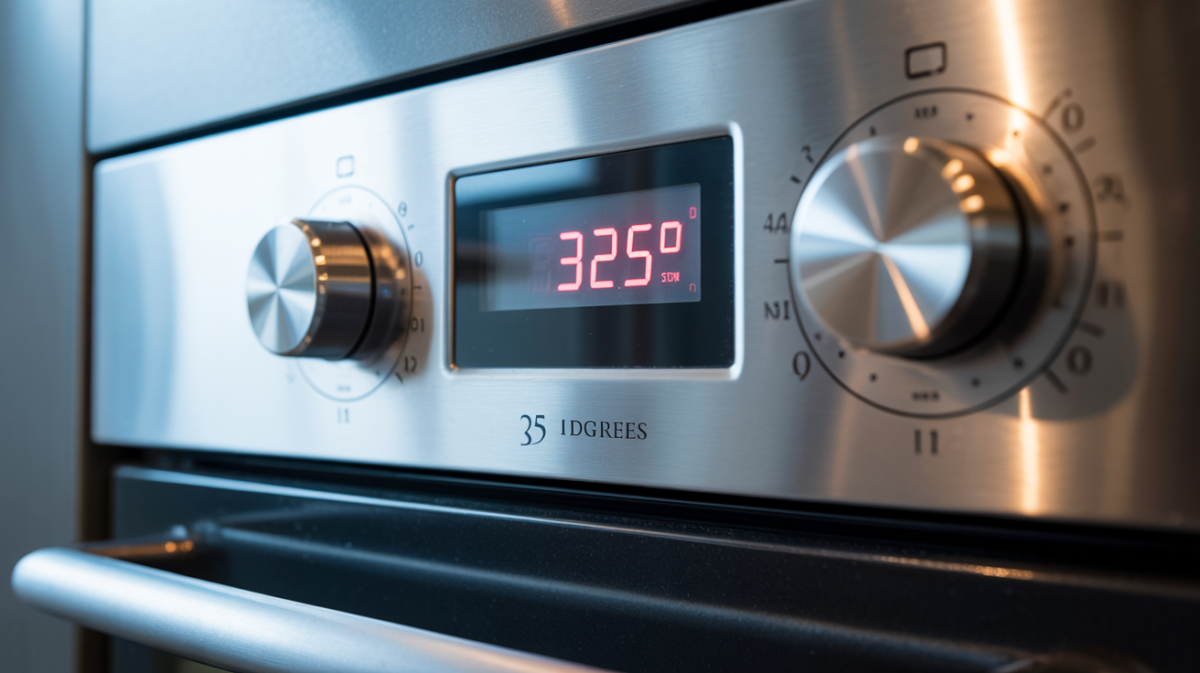
- Preheat the oven and prepare the pan: Preheat your oven to325°F. Set a large, ovenproof pan or Dutch oven on the stove and have it ready for browning the meat.
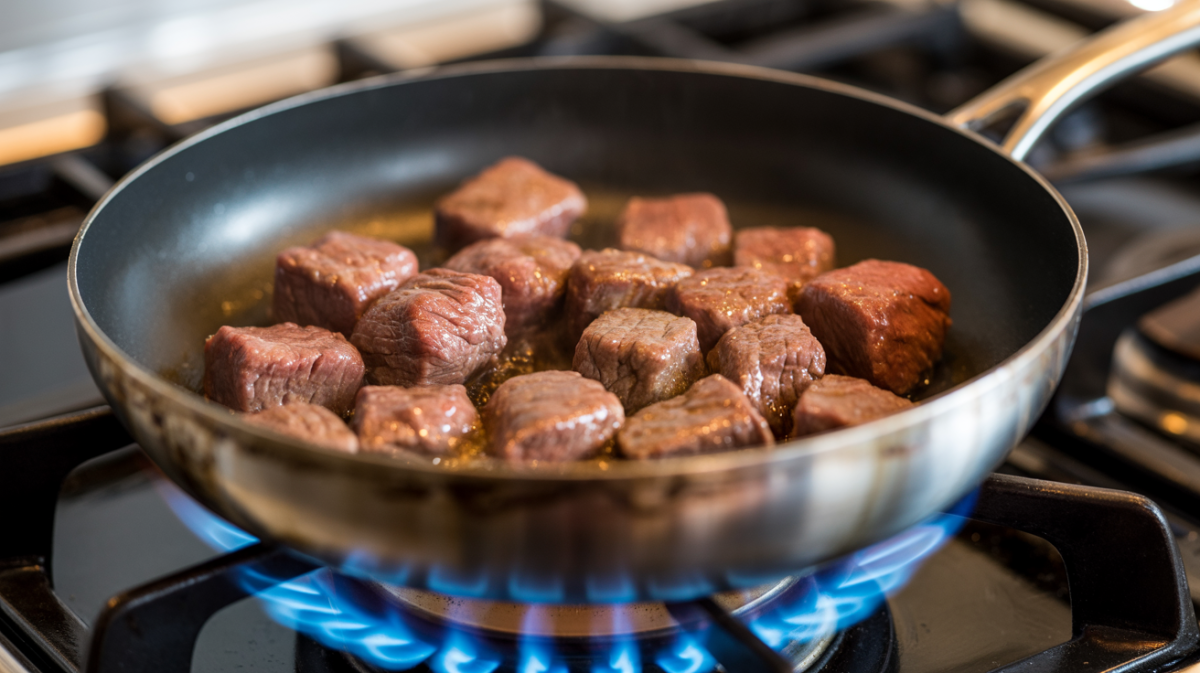
- Brown the beef: Heat2 tablespoons vegetable oil in the pan over medium-high heat. Toss 2.2 pounds Aberdeen Angus braising/stewing beef chunks in 2 tablespoons all-purpose flour until lightly coated. Add the beef in batches and cook for 7–8 minutes, turning often, until browned on all sides.
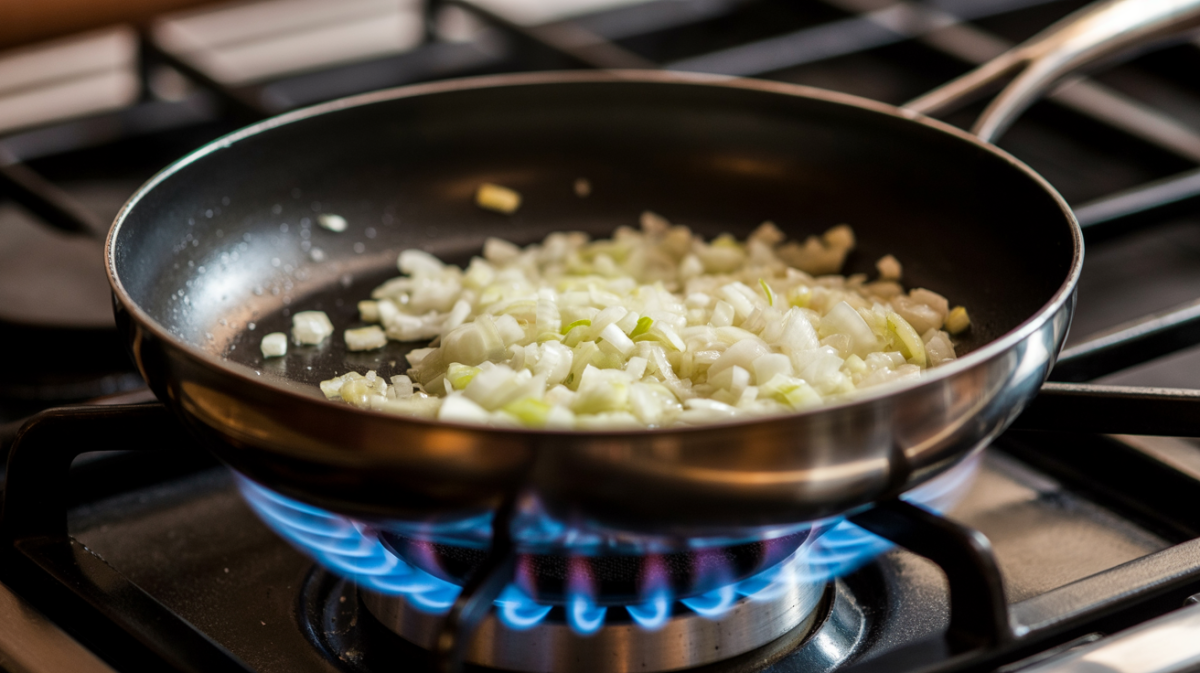
- Cook the onions and garlic: Add 2 large onions (sliced or chopped) to the browned beef. Cook for about 5 minutes, stirring occasionally, until the onions soften. Stir in 3 cloves garlic, finely chopped, and cook for about 1 minute more.
- Add red currant jelly and red wine: Stir in2 tablespoons red currant jelly until it melts and coats the meat and onions. Pour in2 cups plus 1 tablespoon red wine. Bring to a gentle simmer and cook for 5 minutes to start reducing the liquid.
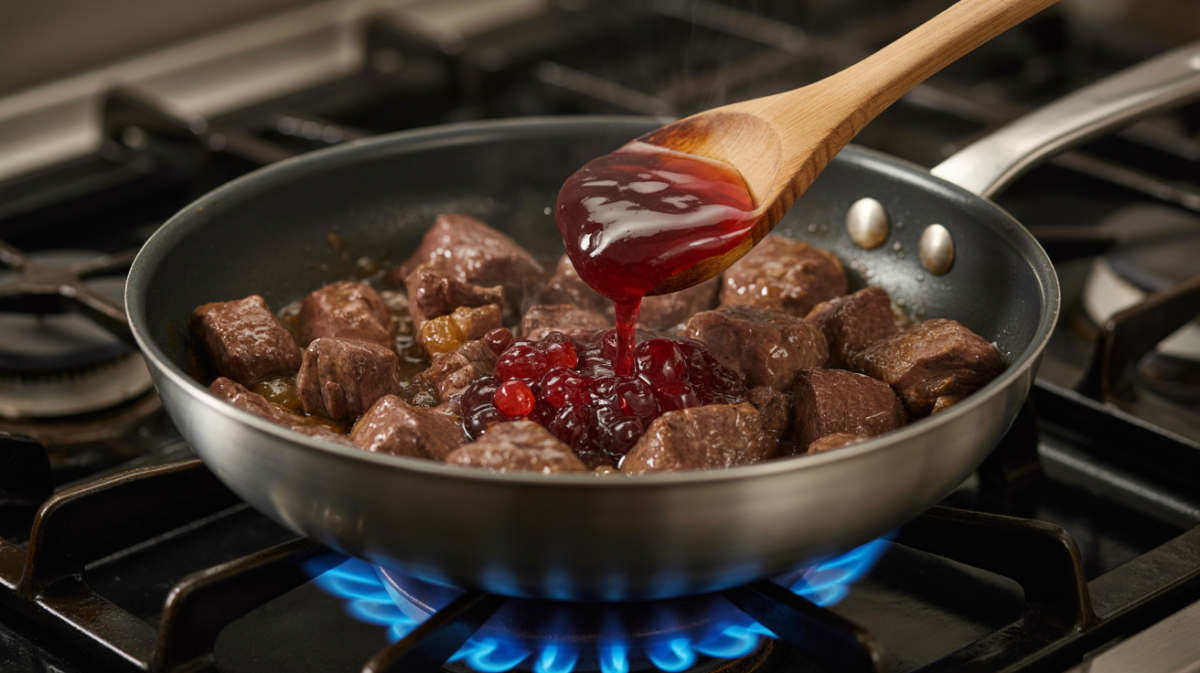
- Add vegetables and liquids: Add 2 large carrots (chunked), 2 medium potatoes (chunked), and1/2 small swede/rutabaga (peeled and diced). Pour in3 cups minus 1 tablespoon beef stock. Stir in2 tablespoons tomato puree, 1 tablespoon Worcestershire sauce, 4 bay leaves, 2 teaspoons dark brown sugar, 3/4 teaspoon salt, and 3/4 teaspoon crushed black pepper. Mix everything well so the ingredients are evenly distributed.
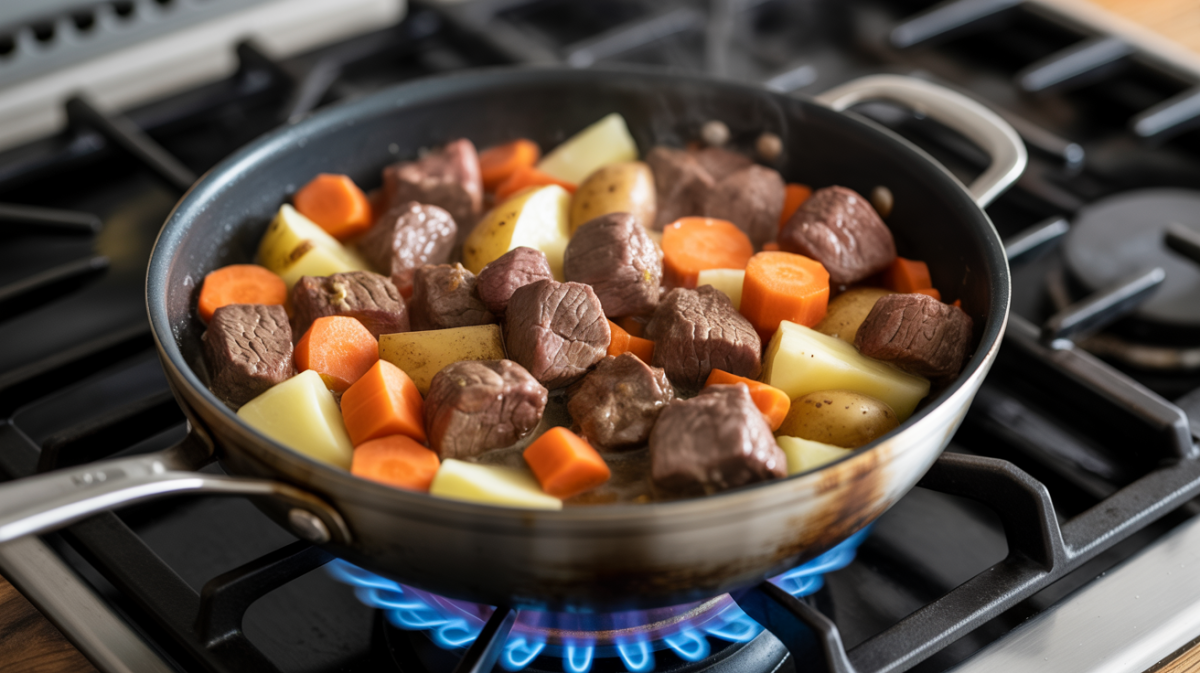
- Bring to a boil and transfer to the oven: Bring the mixture up to a gentle boil on the stove. Once it is just bubbling, cover the pan with a lid and place it in the preheated oven. Cook for 3–4 hours, stirring a couple of times during cooking and adding a little extra stock if it starts to look too dry.

- Slow cooker option (instead of oven): If you prefer, transfer everything to a slow cooker instead of using the oven. Cook onhigh for 5–6 hours or onlow for 7–8 hours, until the beef is very tender and the vegetables are soft.
- Finish and adjust seasoning: When the cooking time is up, the beef should be very tender and the sauce should be thick and rich. Remove and discard the4 bay leaves. Taste the stew and add a little more salt or pepper if needed.

- Serve: Ladle the hot stew into bowls. Top each serving withfresh thyme sprigs and serve with chunks offresh bread on the side.
Video


11 comments
Hey folks, anyone tried swapping wine with beer in this stew recipe? Bet itd add a unique, robust flavor, right?
Is it sacrilege to consider chicken stock instead of beef? It could add an interesting twist to this hearty Scottish classic!
Not sacrilege at all! Sometimes, a twist on the classic can create a new masterpiece.
Anyone else wonder if swapping red wine for a dark beer might give this Scottish stew an interesting twist?
Definitely worth a shot, but remember, messing with a classic can be risky business!
Anyone else reckon shin is underrated? It adds such a depth of flavour to a stew, doesnt get enough credit!
Absolutely! Shin meats richness is a secret weapon in a stew. Totally underrated!
Anyone got a vegetarian alternative? Love the sound of this hearty stew, but trying to cut down on the beef!
Try swapping the beef for hearty mushrooms, they make a great meat substitute!
Anyone tried swapping wine with beer in this stew? Think it could add an earthier depth to the flavors?
Beer in stew? Thats sacrilege! Wine imparts a depth that beer just cant match.
Comments are closed.