

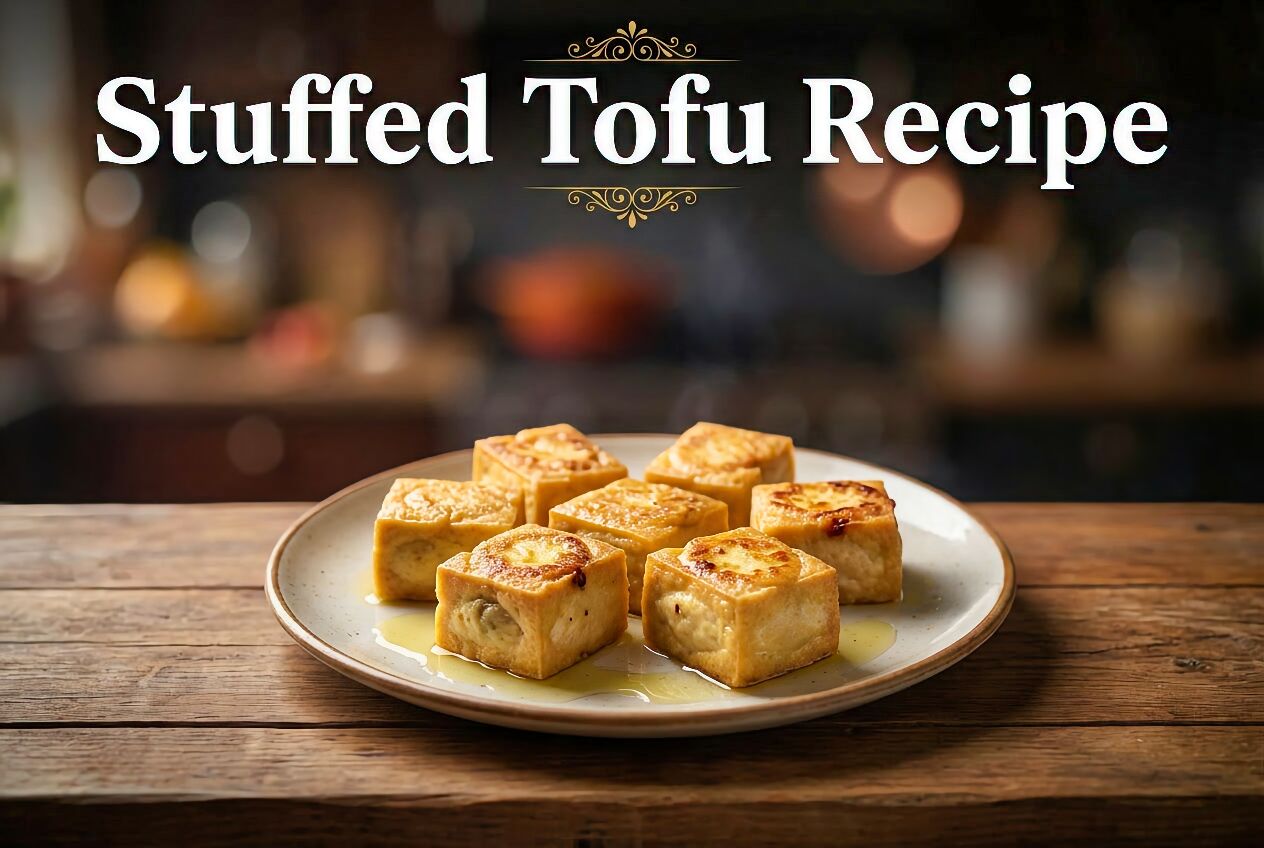
the Burmese deep-fried stuffed tofu recipe really flips the script on what most people expect from tofu. Instead of the usual soy, this Burmese version uses chickpea flour, which makes the tofu lighter and crispier once you fry it up. You cut the tofu puffs to make a hollow center, then pack them with a mix of veggies, herbs, and seasonings before frying until they’re golden and crunchy.
I stumbled onto this stuffed tofu recipe on a trip through Myanmar and honestly, I was hooked by how clever it is. The chickpea flour base makes it naturally soy-free, so even folks with soy allergies can dive in. That’s a pretty big plus for anyone looking for a new stuffed tofu recipe to try at home.
Let’s dig into what makes this stuffed tofu stand out and how you can whip it up yourself. You’ll get the lowdown on must-have ingredients, how to make those hollow centers just right, and a bunch of filling ideas to switch things up. If you’re after a new stuffed tofu recipe to impress your friends, this is a solid pick.
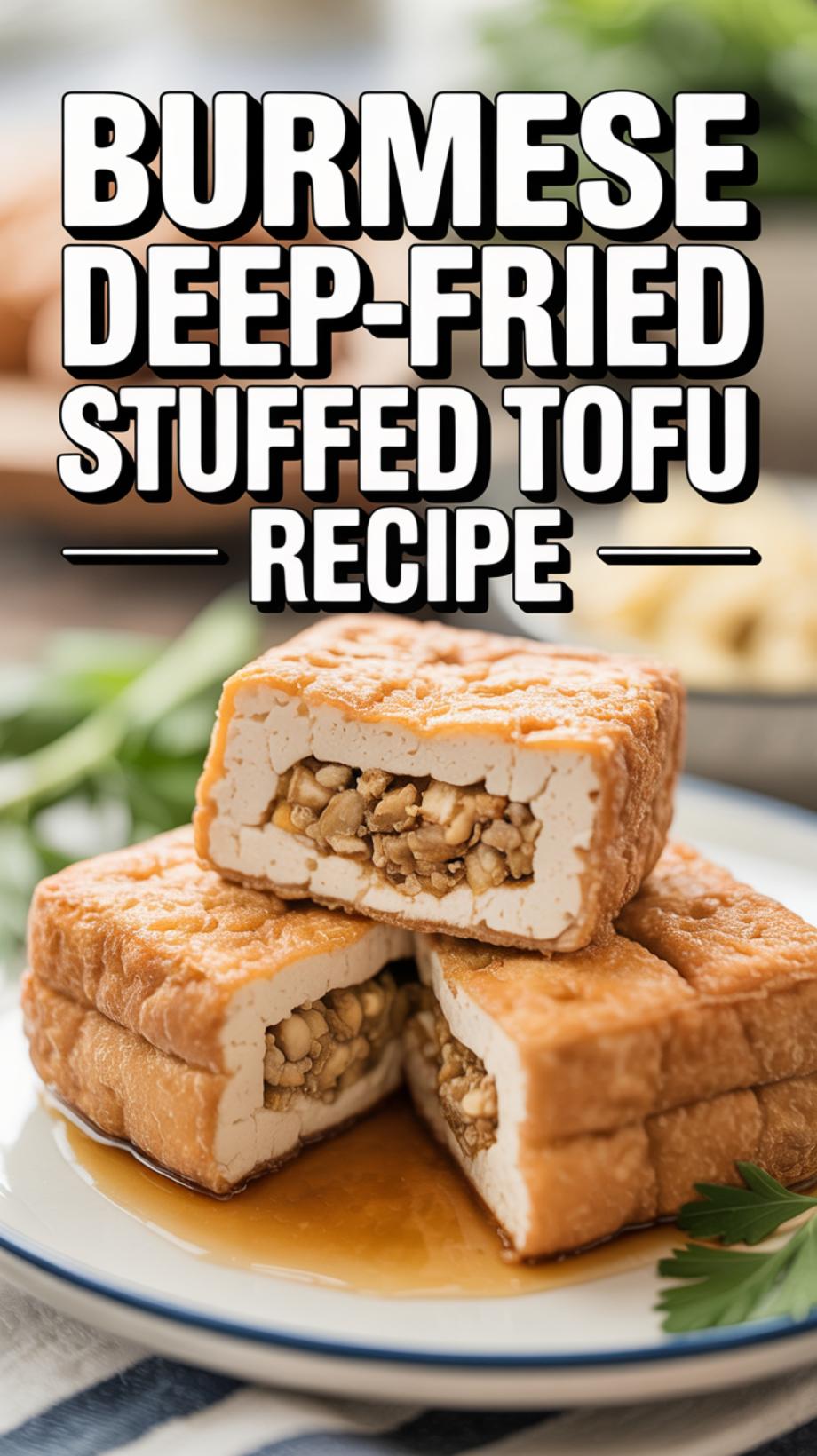
What Is Burmese Deep-Fried Stuffed Tofu?
This street food dish from Myanmar brings you golden-fried tofu loaded with savory fillings, giving you a crispy shell and a soft, tasty interior. Burmese tofu gets made from chickpea flour instead of soybeans, so you get a different taste and feel. That’s a big part of why this stuffed tofu recipe is so memorable.
Origins and Cultural Significance
Burmese deep-fried stuffed tofu comes out of Myanmar’s Shan State, where people have been making chickpea tofu for ages. You’ll see this stuffed tofu recipe everywhere—restaurants, street stalls, you name it. I’ve noticed Burmese tofu recipes really lean into plant-based creativity, and this one’s a perfect example.
The stuffed tofu recipe takes regular Burmese tofu and cranks it up a notch. Cooks slice the tofu, stuff it with veggies or meat, and fry it until it’s super crispy. It turns simple chickpea tofu into a snack, appetizer, or even a main dish if you want.
Burmese Tofu vs. Soy Tofu
Burmese tofu and classic soy tofu are pretty different:
| Feature | Burmese Tofu | Soy Tofu |
|---|---|---|
| Main ingredient | Chickpea flour | Soybeans |
| Texture | Lighter, softer | Denser, firmer |
| Flavor | Nutty, earthy | Mild, neutral |
| Preparation | Cooked mixture sets | Coagulated soy milk |
To make chickpea tofu, I cook chickpea flour with water and turmeric until it thickens, then let it set. Regular tofu means soaking, grinding, and coagulating soybeans, which is a whole process. Chickpea tofu sets faster and doesn’t need fancy tools, making it super handy for a stuffed tofu recipe.
Essential Ingredients and Preparation
This stuffed tofu recipe leans on chickpea flour-based tofu, so you get a lighter bite that holds up perfectly when fried and filled. The filling uses crisp veggies and bold flavors, while dressings like tamarind juice and fish sauce bring in that classic tangy-salty balance. If you haven’t tried this stuffed tofu recipe yet, you’re missing out.
Types of Tofu Used
I always reach for chickpea flour tofu in this stuffed tofu recipe because the texture is just unbeatable. Burmese-style tofu, or Shan tofu, is lighter and softer than firm soy tofu. That delicate consistency is key for a great stuffed tofu recipe.
For chickpea tofu, I blend chickpea flour with water, cook it till it thickens, and pour it into a mold to set. It comes out as a golden block, ready to cut into triangles for frying. That’s the base for any solid stuffed tofu recipe, if you ask me.
Some folks use regular firm tofu or tofu puffs for their stuffed tofu recipe, and that works in a pinch. Tofu puffs are pre-fried soy tofu with a spongy inside, which takes to stuffing pretty well. But honestly, the best stuffed tofu recipe always sticks with chickpea tofu for that unique flavor and feel.
Filling Components and Flavorings
The filling in this stuffed tofu recipe starts with finely shredded white cabbage. I toss in shredded green papaya for a crunchy, slightly tart kick. Those two make the base for most stuffed tofu recipes I’ve seen in Myanmar.
Key filling ingredients include:
- White cabbage (finely shredded)
- Green papaya (julienned)
- Crispy fried onions
- Fresh cilantro (chopped)
I’ll add roasted chickpea powder for extra nuttiness and body. If I want a non-veg stuffed tofu recipe, a little dried shrimp floss gives it a salty punch. For vegetarians, nutritional yeast works as a solid stand-in for that savory flavor in any stuffed tofu recipe.
White pepper gives gentle heat, but I keep it light so the tangy dressing takes center stage. I always want the flavors in my stuffed tofu recipe to balance out—not fight each other. That’s what makes this stuffed tofu recipe so craveable.
Key Sauces and Seasonings
The dressing is where this stuffed tofu really pops. I whisk together tamarind juice for that signature sourness. If you love a stuffed tofu recipe with bold flavors, don’t skip this step.
Essential dressing components:
- Tamarind juice (for sourness)
- Fish sauce (for saltiness and umami)
- Fresh lime juice (for brightness)
- Palm sugar (to balance acidity)
If you want a vegetarian stuffed tofu, swap fish sauce for soy sauce and you’re good. I taste and adjust the dressing until I get the right mix of sour, salty, and sweet. That’s the secret to a stuffed tofu recipe people remember.
Lime juice wakes up the whole dish right before serving. I keep some chili oil handy for anyone who wants extra heat on their stuffed tofu recipe. It’s all about customizing your stuffed tofu recipe to your own taste.

Step-by-Step Burmese Deep-Fried Stuffed Tofu Recipe
The Filling
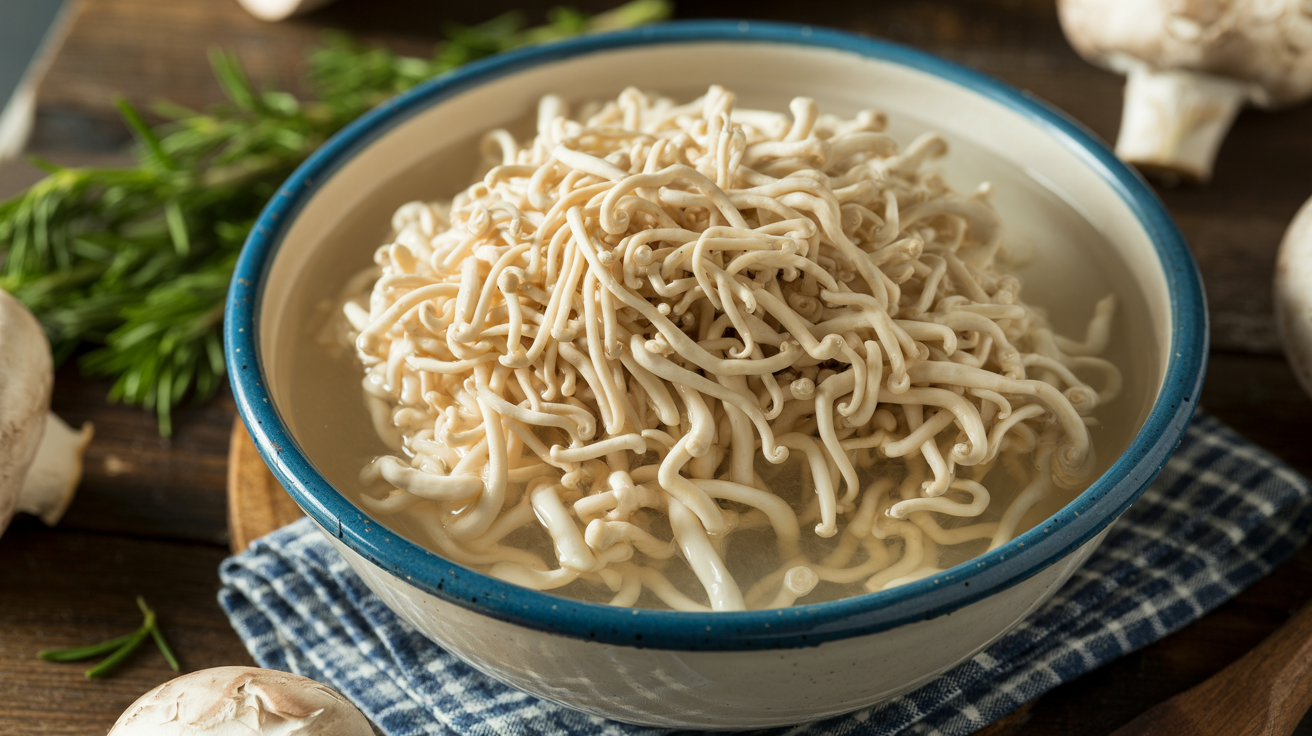
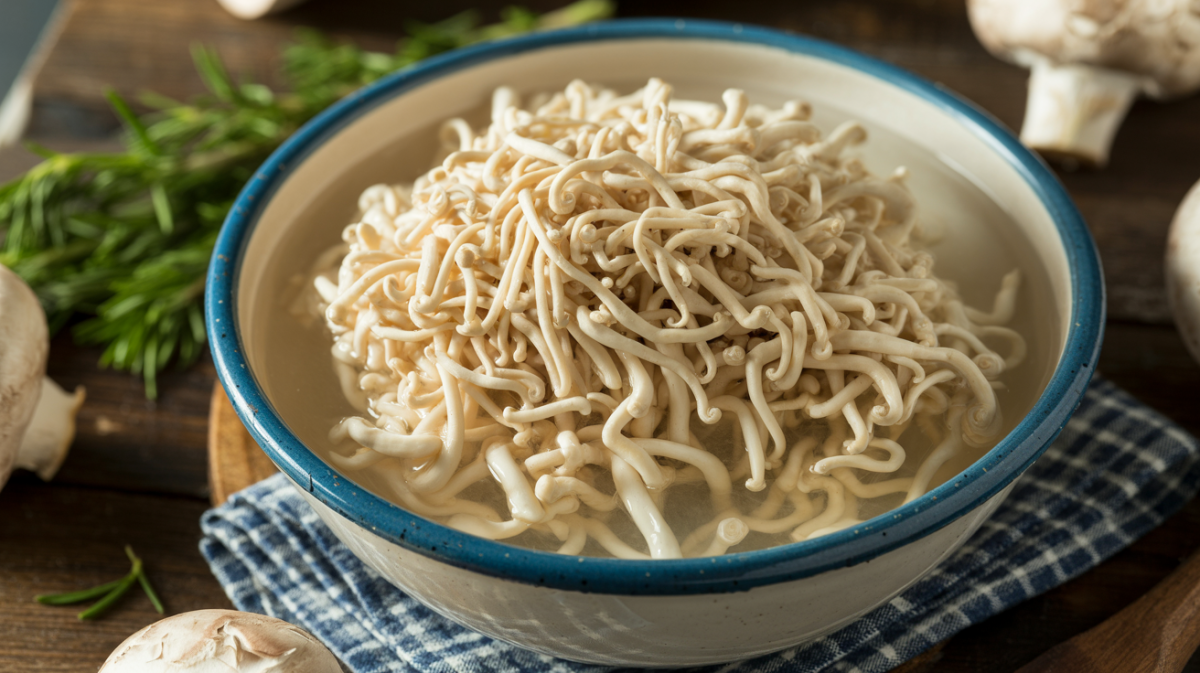
Step 1: Soak and mince the mushroom: Place the shiitake mushroom in a bowl and cover it with warm water. Let it soak for 15–20 minutes, or until it is tender all the way through. Remove the mushroom, discard the stem, and finely mince the cap. Transfer the minced mushroom to a medium-sized mixing bowl.
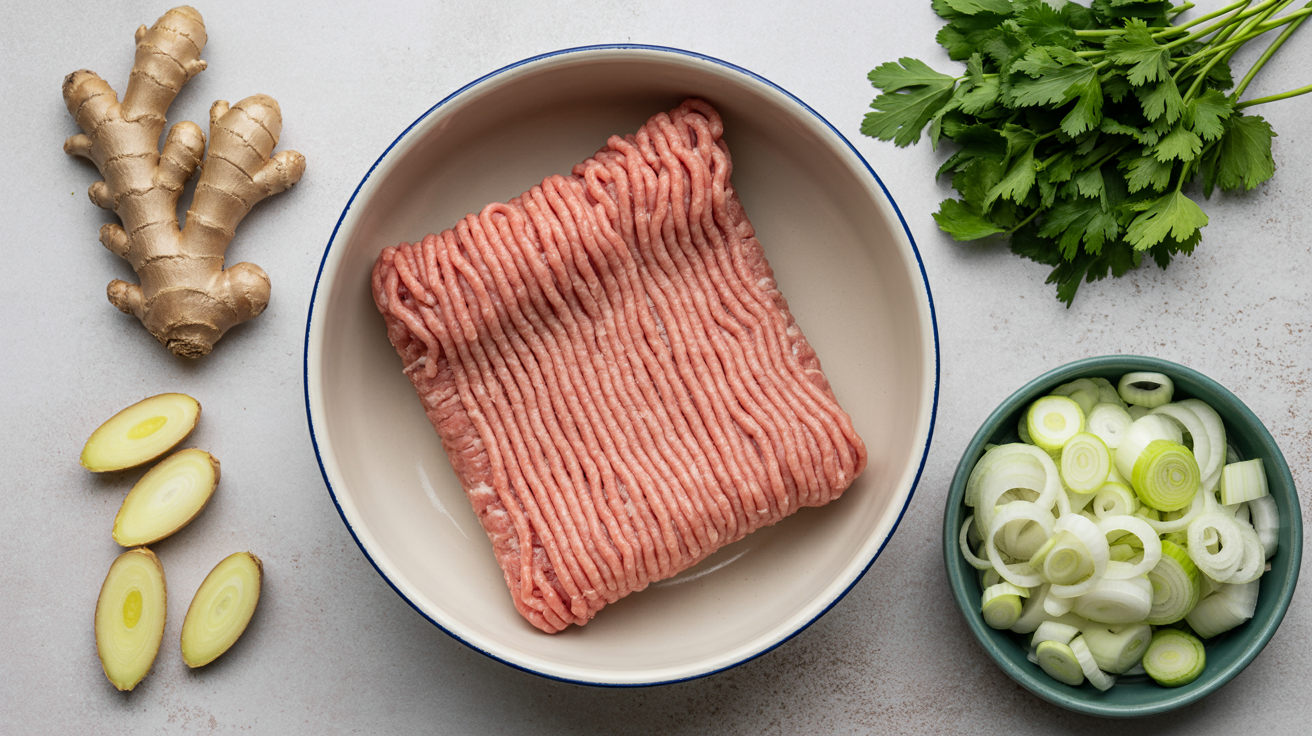
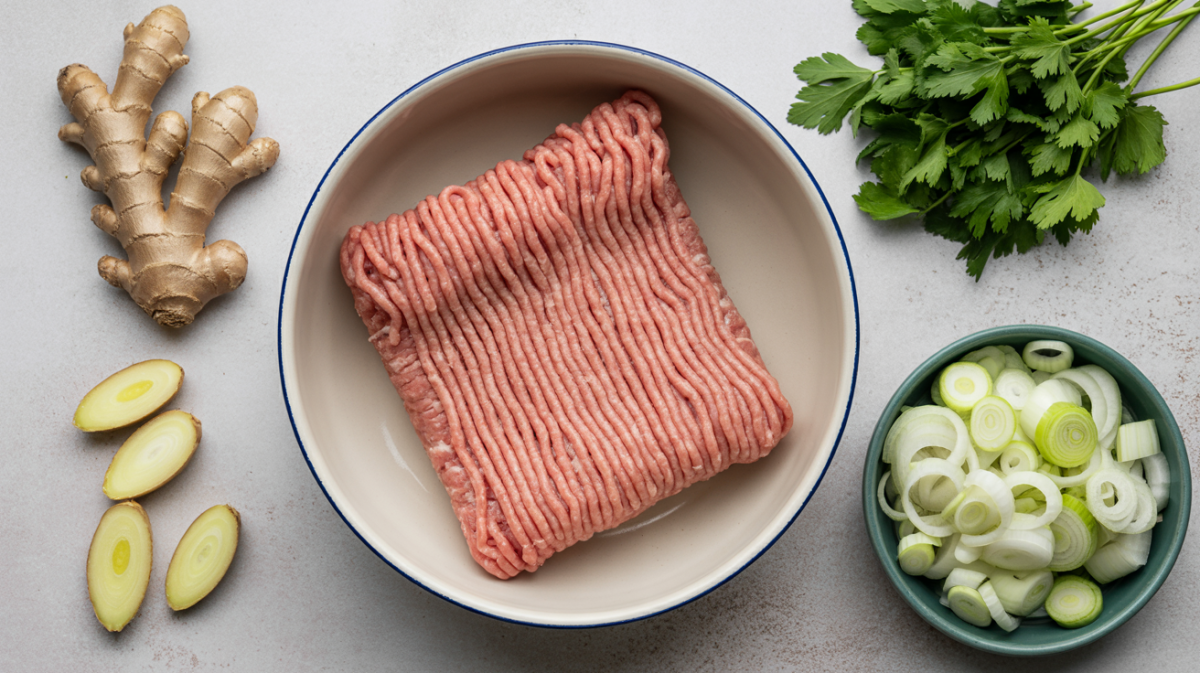
Step 2: Mix the filling: Add the ground pork, ginger, scallion, soy sauce, and cornstarch to the bowl with the minced mushroom. Using your hand or chopsticks, mix everything together in a circular motion until the mixture becomes sticky and cohesive. Set aside while you prepare the tofu.
The Sauce
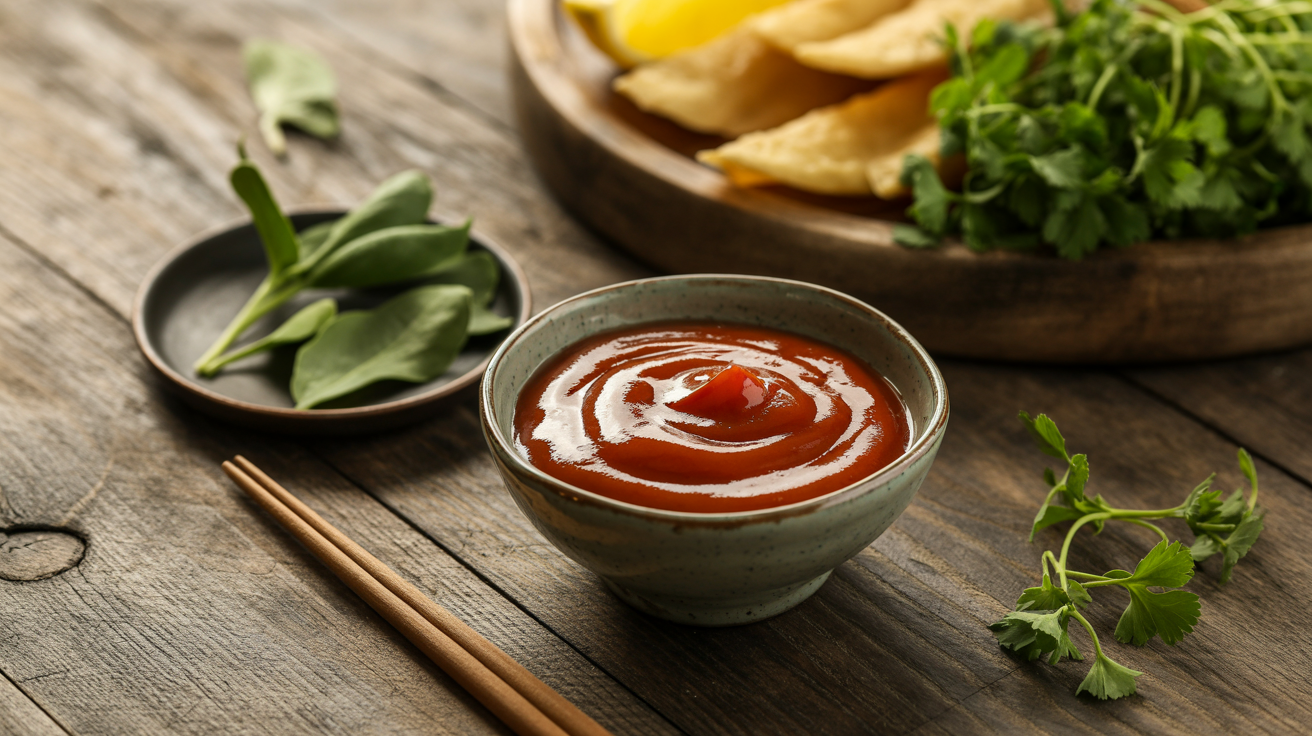
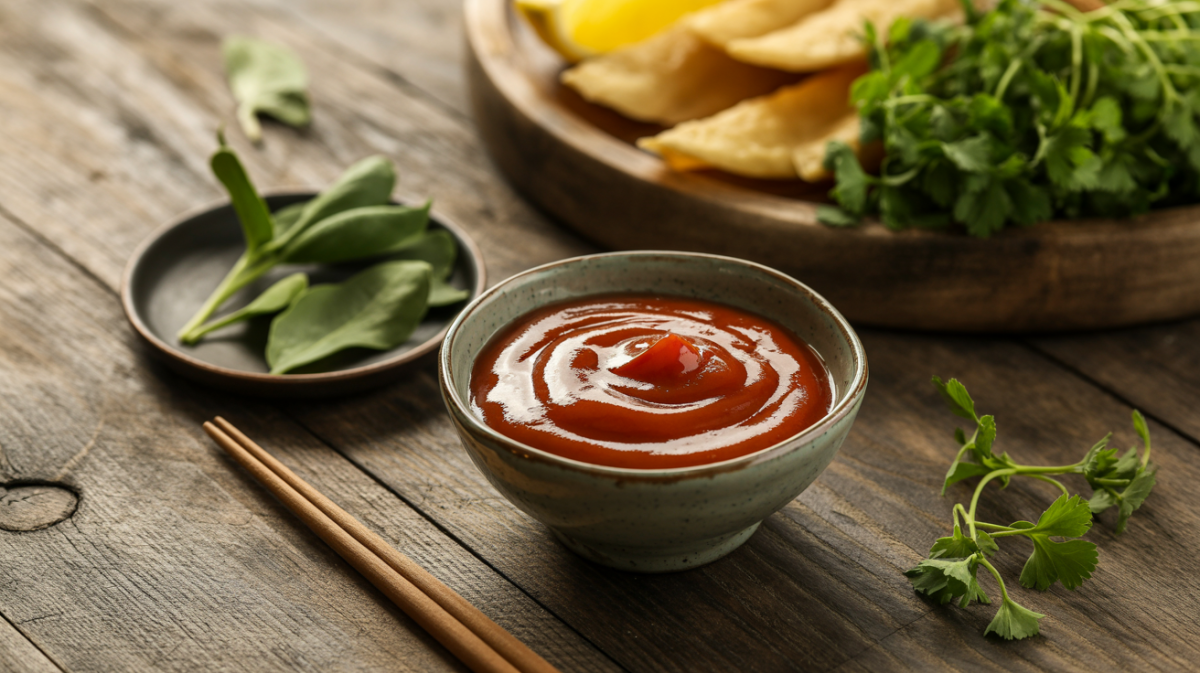
Step 1: Prepare the sauce: In a small bowl, combine all of the sauce ingredients. Stir well until everything is evenly mixed. Set the bowl aside and give it another stir just before adding it to the pan so the cornstarch is fully dissolved.
For the Tofu
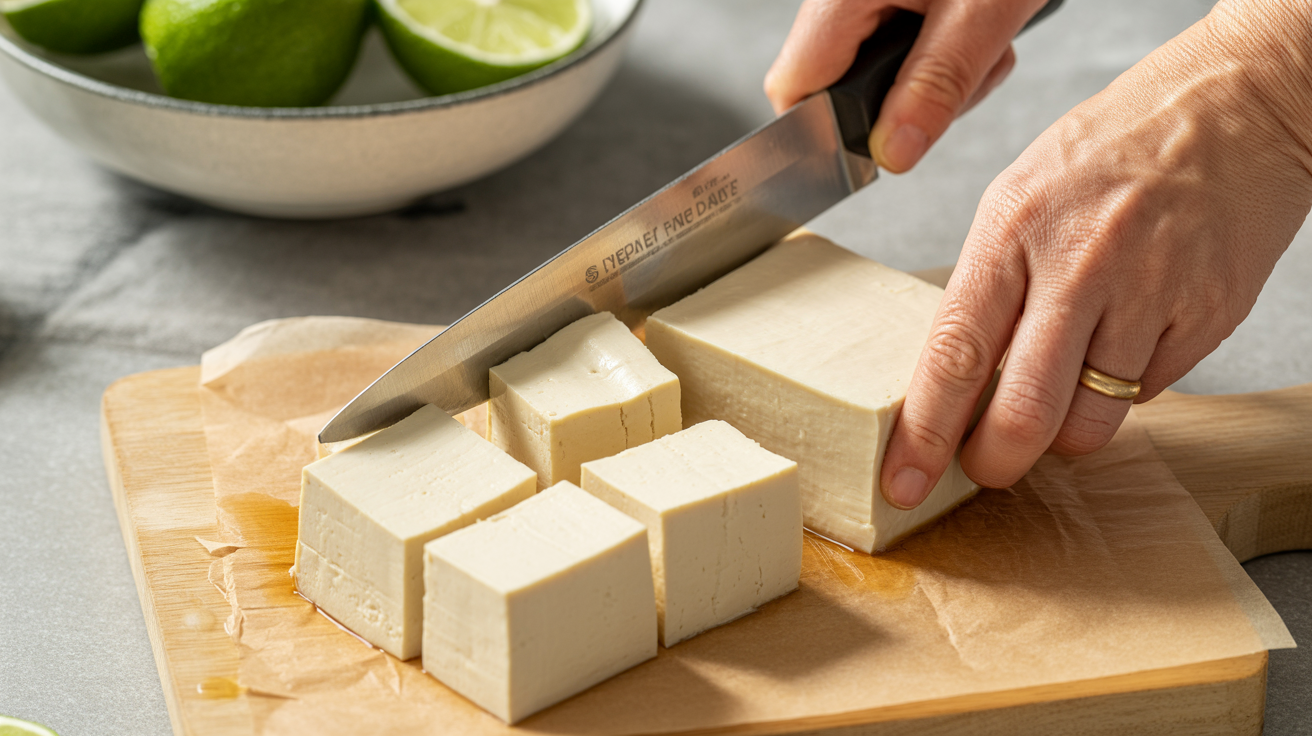
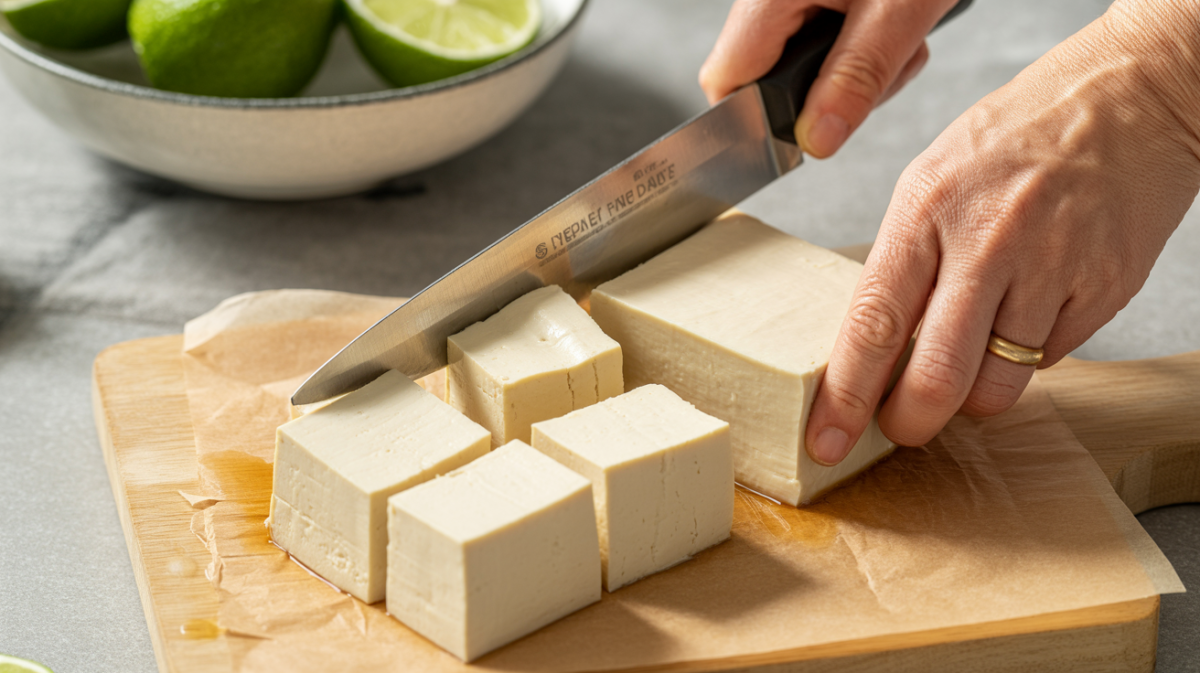
Step 1: Cut and shape the tofu: Stand the block of tofu on its long, narrow side. Cut vertically across the block to make two large thin pieces. Lay these flat and further cut each piece into four cubes, giving you eight tofu pieces in total.
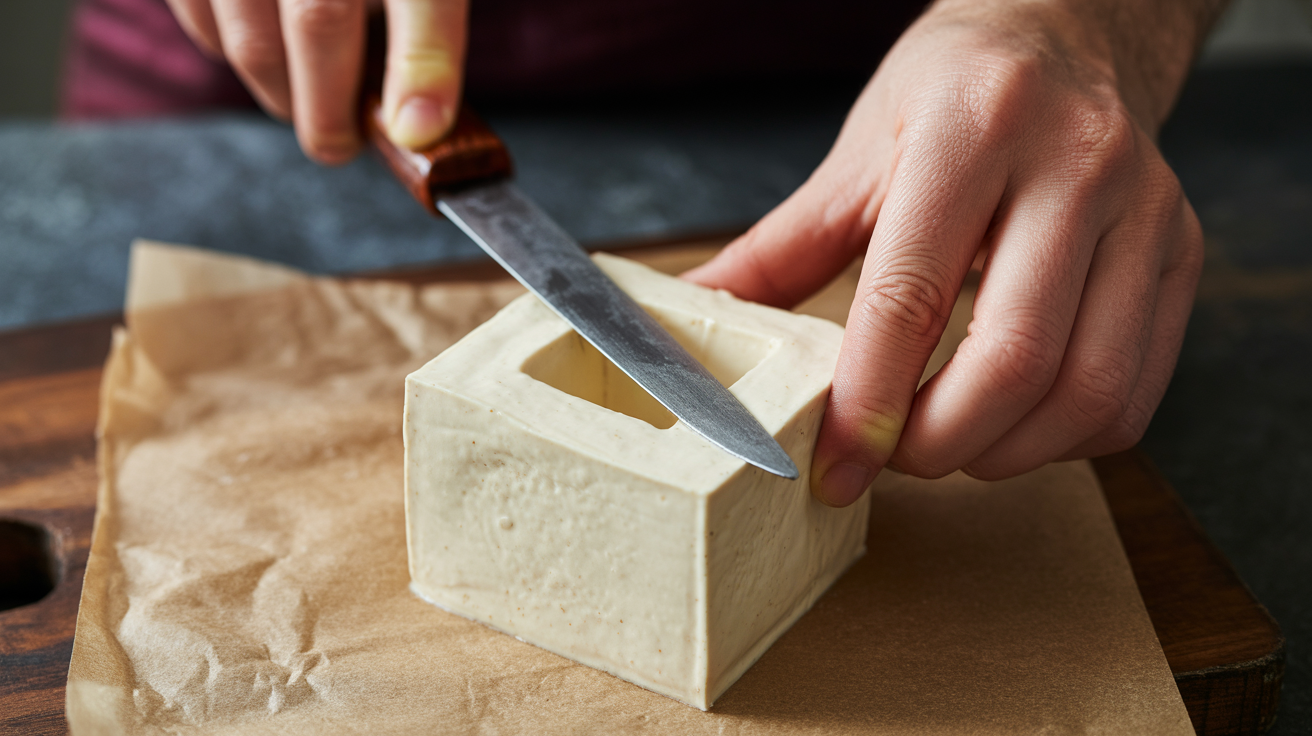
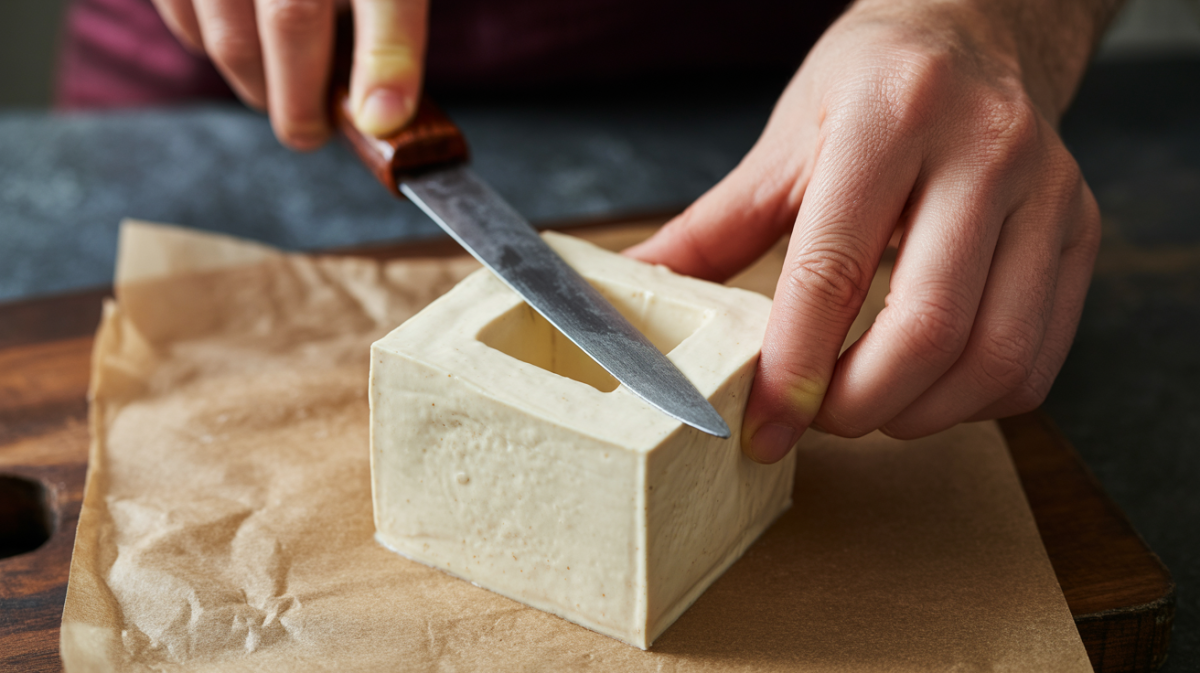
Step 2: Hollow the centers: Use a paring knife to carve a smaller rectangle out of the center of each tofu piece, leaving about 1/4 inch of tofu around the edges and on the bottom. This shallow cut makes it easier to remove some of the tofu. Use the back of a small spoon to gently scoop out the center, creating a dent or “well” to hold the filling.
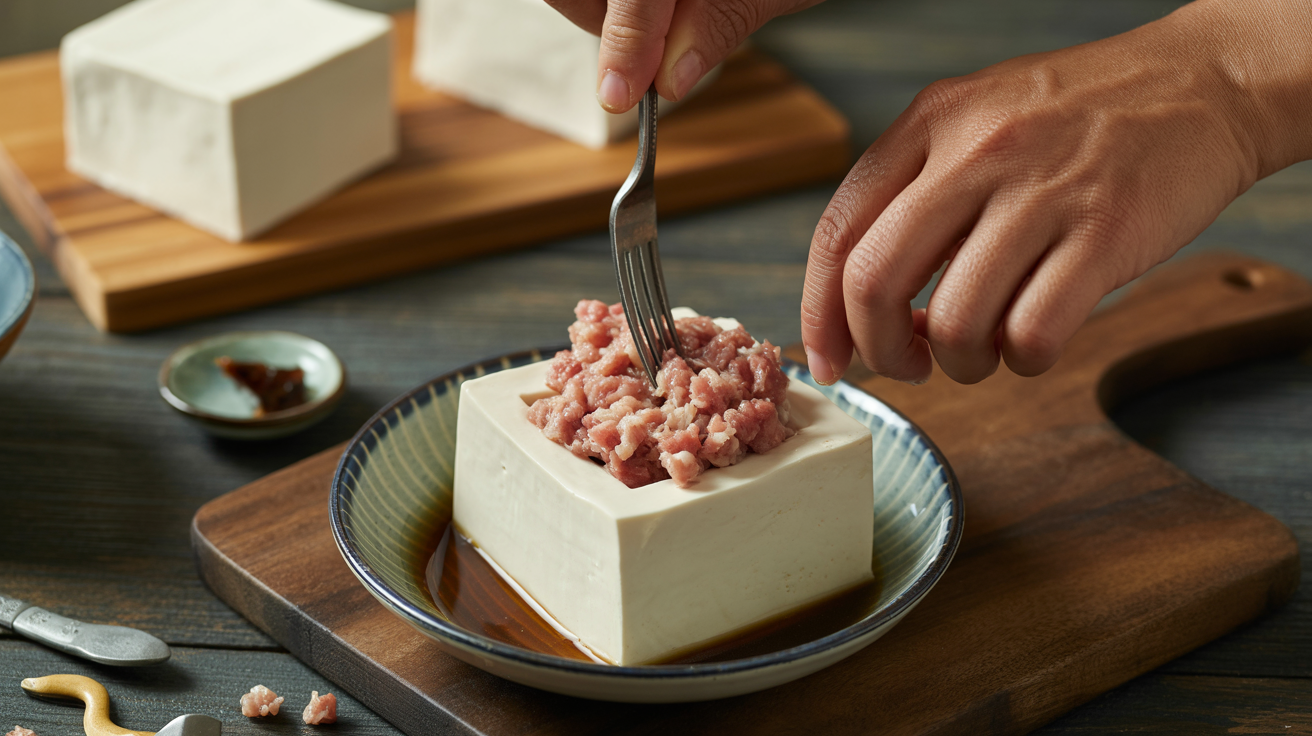
Step 3: Fill the tofu: Pack the pork and mushroom filling into each tofu piece, pressing it in firmly and smoothing the top so the filling is level with the tofu surface.
Cooking the Tofu
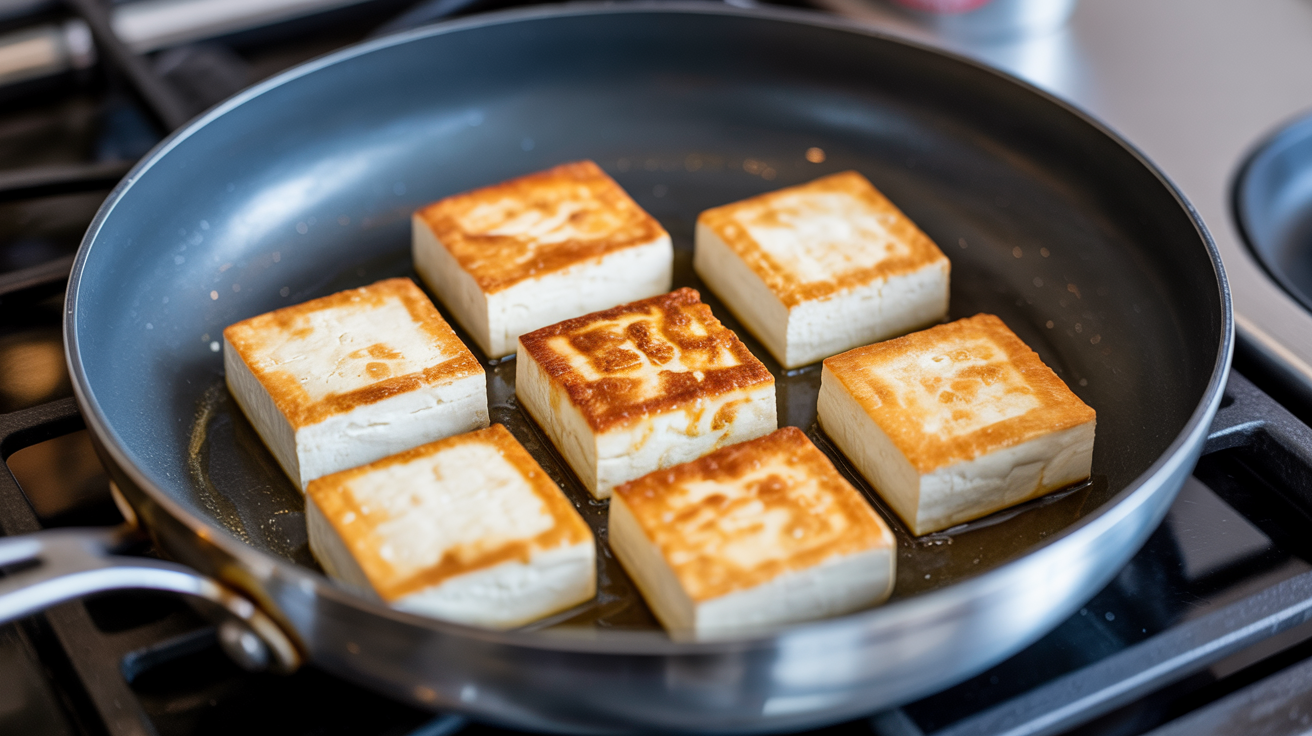
Step 1: Pan-sear the stuffed tofu: Add 1 tablespoon oil to a large nonstick skillet. One piece at a time, carefully lift the stuffed tofu onto a spatula, filling side down, and slide it gently into the skillet. Turn the heat to medium-high. Sear the tofu, filling side down, until the meat has turned golden brown, about 4 minutes, checking occasionally to ensure the pork is cooking through.
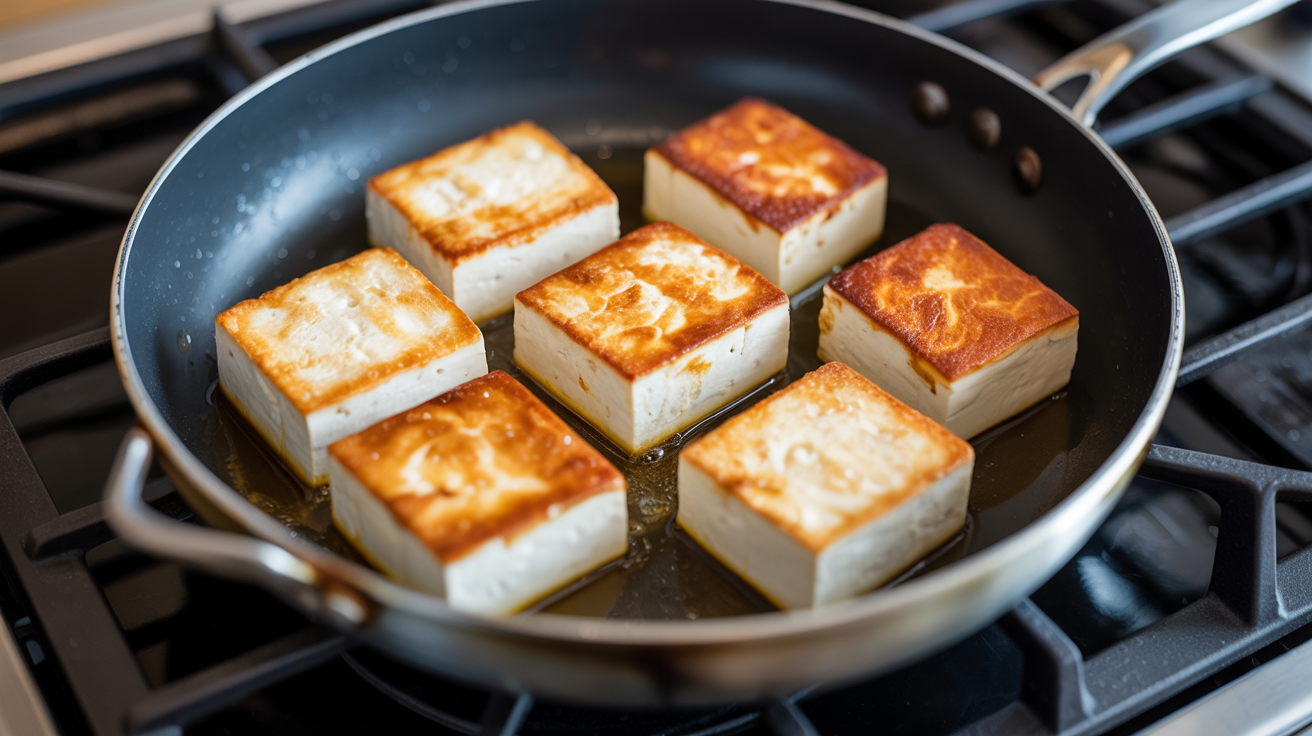
Step 1: Brown the other side: Turn each tofu piece over and brown the tofu side for another 1–2 minutes, or until it is slightly golden. Adjust the heat as needed so the tofu colors without burning.
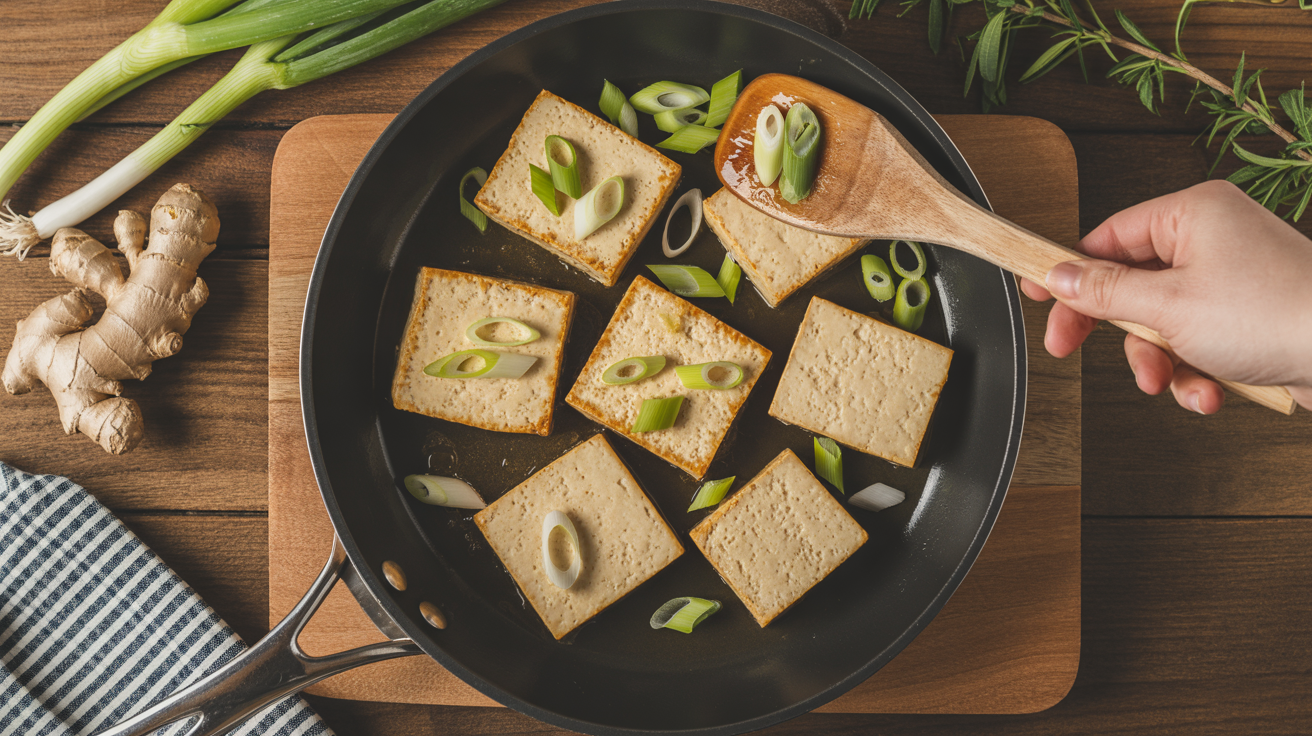
Step 2: Sauté the aromatics: Move the tofu pieces to one side of the skillet to clear some space. Add the remaining 1 tablespoon oil to the empty side, then add the scallion, ginger, and garlic. Stir them a few times over the heat until fragrant.
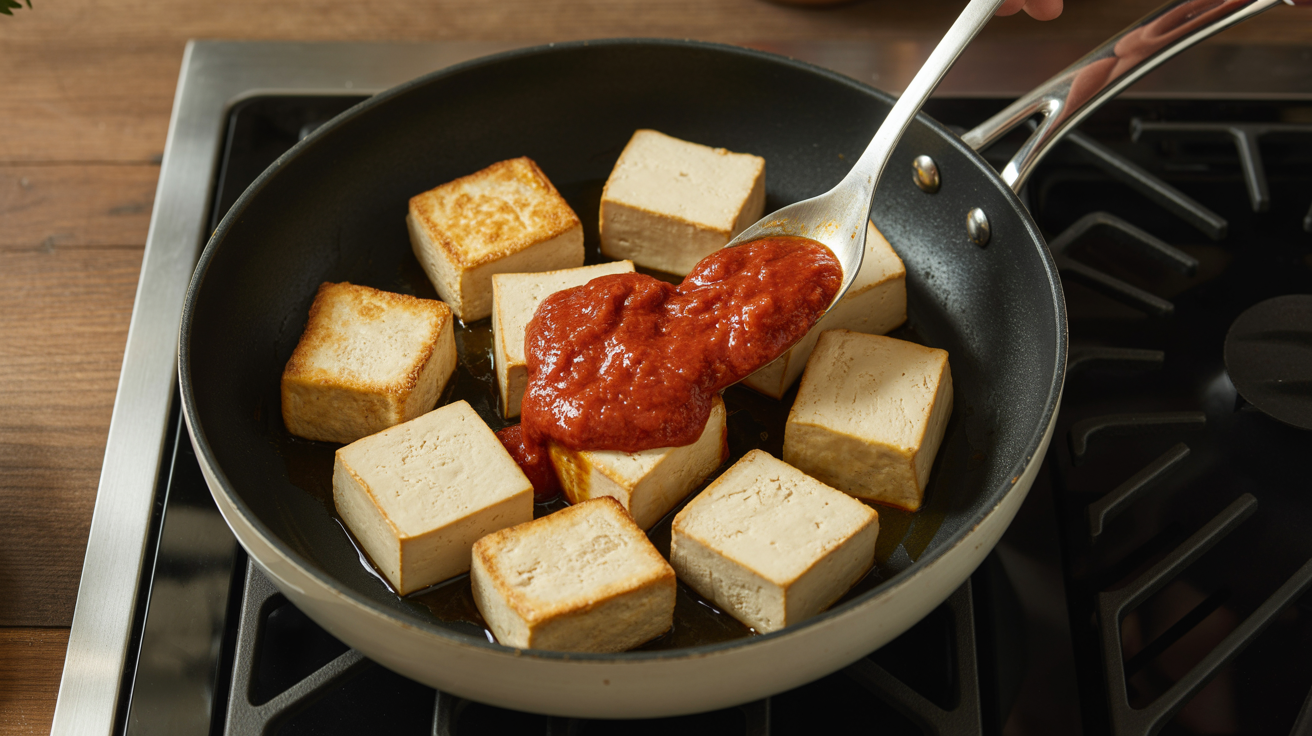
Step 3: Add and thicken the sauce: Stir the sauce mixture again to fully dissolve the cornstarch. Pour it into the skillet, aiming between and around the tofu pieces. Stir the sauce between the gaps of the tofu so it cooks evenly and begins to thicken. Simmer just until the sauce has thickened to a glossy consistency.
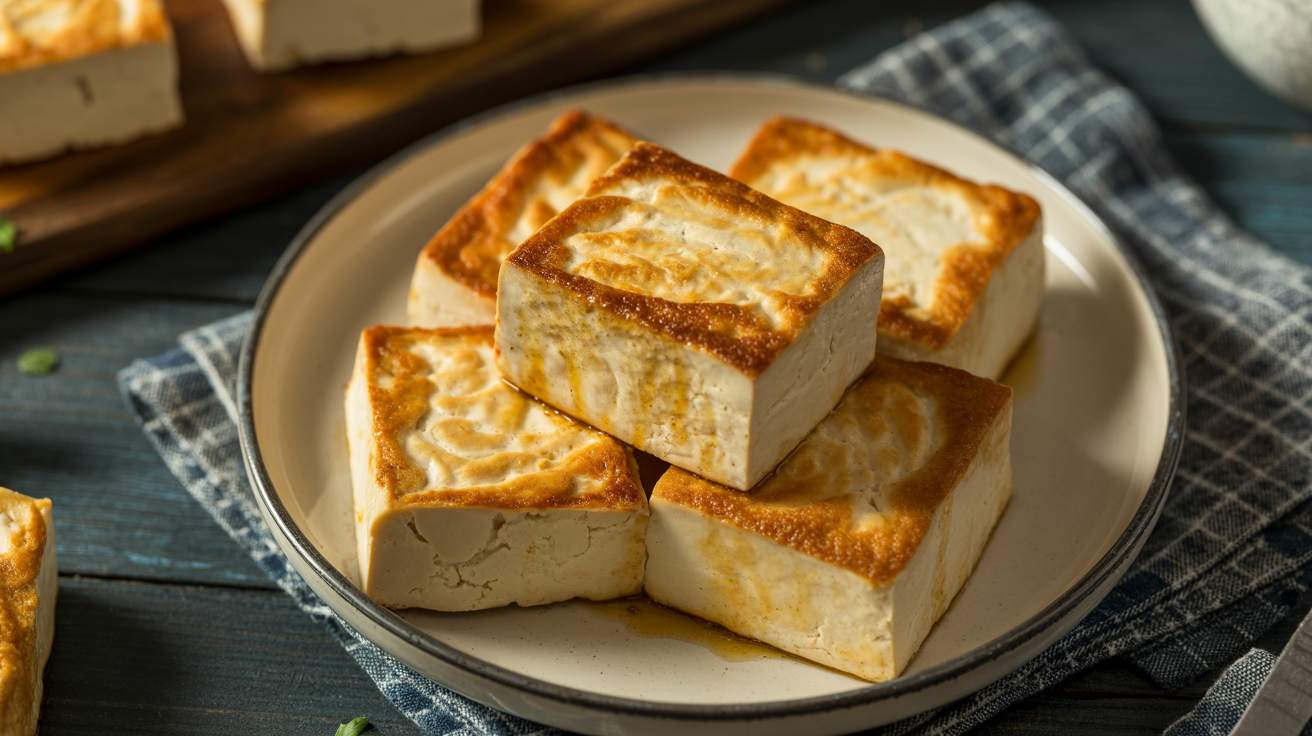
Step 4: Serve: Transfer the stuffed tofu pieces to a serving plate. Pour the thickened sauce over and around the tofu. Serve hot as a main dish.
Making Chickpea Tofu and Preparing Tofu Puffs
I start my stuffed tofu recipe by cooking up chickpea flour and water. I use 1 cup of chickpea flour and 3 cups of water, whisking in a pot until it’s totally smooth. I stir it on medium heat for about 15 minutes, keeping at it until it thickens into a paste.
When the mixture pulls away from the sides, I pour it into a greased pan. I let it cool for half an hour, then pop it in the fridge for a couple of hours to firm up. That’s when you know your stuffed tofu recipe is on track.
Once the chickpea tofu is set, I slice it into squares about 2 inches wide. Sometimes I use store-bought firm tofu or tofu puffs for a street food platter if I’m in a hurry. Each piece needs a pocket carved out for stuffing, which is a fun part of any stuffed tofu recipe.
Stuffing and Shaping Techniques
I cut a pocket into each tofu square, about an inch deep, just wide enough to hold the filling. I try not to go too deep or the tofu might break apart. That’s a rookie mistake I made the first time I tried this stuffed tofu recipe.
For the filling, I mix cabbage, papaya, crispy onions, shrimp floss, and roasted chickpea powder. I toss it with tamarind juice, fish sauce, and lime juice for a punchy flavor. I spoon the filling into the tofu pockets, pressing gently so it stays put during frying.
I avoid overfilling because the stuffing can spill out in the hot oil. Leaving a little border around the opening helps keep things tidy. It’s a small trick that makes this stuffed tofu work every time.
Deep-Frying Tips for Perfect Crispiness
I pour about 2 inches of oil into a heavy pan and heat it to 375°F. To check the temp, I drop in a tiny piece of tofu—it should sizzle and float right away. That’s how I know it’s hot enough for my stuffed tofu.
I fry the stuffed tofu in small batches so the oil doesn’t cool down too much. Each batch takes 3-4 minutes, and I flip them once to get even color. The fried chickpea tofu comes out golden and super crispy.
I use a slotted spoon to lift out the tofu and drain it on paper towels. I keep an eye on the oil temp between batches, adjusting as needed. Nothing ruins a stuffed tofu recipe faster than soggy tofu, so don’t rush this part.
Serving, Variations, and Tips
Burmese deep-fried stuffed tofu is best hot and fresh, served with classic sides. This stuffed tofu is flexible, so you can tweak it based on what you have or your dietary needs. I’ve tried a dozen versions of this stuffed tofu recipe, and it never gets old.

Serving Suggestions and Accompaniments
I like to serve Burmese deep-fried stuffed tofu with shredded cabbage, cucumber slices, and fresh cilantro. The crisp veggies play off the hot, crunchy tofu perfectly. For me, that’s what makes a stuffed tofu recipe truly satisfying.
I squeeze lime juice over the top and drizzle with fish sauce, just before serving. Some folks love a tamarind dipping sauce with fish sauce, lime, and roasted chickpea powder for their stuffed tofu. A sprinkle of crispy onions and shrimp floss adds more texture and flavor to your stuffed tofu recipe.
For a full meal, I’ll pair the stuffed tofu recipe with steamed rice, but it also works as party finger food if you cut the triangles smaller. I always tell people to eat it right away while the outside is still crispy and the inside stays warm. That’s really the magic of a great stuffed tofu recipe, isn’t it?
Popular Variations and Dietary Adaptations
Chinese stuffed tofu recipes usually call for regular soy tofu, not chickpea flour-based Burmese tofu. When I make a stuffed tofu recipe, I like to use tofu pockets filled with minced pork, fish paste, or ground chicken blended with dried scallops. That’s a solid option for anyone who wants a non-vegetarian stuffed tofu recipe.
If I’m after a vegetarian stuffed tofu, I’ll go with chopped cabbage, carrots, glass noodles, and mushrooms for the filling. I just leave out the fish sauce and dried shrimp, swapping in soy sauce instead. Sometimes I grab tofu puffs—they’ve already got hollow centers, so stuffing them is honestly a breeze.
Want a spicy stuffed tofu recipe? I’ll toss in chopped chilies or a spoonful of chili oil for a kick. Some people like to coat their stuffed tofu recipe in a light batter and fry it up for extra crispiness.
Storage and Leftovers
I usually toss leftover fried stuffed tofu into an airtight container and stick it in the fridge—it keeps for about two days. Honestly, the tofu never stays crispy after chilling, but popping it in the oven at 375°F for 10 minutes brings back some crunch. If you’re into that fresh-out-of-the-pan vibe, this is the way to go for your stuffed tofu recipe.
Freezing fried stuffed tofu? Not my favorite move—it just turns soggy when you thaw it. What I do instead: prep the stuffed tofu recipe in advance, freeze the uncooked pieces, and fry them straight from the freezer. You’ll need a few extra minutes in the pan, but it works surprisingly well for this stuffed tofu.
Got leftover filling from your stuffed tofu recipe? I keep it in the fridge for up to three days. Sometimes I’ll stuff more tofu, or just toss it into a stir-fry or soup—this stuffed tofu recipe is pretty versatile like that.

Stuffed Tofu vs Fried Tofu
Stuffed tofu and fried tofu are both popular ways to prepare tofu, but they differ greatly in complexity, flavor, and presentation.
Stuffed tofu involves filling tofu pockets or blocks with a mixture of ingredients such as vegetables, minced meat, or seafood. The tofu is then cooked—often pan-fried, steamed, or simmered in sauce—allowing it to absorb additional flavors. This creates a more complex dish with multiple textures and a richer taste.
Fried tofu, by contrast, is a simpler preparation where tofu is cut into cubes or slices and fried until golden and crispy on the outside while remaining soft inside. It is often served as a side dish or appetizer, sometimes accompanied by dipping sauces.
The key difference is depth and preparation: stuffed tofu is layered and flavorful, while fried tofu is straightforward and texture-focused.
Choose stuffed tofu if you’re looking for a more substantial, flavor-rich dish. Go with fried tofu if you want a simple, crispy option that pairs well with other foods.

Burmese Deep-Fried Stuffed Tofu Recipe FAQ
1. What is Burmese tofu made from?
It is made from chickpea flour, not soybeans.
2. Why is it fried?
Frying gives it a crispy exterior.
3. What fillings are used?
Vegetables or spiced mixtures.
4. Is Burmese tofu vegan?
Yes, it is plant-based.
5. What sauces are served with it?
Chili or tamarind sauce.

Burmese Deep Fried Stuffed Tofu
Ingredients
- 14 oz tofu chickpea not soy
- 2 tbsp peanut oil
- 1 scallion sliced
- 1/2 inch ginger root minced
- 2 cloves garlic minced
- 1 mushroom dried shiitake
- 4 oz pork ground
- 1/2 tsp ginger minced
- 1 scallion thinly sliced
- 2 tsp soy sauce
- 1 tsp cornstarch
- 2/3 cup chicken broth
- 1 tbsp soy sauce light
- 1 tbsp oyster sauce
- 1/4 tsp white pepper
- 1/2 tsp sugar
- 2 tsp cornstarch
- 1 tsp sesame oil toasted
Instructions
- Soak and mince the mushroom: Place the shiitake mushroom in a bowl and cover it with warm water. Let it soak for 15–20 minutes, or until it is tender all the way through. Remove the mushroom, discard the stem, and finely mince the cap. Transfer the minced mushroom to a medium-sized mixing bowl.
- Mix the filling: Add the ground pork, ginger, scallion, soy sauce, and cornstarch to the bowl with the minced mushroom. Using your hand or chopsticks, mix everything together in a circular motion until the mixture becomes sticky and cohesive. Set aside while you prepare the tofu.
- Prepare the sauce: In a small bowl, combine all of the sauce ingredients. Stir well until everything is evenly mixed. Set the bowl aside and give it another stir just before adding it to the pan so the cornstarch is fully dissolved.
- Cut and shape the tofu: Stand the block of tofu on its long, narrow side. Cut vertically across the block to make two large thin pieces. Lay these flat and further cut each piece into four cubes, giving you eight tofu pieces in total.
- Hollow the centers: Use a paring knife to carve a smaller rectangle out of the center of each tofu piece, leaving about 1/4 inch of tofu around the edges and on the bottom. This shallow cut makes it easier to remove some of the tofu. Use the back of a small spoon to gently scoop out the center, creating a dent or “well” to hold the filling.
- Fill the tofu: Pack the pork and mushroom filling into each tofu piece, pressing it in firmly and smoothing the top so the filling is level with the tofu surface.

- Pan-sear the stuffed tofu: Add 1 tablespoon oil to a large nonstick skillet. One piece at a time, carefully lift the stuffed tofu onto a spatula, filling side down, and slide it gently into the skillet. Turn the heat to medium-high. Sear the tofu, filling side down, until the meat has turned golden brown, about 4 minutes, checking occasionally to ensure the pork is cooking through.

- Brown the other side: Turn each tofu piece over and brown the tofu side for another 1–2 minutes, or until it is slightly golden. Adjust the heat as needed so the tofu colors without burning.

- Sauté the aromatics: Move the tofu pieces to one side of the skillet to clear some space. Add the remaining 1 tablespoon oil to the empty side, then add the scallion, ginger, and garlic. Stir them a few times over the heat until fragrant.
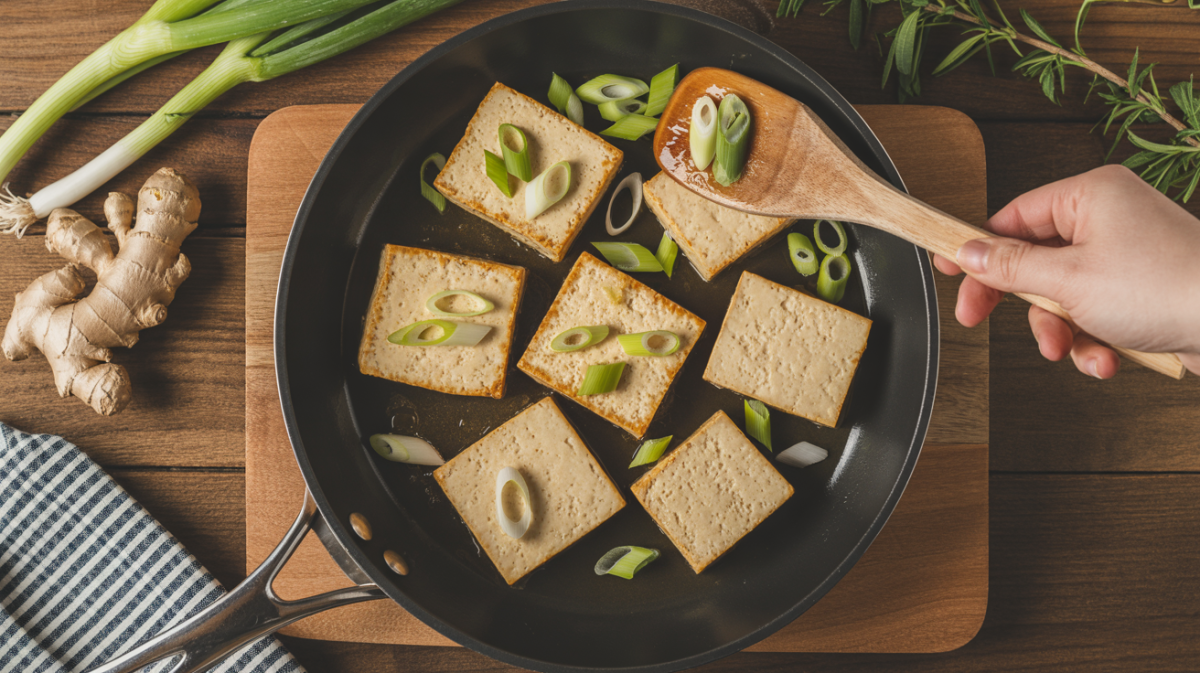
- Add and thicken the sauce: Stir the sauce mixture again to fully dissolve the cornstarch. Pour it into the skillet, aiming between and around the tofu pieces. Stir the sauce between the gaps of the tofu so it cooks evenly and begins to thicken. Simmer just until the sauce has thickened to a glossy consistency.

- Serve: Transfer the stuffed tofu pieces to a serving plate. Pour the thickened sauce over and around the tofu. Serve hot as a main dish.

Video


16 comments
Does anyone else think its odd that Burmese tofu is actually chickpea-based and not soy-based?
Interesting read! Does the crispiness of Burmese Tofu alter the taste compared to the soft Soy Tofu? Just wondering!
Isnt it fascinating how Burmese tofu has its unique identity separate from soy tofu? Wouldnt mind trying this recipe!
Absolutely, the uniqueness of Burmese tofu is unmatched! Highly recommend trying the recipe.
Does anyone else think Burmese tofu might actually be healthier than soy tofu? Just a thought!
Burmese tofu, healthier? Doubtful! Soy is globally recognized for its health benefits.
Interesting read! But, isnt frying tofu detrimental to its nutritional value? Curious about healthier alternatives in Burmese cuisine.
Interesting read! But could we argue that deep frying alters the nutritional value of tofu?
Absolutely! Deep frying anything, tofu included, amps up the calorie count. Healthy goes out the window!
But isnt the texture of Burmese tofu way too different to compare it with soy tofu? Just seems apples to oranges to me.
Interesting read, but does the flavor profile of Burmese tofu significantly differ from that of soy tofu? Just curious!
Definitely! Burmese tofu has a nuttier taste and creamier texture than its soy counterpart. Try it!
I wonder if the crispy exterior of the Burmese stuffed tofu affects its absorption of sauces? Anyone tried this out?
Absolutely! The crispy exterior acts as a barrier, keeping the sauces from penetrating. Makes a big difference!
Isnt it fascinating how Burmese Tofus texture is so distinct from Soy Tofu? Wonder how it impacts the flavor profile.
Actually, the flavor isnt impacted by the texture but rather by the ingredients used.
Comments are closed.