


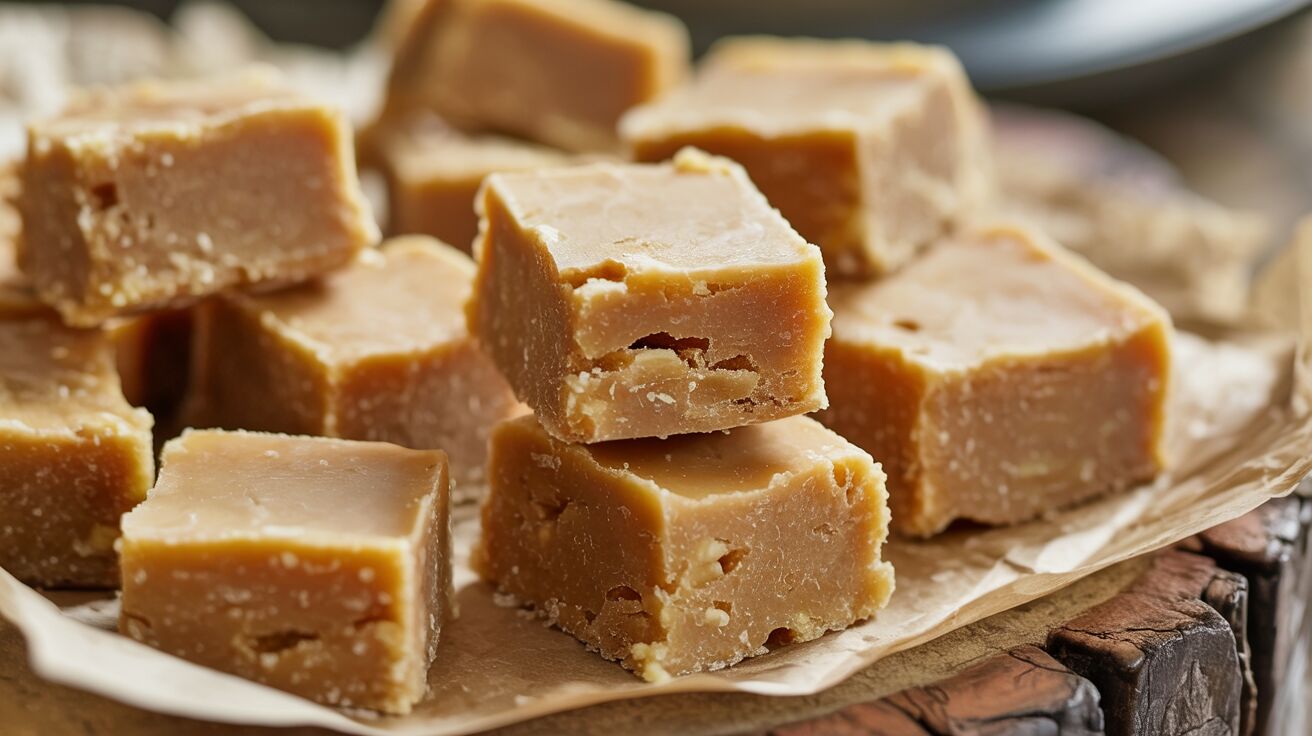
Scottish tablet is a classic sweet from Scotland that sits somewhere between fudge and candy, with a crumbly texture and a wildly sweet, buttery flavor that’ll make your dentist cringe and your taste buds cheer. This Scottish sweet treat takes just a few simple ingredients—sugar, butter, and condensed milk—and somehow turns them into a confection so addictive, I’m convinced it should come with a warning label. I’ve been making this Scottish tablet recipe for years, and honestly, I still lose all self-control once it sets.
If you haven’t tried a Scottish tablet recipe before, picture something like the lovechild of fudge and shortbread, but even sweeter and with a grainy texture that just dissolves away on your tongue. Scots have been making this stuff forever, passing down their Scottish tablet recipe and little tricks that transform basic pantry staples into magic. I’ll show you exactly how to make your own batch at home.
Maybe you’ve heard making Scottish tablet recipe is tricky. I get it! But I’ll break down the steps, point out where things go wrong, and share the tips I wish I’d known when I started. If you follow along, you’ll get that perfect crumbly texture every time. And hey, once you master the classic Scottish tablet recipe, there are some fun twists you can try too.

What Makes Scottish Tablet Unique?
Scottish tablet stands out because of its crumbly bite, its unapologetic sweetness, and its roots in Scottish tradition. It’s not just another candy—it’s a sugar bomb with a cult following in Scotland.
Scottish Tablet vs. Fudge: The Showdown
I’ll admit it: I used to lump Scottish tablet recipe and fudge together. Turns out, that’s a rookie mistake. Any Scottish granny would set you straight.
Fudge is soft and smooth, and it melts away with barely a bite. Scottish tablet, though, is grainy and crumbly. The sugar crystals in a Scottish tablet recipe give it a totally different feel.
The difference comes down to the method. With fudge, you beat it after it cools for creaminess. With a Scottish tablet recipe, you stir while it’s still hot, letting those sugar crystals form. That’s what gives tablet its signature texture.
And the sweetness? Scottish tablet recipe is in another league. The sugar-to-liquid ratio is wild. I mean, brace yourself.
Texture and Taste: Sweet Enough to Knock Your Socks Off
The first time I made a Scottish tablet recipe, I finally understood what “melt-in-your-mouth” really means. It crumbles, dissolves, and leaves you with a buttery caramel wave that’s almost too much—but in a good way.
It’s firm at first, then it breaks into sandy bits. That grainy quality is what sets a Scottish tablet recipe apart from fudge or caramels. Some folks say it’s like crystallized honey, but richer, and honestly, I agree.
The taste? It’s intense. You’ll probably want a glass of water after a piece. The main flavor is caramelized sugar with big notes of butter and condensed milk. Some add vanilla, but the classic Scottish tablet recipe is pretty straightforward.
The Role of Scottish Tablet in Scottish Culture
Scottish tablet recipe sits right alongside other Scottish classics like cranachan, clootie dumpling, and Scottish shortbread. Walk into a Scottish sweet shop, and tablet is always front and center.
Many Scottish families keep their Scottish tablet recipe close—everyone has their own tweaks, whether it’s a bit more butter or a different stirring style. These recipes are heirlooms, passed down over generations.
You’ll spot Scottish tablet recipe at weddings, Burns Night, Highland games—pretty much any Scottish celebration. It’s a go-to gift for visitors, right up there with Scottish macaroons and shortbread.
Offering someone a piece of Scottish tablet recipe is a way of saying, “Welcome, have something special from my kitchen.” That’s why it’s still such a big deal in Scottish food culture.

Essential Ingredients and Equipment for the Perfect Tablet
Making a Scottish tablet recipe doesn’t take much—just a few basic ingredients. But trust me, the right stuff makes all the difference between perfect crumbly tablet and a sticky mess. And yes, you’ll want a candy thermometer. Don’t skip it.
The Must-Have Ingredients
Scottish tablet recipe is all about simplicity. You need sugar, butter, full-fat milk, and condensed milk. That’s it.
I go for unsalted butter so I can control the flavor. About 4 ounces is plenty for most Scottish tablet recipe versions. The butter gives it that rich, creamy kick that sets it apart from fudge.
Some folks add a splash of vanilla or even whisky for depth. I love the whisky twist myself, but vanilla’s great if you want to keep your Scottish tablet recipe classic or kid-friendly.
Choosing the Right Sugar: Caster, Superfine, or Granulated?
This part’s more flexible than you’d think. I’ve tried Scottish tablet recipe with caster sugar, superfine, and good old granulated. All of them work.
Caster sugar dissolves faster thanks to its tiny crystals, so you spend less time stirring. Superfine sugar is basically the same thing, just a different name.
Granulated sugar takes a bit longer to melt, but it gives your Scottish tablet recipe that classic grainy bite. Honestly, I prefer it for the texture alone.
You’ll need about 2 pounds of sugar. Don’t try to cut it down—this is a Scottish tablet recipe, not a health snack.
Full-Fat Milk and Condensed Milk: The Creamy Dream Team
These two are non-negotiable for a real Scottish tablet recipe. Don’t even think about using skim or low-fat anything.
Full-fat milk gives you the liquid base and helps everything melt together. About 1 cup is enough. The fat helps stop the sugar from burning or crystallizing too soon.
Condensed milk is the secret. One 14-ounce can adds the sweetness and creamy-grainy texture that makes a Scottish tablet recipe so addictive. The sugars in condensed milk react with regular sugar as you cook, creating that unique consistency.
Put together, these milks balance each other out. The full-fat milk keeps things fluid, while the condensed milk thickens it up as you hit the right temp.
Why You Absolutely Need a Candy Thermometer
Seriously, you need a candy thermometer for a Scottish tablet recipe. Don’t try to wing it.
Your mixture needs to hit 240°F to 245°F. Too low? You get sticky goo. Too high? You’re chiseling out sugar bricks. Guessing doesn’t work here.
I clip my thermometer to the pot so I can keep an eye on it while stirring. Digital ones work too—just make sure they’re made for high heat.
You could do the cold water test, but honestly, why risk it? A cheap thermometer saves you from ruined batches. I learned that the hard way more than once.
Step-by-Step Scottish Tablet Recipe
The National Scottish Dessert

Step 1: Prepare the tin: Grease a 9×11 inch or 9×12 inch tin with a little butter. Line the base and sides with baking parchment and set aside.

Step 2: Melt butter, sugar, and milk: Put the butter into a large, heavy-based pan over low heat. When it has melted, add the sugar and milk. Keep the heat low and stir occasionally until the sugar has completely dissolved and the mixture is smooth, with no visible sugar grains.

Step 3: Add condensed milk and bring to a boil: Stir in the condensed milk. Continue to cook over low heat, stirring constantly, and slowly bring the mixture up to a boil.

Step 4: Cook to setting point: If using a sugar thermometer, cook the mixture until it reaches 248°F (120°C).

Step 5: If you do not have a thermometer, keep a cup of cold water next to the stove. Drop a small amount of the mixture into the water; if it forms a soft ball that holds its shape, it has reached the correct stage.

Step 6: Beat until thick and slightly grainy: Remove the pan from the heat and stir in the vanilla extract, if using. Beat the mixture vigorously for about 10 minutes, or until it thickens and begins to turn slightly grainy in texture. You can use a hand-held electric mixer or stand mixer for this step to make it easier.
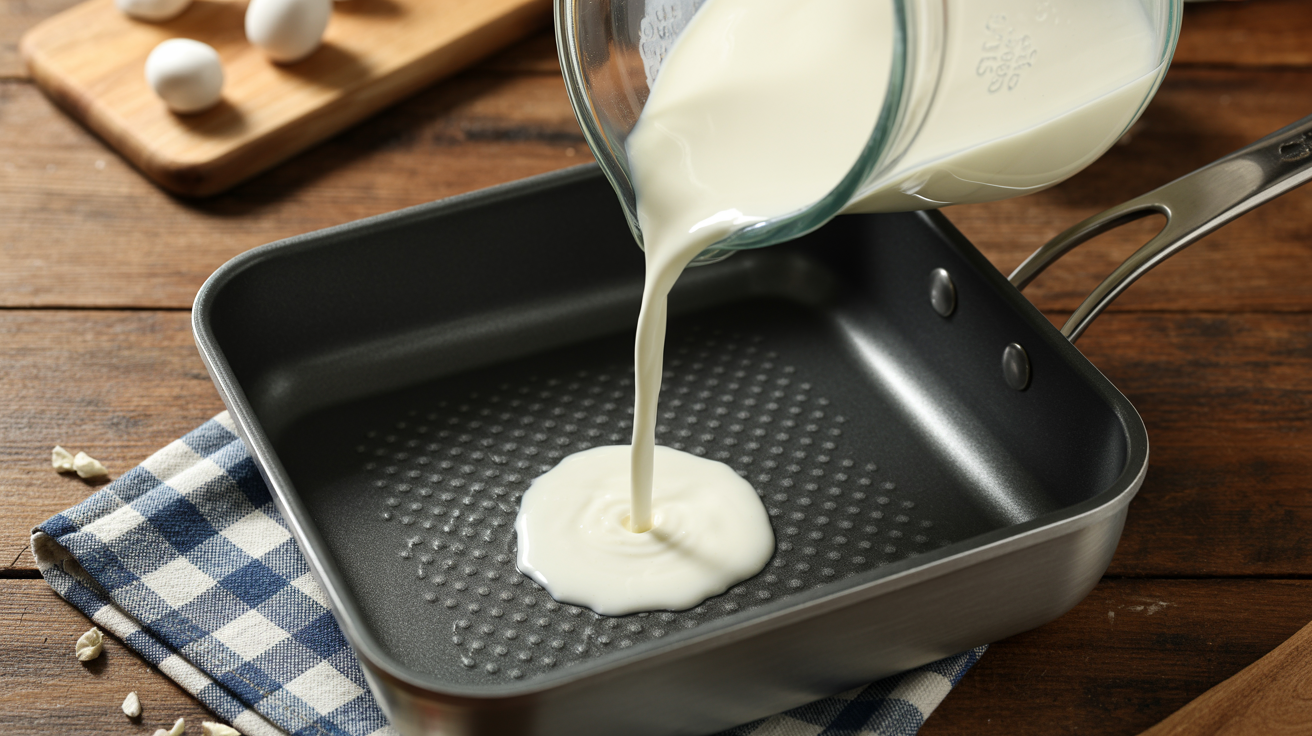
Step 7: Pour into the tin: Tip the mixture into the prepared tin. Use a silicone spatula or similar tool to spread and smooth it out as evenly as possible.

Step 8: Set and cut: Leave the tablet to cool and set completely in the tin. Once firm, cut it into small squares and serve.
Preparation: Grease, Line, and Take a Deep Breath
I always start by greasing a baking tin with butter. A 9×13 inch pan gives me Scottish tablet recipe pieces that are just the right thickness.
Some folks use parchment paper, but I’ve had tablet stick to everything but the pan, so I just stick with butter now.
Before anything else, I make sure my wooden spoon, sugar thermometer, and a cup of cold water for the soft ball test are ready. Once your Scottish tablet recipe mixture starts boiling, you can’t exactly stop to find your spoon.
Melting, Boiling, and Achieving the Soft Ball Stage
I toss butter, sugar, condensed milk, and regular milk into a big, heavy-bottomed pot. Use a bigger pot than you think—you’ll thank me when it bubbles up.
Heat everything over medium, stirring constantly until the sugar’s dissolved. Your arm will complain, but don’t stop.
Once it’s all melted, bring it to a boil and keep stirring. Watch the temp—it needs to hit 240°F on your candy thermometer. This can take 15-20 minutes of non-stop stirring.
I still do the soft ball test too: drop a bit of mixture into cold water. If it forms a squishy ball, you’re good. If not, keep going.
The drop test works as well. Drop some on a cold plate—if it firms up in a few seconds, you’ve nailed it.
The Art of the Beat: Getting the Right Consistency
Take your pot off the heat and start beating. Not a gentle stir—a real arm workout with your wooden spoon.
The mixture is glossy at first. Just keep going. After 5-10 minutes, it thickens and loses its shine. It gets grainier and lighter in color—exactly what you want for a Scottish tablet recipe.
If you stop too soon, your Scottish tablet recipe ends up fudgy. Too long, and you’ll be chiseling it out of the pot. I look for when the mixture holds spoon marks, then pour fast.
Cooling and Cutting: Turning Slab Into Treasure
Pour the beaten mixture into your pan—don’t fuss with smoothing it out, it sets fast.
Let it cool for about 10 minutes, then score it into squares. Wait too long and it’ll shatter when you cut it.
Scottish tablet recipe needs at least 2-3 hours to set at room temp. I tried the fridge once—ended up with sweaty, sad tablet. Just be patient.
Once it’s set, break it up along your score lines. Some pieces are perfect. Others break into odd chunks—call it “baker’s tax” and eat them on the spot.

Troubleshooting and Pro Tips for Tablet Success
Making a Scottish tablet recipe isn’t rocket science, but you do need to pay attention. Most issues come from texture problems, not letting it set, or simply giving up on beating too soon. If you stick it out, you’ll get a Scottish tablet recipe that’s worth the effort.
Why Isn’t My Tablet Setting? Common Mistakes
Honestly, temperature makes or breaks a Scottish tablet recipe. If you don’t get the mixture hot enough, you’re left with a sticky mess instead of those crumbly, melt-in-your-mouth squares everyone loves. I’ve ruined a batch or two this way—it’s frustrating.
You’ll want to cook the mixture to 238-240°F (114-116°C). I use a candy thermometer, but if you don’t have one handy, try the soft ball test: drop a little of the mixture into cold water. If it forms a squishy ball, you’re good to go. It’s old-school, but it works.
Another thing—if you don’t beat the mixture long enough after taking it off the heat, it just won’t set right. I usually go for at least 5-7 minutes, beating until it thickens up and starts losing its shine. If you rush and pour too soon, forget about perfect squares.
And please, don’t use a flimsy pan. A thin pan just burns the sugar before your Scottish tablet recipe hits the right temperature. I learned to stick with a heavy-bottomed pot every single time.
Getting Smooth, Not Grainy: Avoiding Tablet Faux Pas
Grainy Scottish tablet recipe disasters? Yep, sugar crystals are the culprit. I stir constantly while heating to dissolve every last bit of sugar before things start to bubble. That’s key.
Once it boils, I ease up on the stirring. Over-stirring here actually encourages crystals to form on the pan’s sides. Some recipes say don’t stir at all once it’s boiling, but I’ll give it a gentle swirl now and then just to keep things from catching on the bottom.
Never scrape the sides of the pan when you pour the mixture. Those crusty bits are loaded with crystals—and they’ll mess up your whole Scottish tablet recipe.
Butter matters too. I always add it at the start, making sure it melts in completely before turning up the heat. If you toss in cold butter later, the mix can seize up and turn grainy. Not worth the risk.
Beating Blues: When Your Arm Gives Out
Let’s be real: beating a Scottish tablet recipe is an arm workout. I go for 5-10 minutes, switching arms every so often. Sometimes I hand the spoon off to someone else. You can use an electric mixer on low, but honestly, I prefer feeling the texture change in my hands. There’s something satisfying about it.
The mixture gets thick and heavy as it cools—almost like it’s fighting back. When it starts to look matte and feels a bit grainy around the pot’s edges, pour it right away. Wait too long and you’ll be chiseling it out of the pan. Been there, regretted that.

Popular Variations and Global Cousins
Scottish tablet isn’t just about tradition. Bakers all over the world have put their own twists on this treat. From coconut-infused takes to fancier desserts, the Scottish tablet recipe keeps evolving. Distant cousins in other countries—like South African koeksisters or Cuban fudge—share that same crumbly, sweet vibe. It’s kind of fascinating how far this recipe has traveled.
Flavor Twists: From Coconut Tablet to Salted Caramel
Once you’ve got the classic Scottish tablet recipe down, it’s fun to play around. Coconut tablet is a favorite—just stir in shredded coconut for a tropical kick that somehow still tastes Scottish. Whisky tablet is a grown-up option, swapping vanilla for a splash of Scotch. It’s not subtle, but it’s definitely a conversation starter.
Salted caramel tablet? All I do is sprinkle sea salt on top before it sets. It’s trendy for a reason. Chocolate tablet is another winner—melt dark chocolate into the mix or drizzle it over the finished squares. The Scottish tablet recipe is surprisingly flexible.
Some folks use condensed milk for a Swiss milk tablet, which makes it extra creamy. Others add crushed nuts, coffee, or orange zest. I’d say don’t overdo it—the real charm of a Scottish tablet recipe is in its simple, sweet flavor.
Scottish Tablet in Creative Desserts: Cheesecake and Ice Cream
People have started using Scottish tablet recipe results in all sorts of desserts. Tablet cheesecake is wild—crumbled tablet in the base and on top gives you buttery biscuit, creamy filling, and sweet, grainy chunks all in one bite. The contrast in textures is kind of addictive.
Tablet ice cream might be my favorite twist. I chop up Scottish tablet recipe leftovers and fold them into vanilla ice cream just before it’s done churning. The pieces stay chewy, unlike chocolate chips that get rock-hard. It’s honestly genius.
Crushed Scottish tablet recipe bits make a killer topping for cupcakes, brownies, or trifles. Some bakers even melt it into a sauce for pancakes or waffles. I haven’t tried that yet, but it’s on my list.
Perhaps Distant Cousins: Dulce de Leche en Tabla, Sucre à la Crème, Borstplaat, and Russian Fudge
I’ve always found it fascinating how sweets pop up in different corners of the world, each with their own twist. Take dulce de leche en tabla from Latin America. It’s all about caramelized milk and sugar, and while it’s smoother than a classic Scottish tablet recipe, the “en tabla” part—literally “in tablet form”—makes me wonder if there’s some shared confectionery ancestor out there. Or maybe folks just love sugar in every culture.
Then there’s sucre à la crème from Quebec. Think brown sugar, cream, and butter, and you get this crumbly treat that’s a lot like the Scottish tablet recipe I grew up with. The resemblance is uncanny, honestly. Over in the Netherlands, borstplaat takes fondant and turns it into something grainy and sweet, and it reminds me so much of a Scottish tablet recipe that I can’t help but see the connection.
Russian fudge from New Zealand? Not Russian, but it’s made with condensed milk and has that signature grainy bite. Some folks make it almost exactly like a Scottish tablet recipe, but just slap a different name on it. It’s wild how the Scottish tablet recipe keeps showing up, sometimes with only tiny tweaks, in places you wouldn’t expect.
Tablet vs Fudge
Scottish tablet and fudge are both rich, sugar-based confections, but their textures and preparation methods create very different results.
Tablet is a traditional Scottish sweet made from sugar, butter, and condensed milk, cooked to a high temperature and then beaten as it cools. This process creates a crumbly yet slightly creamy texture that melts slowly on the tongue. Tablet is firmer than fudge and has a distinctive grainy structure, giving it a more robust bite and an intensely sweet flavor.
Fudge, while made from similar ingredients, is cooked and cooled differently to achieve a smooth, soft consistency. It is creamy and uniform, with a melt-in-your-mouth texture that feels richer and more indulgent. Fudge often comes in a variety of flavors, from chocolate to vanilla and beyond.
The main difference is texture: tablet is firmer and grainier, while fudge is smooth and creamy.
Choose tablet if you enjoy a more structured, traditional sweet with a slightly crumbly bite. Go with fudge if you prefer a softer, silkier confection that melts quickly.

Scottish Tablet Recipe FAQ
1. What is the texture of Scottish tablet like?
Tablet has a firm, slightly crumbly texture that melts in your mouth, different from smooth fudge.
2. Why does tablet have a grainy consistency?
The sugar crystallizes during cooking, which creates its signature texture.
3. How do you know when tablet is ready to set?
The mixture thickens and loses its glossy sheen before being poured into a tray.
4. Can tablet be flavored with other ingredients?
Yes, vanilla is common, but some recipes include whisky or nuts.
5. How should tablet be stored?
It should be kept in an airtight container at room temperature to maintain texture.

Scottish Tablet Dessert
Ingredients
- 1/2 cup butter unsalted
- 4 cups sugar granulated
- 1 cup milk
- 14 oz condensed milk
- 1 tsp vanilla extract
Instructions
- Prepare the tin: Grease a 9×11 inch or 9×12 inch tin with a little butter. Line the base and sides with baking parchment and set aside.

- Melt butter, sugar, and milk: Put the butter into a large, heavy-based pan over low heat. When it has melted, add the sugar and milk. Keep the heat low and stir occasionally until the sugar has completely dissolved and the mixture is smooth, with no visible sugar grains.

- Add condensed milk and bring to a boil: Stir in the condensed milk. Continue to cook over low heat, stirring constantly, and slowly bring the mixture up to a boil.

- Cook to setting point: If using a sugar thermometer, cook the mixture until it reaches 248°F (120°C).

- If you do not have a thermometer, keep a cup of cold water next to the stove. Drop a small amount of the mixture into the water; if it forms a soft ball that holds its shape, it has reached the correct stage.

- Beat until thick and slightly grainy: Remove the pan from the heat and stir in the vanilla extract, if using. Beat the mixture vigorously for about 10 minutes, or until it thickens and begins to turn slightly grainy in texture. You can use a hand-held electric mixer or stand mixer for this step to make it easier.

- Pour into the tin: Tip the mixture into the prepared tin. Use a silicone spatula or similar tool to spread and smooth it out as evenly as possible.

- Set and cut: Leave the tablet to cool and set completely in the tin. Once firm, cut it into small squares and serve.

Video


11 comments
Is the Scottish Tablets unique texture due to the cooking method or the ingredients? Curious to see the science behind it!
Interesting insight into the Scottish Tablet. But is it truly more unique than the plethora of other global sugar candies?
Unique or not, the Scottish Tablets rich history and distinct taste set it apart, hands down!
Anyone else think the Scottish Tablets role in their culture is as iconic as Haggis? Its sugar vs. sheeps innards, folks!
Scottish Tablets for the win! Who needs sheep innards when youve got pure sugar delight?
How does Scottish Tablet hold up in a global sweets comparison? Could it beat baklava or brigadeiro in a dessert face-off?
Scottish Tablet would wipe the floor with baklava and brigadeiro, hands down. No contest!
Is the Scottish Tablets unique texture and taste really a product of Scottish culture, or just a happy sugar-driven accident?
Just a thought, but could the toothsome Scottish Tablet be the secret weapon in the battle against haggis-phobia? 🏴🍬 vs 🐑🤔
Perhaps, but nothing can truly combat the sheer terror of haggis! 🐑🤢
Interesting read! But isnt the sugar content in Scottish Tablet a concern in todays health-conscious society?
Comments are closed.