


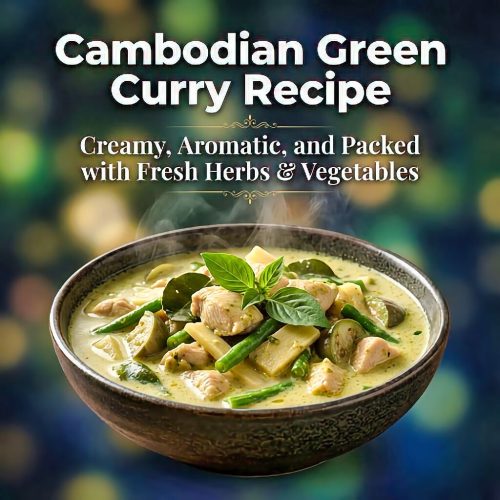
Cambodian green curry isn’t just another Southeast Asian dish—it’s a whole experience. This traditional curry uses kroeung (a special spice paste made from herbs and spices), fermented fish, coconut milk, and a mix of meats and vegetables to create a creamy, rich curry that’s sweet, savory, and full of those herbal, aromatic notes. Honestly, Cambodian food doesn’t get enough love, but this one? It’s worth adding to your regular rotation. If you’re after a Cambodian green curry recipe that feels legit, you’re in the right place.
What makes Cambodian green curry special is its layers of flavor. It often uses palm sugar for sweetness and toasted rice powder for a bit of texture. The kroeung paste—packed with lemongrass, galangal, and ginger—gives it that unmistakable taste you just can’t fake.
Let’s dig into what you need to make this at home. I’ll break down the ingredients, show you how to build the curry paste, and walk you through the steps to nail this Cambodian green curry recipe in your own kitchen.

Essential Ingredients for Cambodian Green Curry
The backbone of any Cambodian green curry is fresh herbs, punchy spices, and a good mix of veggies and protein. Using the real stuff makes a huge difference—trust me, you can taste it. The flavors are way more vibrant than your average curry.
Key Herbs and Aromatics
The soul of a Cambodian green curry recipe is kroeung, that fragrant curry paste loaded with lemongrass, garlic, and fresh herbs. It’s where all the flavor starts.
Lemongrass brings a bright, citrusy kick. I always grab the tender, inner stalks and chop them up fine or smash them into the paste.
Kaffir lime leaves? You can’t skip them. Their aroma is so distinct—regular lime zest just doesn’t cut it.
Turmeric root gives the curry that golden color and a bit of earthiness. Galangal, which is kind of like ginger’s wild cousin, adds a sharp, almost piney bite that’s essential for the real deal.
I toss in plenty of fresh cilantro roots and stems for depth. Garlic and shallots round things out, making the base super savory and a little pungent (in a good way).
Vegetables Commonly Used
This Cambodian green curry recipe usually calls for veggies that soak up flavor and hold their shape. I’m a fan of the ones that don’t turn to mush.
Eggplant—especially the little Asian ones—is a classic. Green beans add a nice crunch and mellow taste that works with the curry.
Bamboo shoots are great for texture. I like to throw in some Thai basil right at the end for that fresh, slightly anise flavor.
Squash or pumpkin? They bring a hint of sweetness. Sometimes I go with green papaya, which holds up nicely and soaks in all the curry goodness.
Protein Options
Fish and pork belly are the usual suspects in a classic Cambodian green curry recipe. They just work so well with that herby paste.
Freshwater fish is everywhere in Cambodia, but any firm white fish—catfish or tilapia—will do the trick. They stay together while simmering in the curry.
Pork belly brings richness with its fat. If you want something lighter, chicken thighs are a solid swap and still pack flavor.
Vegetarian? I use tofu or tempeh. They really soak up the sauce if you give them enough time.
Shrimp or prawns make the curry lighter. I toss them in near the end so they don’t get rubbery.
Specialty Cambodian Seasonings
The seasonings are what set a Cambodian green curry recipe apart. Prahok, or fermented fish paste, gives a deep, funky umami flavor that’s kind of addictive.
Fish sauce adds salt and complexity. I usually combine it with prahok for extra depth.
Toasted rice powder thickens the curry and adds a nutty undertone. I just toast some rice in a dry pan until golden and grind it up.
Palm sugar balances out the salty and spicy notes with a mellow sweetness. Coconut milk is what makes the curry so creamy and ties everything together.

Preparing the Green Curry Paste
The paste is the foundation of any Cambodian green curry recipe. Making it from scratch is worth the extra effort—you really get to control the flavor and freshness. I focus on blending technique, nailing the authentic taste, and making do with what I can find at the store.
Traditional Methods for Blending Paste
If I’m feeling traditional, I’ll grab a mortar and pestle. Breaking down the lemongrass and galangal by hand releases their oils in a way a blender just can’t manage.
I always start with the tough stuff—lemongrass, galangal, and garlic. Once they’re smashed up, I add the softer ingredients like shallots and chilies.
The kroeung paste takes patience. I use a circular motion, not just pounding straight down. It’s a bit of a workout—maybe 15-20 minutes—but you can taste the difference.
If I’m in a rush, I’ll use a food processor or blender. I chop everything small, add a splash of water, and pulse (not blend) so it doesn’t turn soupy.
Tips for Achieving Authentic Flavor
Prahok, the fermented fish paste, is what makes a Cambodian green curry recipe pop. I add a tablespoon or so straight into the paste for that salty, umami punch.
Fresh ingredients are non-negotiable for me. Dried lemongrass or powdered galangal just don’t cut it. The brightness from fresh herbs is what really makes the curry sing.
I toast my spices—coriander and cumin—before grinding them in. It only takes a few minutes but makes the flavors way more intense.
The ratios matter. I go heavier on turmeric and galangal than I would for Thai curry, which gives this Cambodian green curry recipe its earthy, less-sweet personality.
Ingredient Substitutions for Availability
If I can’t get galangal, I swap in fresh ginger and a pinch of white pepper. It’s not perfect, but it does the job. I usually use a bit more ginger than galangal to make up the difference.
Frozen lemongrass works if fresh isn’t around. I avoid jarred paste, though—it’s just not the same.
Common Substitutions:
- Prahok → Fish sauce or anchovy paste
- Thai basil → Italian basil with a few mint leaves
- Kaffir lime leaves → Half as much regular lime zest
- Green Thai chilies → Serrano or jalapeño peppers
If I’m out of prahok, I’ll use shrimp paste (just half as much since it’s stronger). For a vegetarian Cambodian green curry recipe, I go with miso paste plus a little seaweed to get that ocean-y vibe.

Cooking Cambodian Green Curry Step by Step

Step 1: Adjust the oven rack as needed and preheat the oven to 410°F. Heat a generous amount of olive oil in a large saucepan over medium heat.

Step 2: Once the oil is hot and shimmering, add the chickpeas. Season with salt and Black Kampot pepper and cook for about 5 minutes, stirring occasionally, until the chickpeas begin to crackle.
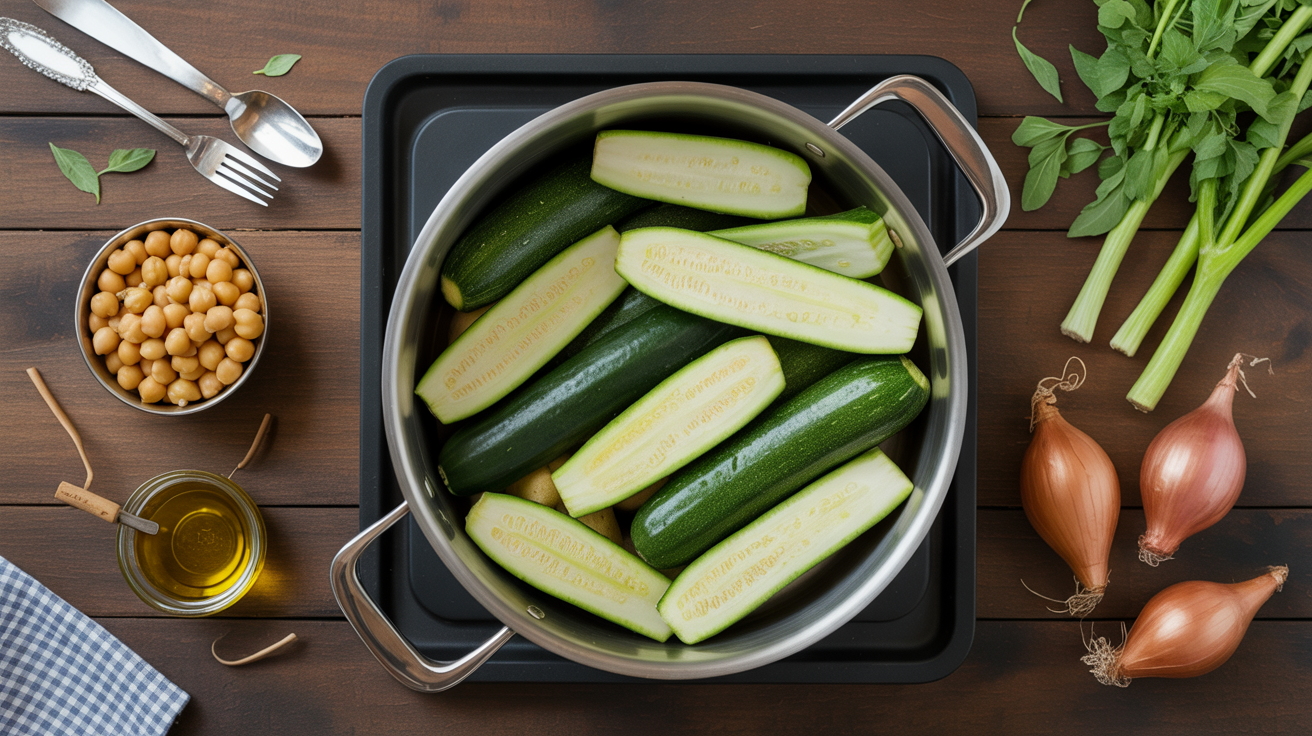
Step 3: Add the Vegetables: Chop the courgettes and shallots. Add them to the pan along with the corn and stir to combine. Season to taste and cook for another 5–10 minutes, until the vegetables are tender.
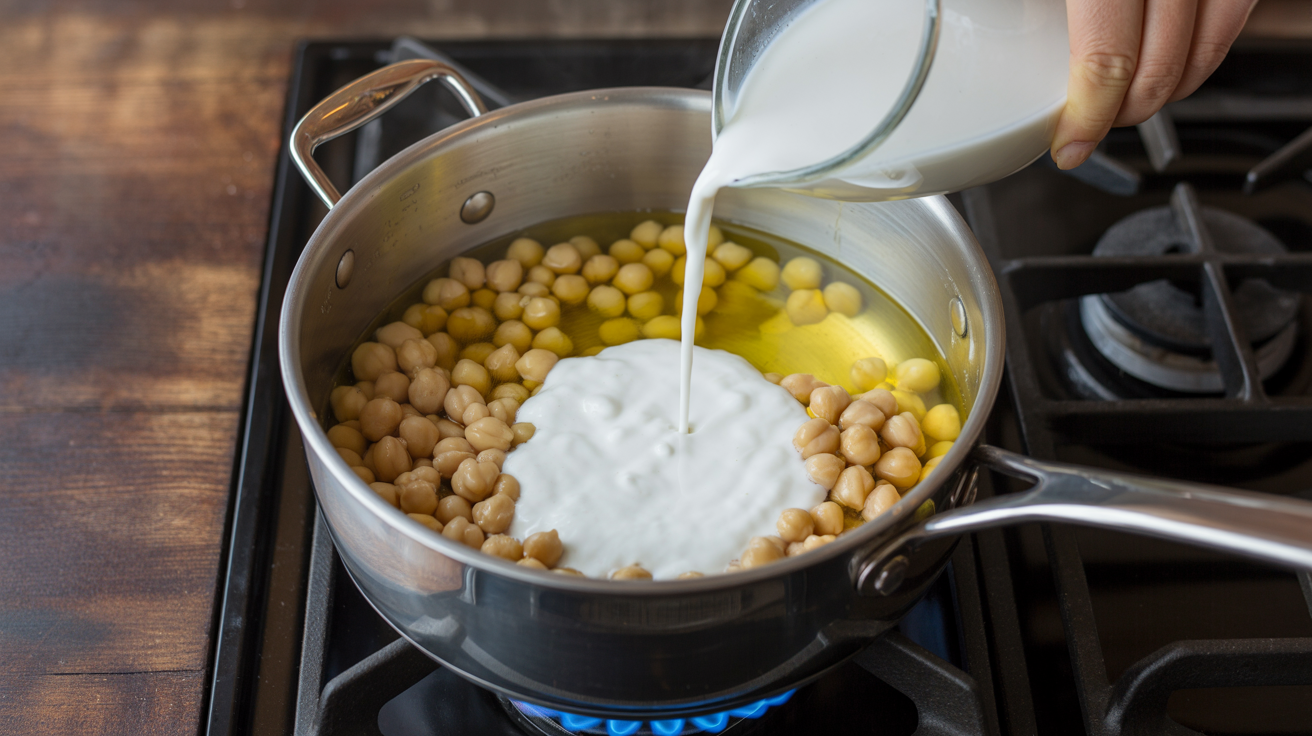
Step 4: Build the Curry: Stir in the young ginger, Khmer green curry, and sweet long pepper. Cook for a few minutes to allow the flavors to bloom. Pour in the coconut milk, stir well, and reduce the heat to low.

Step 5: Simmer gently for 10 minutes. Remove from the heat and stir in the lemon juice, lemon zest, and coriander.

Step 6: Grill the Halloumi: Heat 2 Tbsp olive oil in a large frying pan over medium heat. Add the halloumi slices and cook for about 3 minutes per side, until golden and nicely browned. Add to the curry.
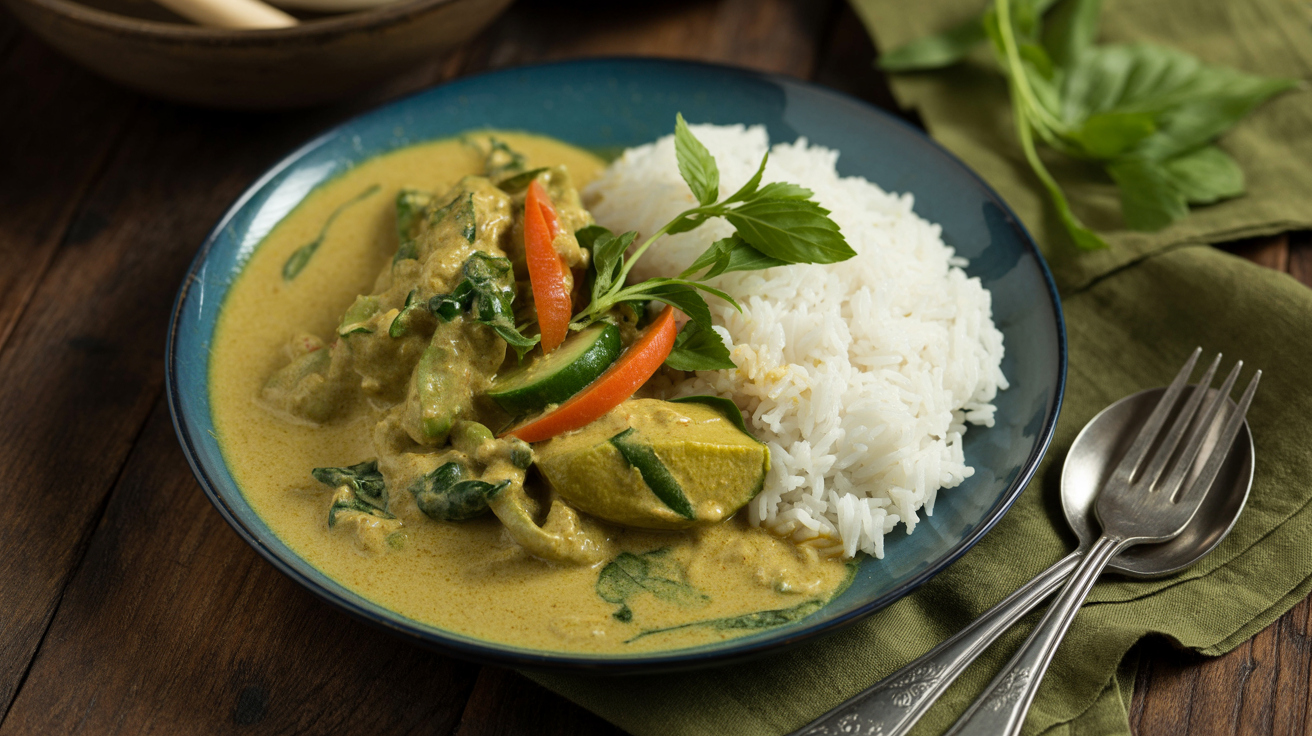
Step 7: Serve: Spoon the rice into serving bowls. Top with the curry and garnish with grilled halloumi, green chilies, coriander, and lime wedges. Serve warm.
Initial Sautéing Techniques
I heat a couple tablespoons of oil in a big pot over medium-high heat until it’s shimmering. Then in goes about 3-4 tablespoons of kroeung paste, stirring nonstop for a few minutes.
The paste should smell amazing and darken a bit. When I see the oil separating, I know it’s ready.
Next, I toss in my protein—chicken, pork belly, or fish. I make sure each piece gets coated and cooks for a few minutes to get some color and lock in the juices.
I add a couple tablespoons of fish sauce and a spoonful of fermented fish paste. Don’t worry about the strong smell—it mellows out as it cooks.
Simmering and Flavor Development
Harder veggies—potatoes, carrots, bamboo shoots—go in next. I pour in just enough water or stock to cover everything, usually 2-3 cups, so the pot’s about halfway full.
I bring it all to a boil, then drop to a gentle simmer. I let it go uncovered for 15 minutes, giving it a stir now and then.
Once the veggies start to soften, I add a can of coconut milk (about 14 ounces). Softer veggies like green beans and eggplant go in now. Let the curry simmer for another 10 minutes on low.
I always taste and adjust—maybe more fish sauce for salt, or a pinch of sugar if it needs balance.
Final Adjustments and Garnishing
I squeeze in a couple tablespoons of fresh lime juice for brightness. Sometimes I add lime zest for extra zing.
Fresh Thai basil gets torn and tossed in so it just wilts, keeping that aroma. I usually add some chopped cilantro too.
Here’s what I use for garnish:
- Fresh Thai basil leaves
- Cilantro sprigs
- Sliced red chilies
- Lime wedges
I take the pot off the heat and let it rest a couple minutes. That gives the flavors time to settle in. Then I serve it hot over jasmine rice, with extra herbs on the side. This Cambodian green curry recipe is a total crowd-pleaser.

Serving Suggestions and Complementary Sides
Cambodian green curry is best with rice, honestly. I like to add pickled veggies and a handful of fresh herbs on the side to cut through the richness. If you’re looking for a Cambodian green curry recipe that feels complete, don’t skip the sides—they really round out the meal.
Recommended Rice Varieties
If you ask me, jasmine rice is the way to go with any Cambodian green curry recipe. That fragrant, just-sticky-enough texture grabs onto every drop of curry sauce. White jasmine rice? It’s what most Cambodian families actually put on the table, and honestly, it just feels right.
But hey, if you’re into a bit of chew, sticky rice is also a solid pick. I usually steam it in a bamboo basket—sure, it’s a little more work, but the texture pays off. Some folks like to get fancy with coconut rice, which brings a creamier vibe and a little sweetness to your Cambodian green curry recipe. Not a bad twist if you ask me.
Trying to be a bit healthier? Brown jasmine rice is out there if you want more fiber and a nuttier taste. It does take longer to cook, so plan ahead. I usually go with about one cup of uncooked rice for every two people, and that seems to be the sweet spot for a hearty Cambodian green curry recipe. Just make sure everyone gets enough to mop up all that sauce—no one likes running out of rice before the curry’s gone.
Popular Cambodian Accompaniments
Fresh vegetables are a must with any Cambodian green curry recipe. I usually toss some raw cucumber slices, cabbage wedges, and long beans onto the table. Their crispness just balances out the spicy curry in a way that’s hard to beat.
Pickled veggies? Absolutely. I like to throw in pickled mustard greens or maybe some pickled radish. And you can’t forget fresh herbs—Thai basil, mint, cilantro—they lift every bite. If you’re making a Cambodian green curry recipe, don’t skip the herbs.
Fish sauce with lime and chilies is a classic dipping sauce for a reason. I just mix fish sauce, lime juice, a few sliced chilies, and a pinch of sugar. Some families put out traditional Cambodian side dishes like stir-fried morning glory or a light soup with their Cambodian green curry recipe. Honestly, I think these sides make the whole meal feel more complete. If you’re looking for ways to round out your Cambodian green curry recipe, these accompaniments are perfect.

Cambodian Green Curry vs Thai Green Curry
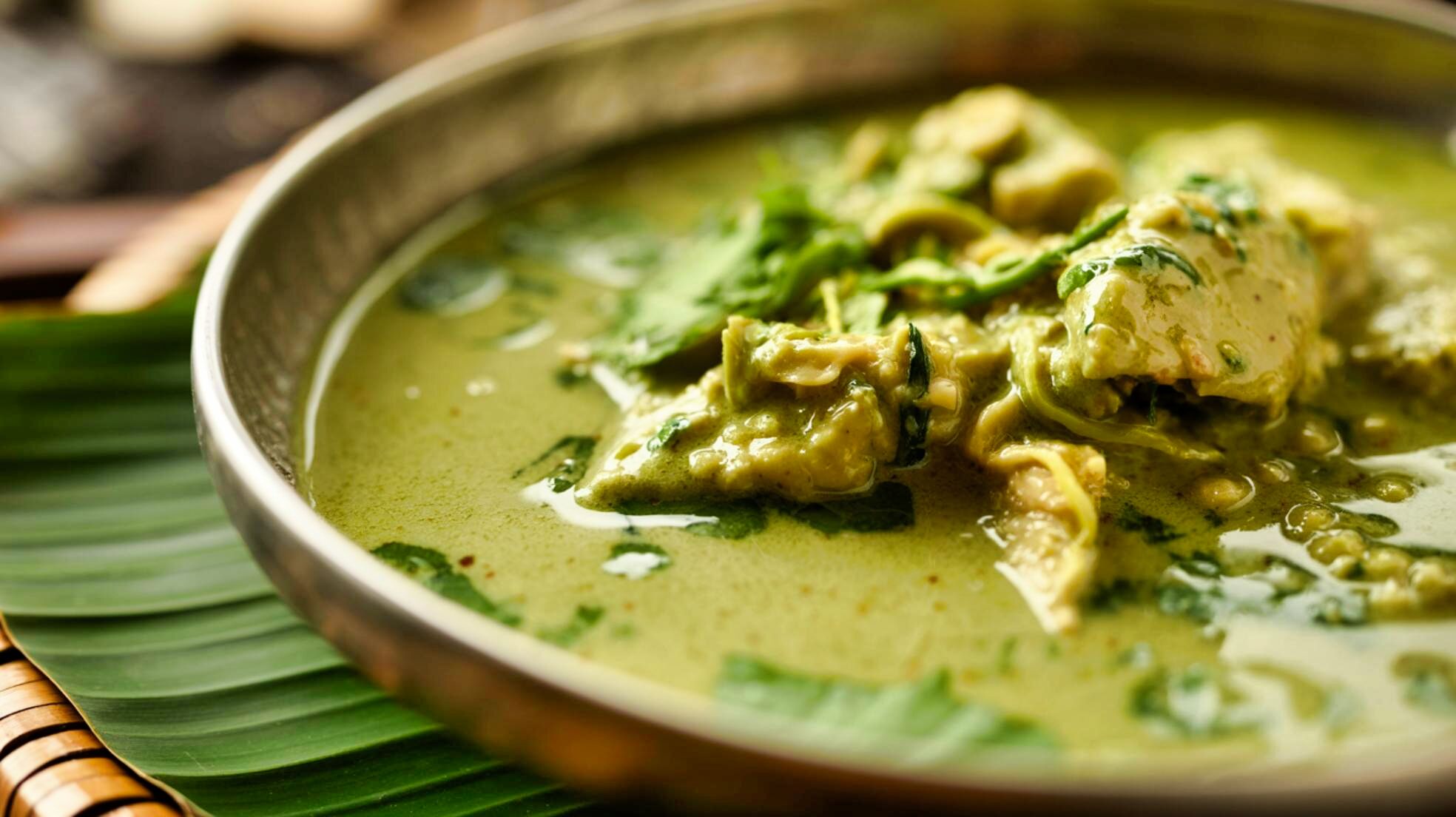
Cambodian green curry and Thai green curry share a similar name and color, but their flavor profiles and spice levels set them apart.
Cambodian green curry is typically milder and more herb-forward, using ingredients like lemongrass, kaffir lime, and green herbs. Coconut milk is often used to create a creamy base, but the spice level is generally low, resulting in a gentle, balanced dish that highlights fresh flavors rather than heat.
Thai green curry, on the other hand, is known for its bold and spicy character. It uses green curry paste made with chili peppers, garlic, and spices, creating a more intense and aromatic flavor. The dish is still creamy from coconut milk, but the heat and complexity are more pronounced.
The main difference is heat and intensity: Cambodian green curry is mild and subtle, while Thai green curry is spicier and more robust.
Choose Cambodian green curry if you prefer a softer, herbaceous flavor with minimal heat. Go with Thai green curry if you want a bold, spicy dish with stronger, more layered flavors.
Cambodian Green Curry Recipe FAQ
1. What gives green curry its color?
Green chilies and fresh herbs.
2. Is Cambodian green curry spicy?
It is usually milder than Thai green curry.
3. What protein is used in green curry?
Chicken, fish, or vegetables.
4. What herbs are essential?
Lemongrass and kaffir lime leaves.
5. What is served with green curry?
Rice or noodles.
Cambodian Green Curry
Ingredients
- 2 Courgettes
- 2 Shallots
- 2 Clove garlic
- 15 oz Chickpeas
- 4 oz Corn
- 2 Green Chillies Fresh or Bird
- 2 Coriander
- 14.5 can coconut milk
- 1 Lemon
- 1 Halloumi Young Ginger
- 1 tsp Green Khmer Curry
- 2 tbsp Sweet Long Chili
- 1 tbsp pepper black campot freshly ground
Instructions
- Adjust the oven rack as needed and preheat the oven to 410°F. Heat a generous amount of olive oil in a large saucepan over medium heat.

- Once the oil is hot and shimmering, add the chickpeas. Season with salt and Black Kampot pepper and cook for about 5 minutes, stirring occasionally, until the chickpeas begin to crackle.

- Add the Vegetables: Chop the courgettes and shallots. Add them to the pan along with the corn and stir to combine. Season to taste and cook for another 5–10 minutes, until the vegetables are tender.

- Build the Curry: Stir in the young ginger, Khmer green curry, and sweet long pepper. Cook for a few minutes to allow the flavors to bloom. Pour in the coconut milk, stir well, and reduce the heat to low.

- Simmer gently for 10 minutes. Remove from the heat and stir in the lemon juice, lemon zest, and coriander.

- Grill the Halloumi: Heat 2 Tbsp olive oil in a large frying pan over medium heat. Add the halloumi slices and cook for about 3 minutes per side, until golden and nicely browned.

- Serve: Spoon the rice into serving bowls. Top with the curry and garnish with grilled halloumi, green chilies, coriander, and lime wedges. Serve warm.

Video


17 comments
Interesting read! Curious, why dont we use tofu as a protein option in Cambodian Green Curry? Its quite versatile!
Has anyone tried adding tofu as a protein option in the Cambodian Green Curry? Could be an interesting vegetarian twist!
Tried it myself. Tofu absorbs the flavors brilliantly. A must-try for vegetarians!
Does anyone else think adding basil could enhance the flavor profile of this Cambodian green curry? Just a random thought!
Interesting read! But, have you ever thought of substitifying tofu as a protein option in the Cambodian Green Curry recipe?
Sure, tofu could work, but it certainly wont beat the authentic flavor of chicken!
Has anyone tried swapping out the traditional protein with tofu in this Cambodian green curry recipe? Would it still hold up?
Is it sacrilege to use chicken in Cambodian Green Curry instead of traditional fish? Just curious!
Tradition is sacred! Using chicken is culinary heresy. Stick to fish for authentic flavor.
Did the article mention substitutes for lemongrass in the Cambodian Green Curry recipe? Allergies can be tricky!
The article indeed suggested lime zest or kaffir lime leaves as alternatives. Do read properly!
Why not try replacing chicken with tofu for a vegan twist? Could be a game-changer for this Cambodian Green Curry recipe.
Tofu in a curry? Thats as outrageous as pineapple on a pizza! Stick to the original.
Anyone tried swapping chicken for tofu in this recipe? Wondering if it still holds that authentic Cambodian flavour.
Tried it with tofu, totally ruins the authentic Cambodian essence, wouldnt recommend!
Just curious, are there any non-traditional proteins that could work well in this Cambodian green curry recipe?
Absolutely, try tofu or tempeh for a non-traditional but flavorful twist!
Comments are closed.