


Slovak nut roll recipe, also called orechový závin, is a classic sweet bread with soft yeast dough wrapped around a rich walnut filling, baked until it’s golden and irresistible. I remember standing at my grandmother’s kitchen table, watching her roll out dough for her famous walnut rolls every Christmas and Easter. The scent of fresh yeast and sweet ground walnuts filled our home, and honestly, just thinking about it makes me hungry.
This recipe has traveled through generations of Slovak families. The traditional Slovak nut roll recipe does take a little patience, but you’ll realize it’s absolutely worth it. The combination of tender dough and sweet walnut filling creates something that always seems to bring people together, especially during holidays.
I want to share what I’ve learned about making Slovak nut roll recipe over the years. I’ll walk you through what makes these rolls special, the ingredients you need, and each step of the process. You’ll also get a few tips and variations, because honestly, everyone puts their own spin on it.

What Makes Slovak Nut Roll Recipe Special
Slovak nut roll is more than just a pastry—it’s a tradition. It has deep cultural roots, varies a bit from region to region, and delivers that perfect balance of soft dough and rich walnut filling. That’s what makes the taste so memorable.
Heritage and Tradition
I’ve noticed that traditional Slovak nut roll really connects families through shared baking rituals. Slovak immigrants brought this recipe to America in the late 1800s, and it’s stuck around ever since, showing up at countless family tables.
Orechový závin is a staple at big celebrations. You’ll spot homemade nut rolls on Christmas and Easter in Slovak homes. These aren’t just desserts; they’re a symbol of family and heritage.
The recipe doesn’t change much, but every family adds a little something of their own. Grandmothers teach mothers, mothers teach their kids, and the Slovak nut roll recipe just keeps rolling through the generations.
Variations Across Central Europe
While I’m focused on the Slovak nut roll, you’ll find similar pastries all over Central Europe. The ořechový závin in Czech regions is nearly the same, and Polish nut roll recipes use that same soft yeast dough base.
Kolache can mean nut rolls in some Slovak-American communities, but it also refers to other pastries depending on where you are. In Poland, Makowiec uses poppy seeds instead of walnuts, but the rolling technique is familiar. You might see poppy seed roll at a neighbor’s table and realize it’s almost the same thing.
Each country has its own twist. Some swap in pecans, others add apples or honey to the filling. The dough might use margarine, butter, or both. There’s a lot of room to experiment, honestly.
Key Flavors and Textures
The magic of Slovak nut roll is all about texture and flavor. The soft yeast dough stretches thin and bakes up tender. The walnut filling stays moist and rich inside, never dry or heavy.
Ground walnuts mixed with sugar, butter, and milk make up the classic filling. Sometimes I’ll toss in:
- Honey for extra sweetness
- Cinnamon for a little warmth
- Vanilla for depth
- Lemon zest for a bit of brightness
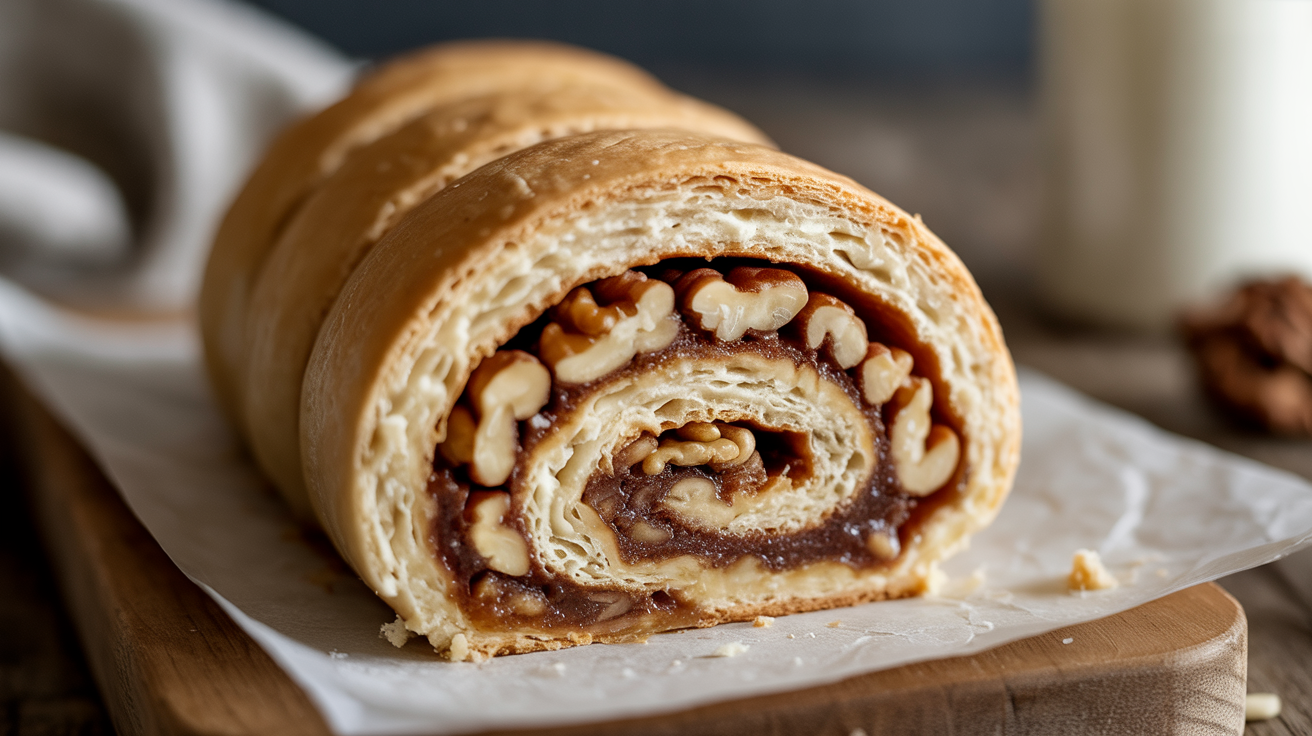
The outside gets golden and a little crusty, but the inside stays soft. When you cut into a Slovak nut roll recipe, you see those beautiful swirls of walnut filling. The nuts give it richness, but it never feels too dense.

Essential Ingredients and Equipment
To make a real Slovak nut roll, you need the right ingredients and tools. There’s no shortcut here—getting the basics right makes all the difference between an okay roll and an unforgettable one. If you want to see more variations, check out this potica recipe for inspiration.
Choosing and Preparing the Yeast Dough
I stick with active dry yeast for my dough because it’s reliable. I always make a starter by dissolving a teaspoon of honey or sugar in warm milk (about 110°F), then sprinkle in the yeast.
For Slovak nut roll recipe dough, I use all-purpose flour, eggs, butter or margarine, sugar, salt, and milk. I measure carefully—dough should be soft, not sticky. If it’s too wet, I add a little more flour. If it’s too dry, a splash of water helps. It’s a feel thing, honestly.
Letting the dough rise is key. I dust a bowl with flour, drop the dough in, cover it with plastic wrap, and let it rise for about 2 hours in a warm spot. It should double in size. This is what gives Slovak nut roll its signature soft texture. For more yeast dough tips, you might find this step-by-step yeast dough guide helpful.
Walnut Filling and Alternatives
Ground walnuts are the star of the Slovak nut roll filling. I usually need 2-3 cups per roll. Grinding them fresh in a food processor makes a big difference in flavor.
My filling mixes ground walnuts with sugar, warm milk or light cream, vanilla, and a pinch of salt. Sometimes I add toasted bread crumbs sautéed in butter to keep the filling from getting soggy.
I fold in beaten egg whites for a lighter, fluffier texture. It’s a little extra work, but it’s worth it. My grandmother swore by this trick for Slovak nut roll recipe.
Sometimes I switch things up and make a poppy seed roll instead, using ground poppy seeds but keeping the rest of the recipe the same. Slovak nut roll really is the base for so many delicious variations.
Egg Wash and Glaze Techniques
I always brush my Slovak nut roll recipe with an egg wash before baking. It makes the crust shiny and golden. One egg with a tablespoon of water or milk, whisked well, does the trick.
I brush gently right before the nut roll goes into the oven. That’s how you get that bakery-worthy finish. Sometimes I add a simple glaze of powdered sugar and milk after baking, but I wait about 10 minutes so the roll is still a little warm but not too hot.
Must-Have Tools for Baking
You’ll want a large cookie sheet—at least 12 inches long. If your baking sheet is smaller, just curve the Slovak nut roll a bit to fit.
Parchment paper is non-negotiable for me. It keeps the rolls from sticking and makes cleanup easy. I always keep some on hand.
Other tools I use for Slovak nut roll:
- Mixing bowls (at least two big ones)
- Electric mixer or a sturdy wooden spoon
- Rolling pin
- Clean kitchen towels for covering dough
- Pastry brush for egg wash
- Sharp knife for slicing
I keep a chopstick or skewer nearby to poke tiny steam vents in the top of the Slovak nut roll recipe before baking. It helps prevent cracks, and it’s saved me from a few disasters.
Classic Slovak Nut Roll Recipe Steps

Step 1. In a small bowl, mix milk and vanilla, then dissolve the yeast in it.

Step 2. In a large bowl, sift together the flour, sugar, and salt. Cut in the butter until the mixture looks like coarse crumbs.

Step 3. Add the egg yolks and yeast mixture. Stir briefly, then knead by hand (or use a mixer with a dough hook) until a smooth, less sticky dough forms. Shape into a ball, wrap, and refrigerate overnight.

Step 4. To make the filling, combine ground walnuts, sugar, and brown sugar. Divide evenly into two bowls and set aside.

Step 5. Take the dough out of the fridge, divide it in half, and place on a floured surface. Roll each piece into a 14” x 13” rectangle, with a long edge facing you.

Step 6. Mix the reserved egg whites with a drop of vanilla. Brush some over the dough, then spread about ¼ cup applesauce on top. Sprinkle one portion of the nut filling evenly, leaving about a 1-inch border (½ inch on the far edge).

Step 7. Roll the dough tightly away from you into a log. After a few turns, fold in the side edges, then continue rolling. Pinch the seam closed and place seam-side down on a lined or greased baking sheet. Brush the top with milk mixed with a little vanilla. Repeat with the second piece of dough.

Step 8. Let the rolls rise for 30 minutes. During the last 10–15 minutes, preheat the oven to 350°F.

Step 9. Bake for 30–35 minutes, until deep golden brown. Slice across to serve.
Making and Proofing the Dough
I start my Slovak nut roll recipe by warming milk to about 110°F. I dissolve the yeast in warm water with a pinch of sugar and let it get foamy for 5 minutes.
In a large bowl, I mix the yeast starter with scalded and cooled milk, melted butter, sugar, salt, and egg yolks. I add flour little by little until the dough is soft and not sticky.
Kneading takes about 8 minutes on a floured surface. When it’s smooth and elastic, I drop it in a greased bowl, cover with a damp towel, and let it rise in a warm spot until doubled—usually 1 to 2 hours.
Preparing the Walnut Filling
While the dough rises, I grind the walnuts. I like a little texture, so I don’t make them too fine. I heat milk or cream in a pan, stir in sugar, butter, and sometimes honey, then add the ground walnuts for a thick, spreadable filling.
Some traditional walnut roll recipes use beaten egg whites in the filling for extra lightness. I let the filling cool before spreading it—it’s just easier that way.
Rolling, Filling, and Shaping
I divide the dough into two pieces. I roll each into a rectangle, about 1/4 inch thick, on a floured surface. I spread half the walnut filling on each, leaving a 1-inch border.
I roll up the dough from the long side, keeping it tight to avoid air pockets. Here’s what I always do for Slovak nut roll recipe:
- Pinch the seam closed
- Tuck the ends under
- Place seam-side down on a greased or parchment-lined baking sheet
I brush the top with egg wash. Before baking, I poke holes on top with a chopstick to let steam escape and keep the Slovak nut roll from cracking.
Baking, Slicing, and Serving
I preheat the oven to 350°F and bake the nut rolls for 30-35 minutes, or until they’re golden. The kitchen smells incredible—honestly, it’s hard to wait.
I let the Slovak nut roll recipe cool on the baking sheet for about 10 minutes, then move it to a rack. I wait until it’s completely cool before slicing, or it’ll fall apart. A serrated knife works best for neat slices.
Slovak nut roll keeps well at room temp for three days, wrapped up tight, or you can freeze it for a few months. I eat mine plain, but a sprinkle of powdered sugar is always nice.

Fun Variations and Helpful Tips
Walnut filling is classic, but you can totally play around with other nuts or seeds in your Slovak nut roll recipe. Try pecans, almonds, or even a chocolate swirl if you feel adventurous. For more ideas, check out this potica variation or see how the poppy seed roll compares.
Knowing how to troubleshoot common issues—like dough that’s too sticky or filling that leaks—makes a big difference. Store your Slovak nut roll wrapped in plastic or foil to keep it fresh. If you want to freeze it, slice it first for easy snacking later. Want more baking inspiration? Here’s a list of Eastern European desserts that’s worth a look.
Making Slovak nut roll recipe is a bit of an art, but you’ll get the hang of it. There’s something special about baking it yourself—maybe it’s the tradition, maybe it’s the smell, or maybe it’s just knowing you made something delicious from scratch. Either way, Slovak nut roll always finds a place at my table, and I hope it does at yours too.
Poppy Seed, Pecan, and Fruit Options
Poppy seed filling creates a beautiful black swirl when you slice into your sweet yeast dough. Ground poppy seeds, sugar, milk, and butter come together for a traditional makowiec that’s honestly just as beloved as the walnut version. I always grind the poppy seeds fresh—trust me, it makes a difference in both flavor and texture. If you’re looking for a classic Slovak nut roll recipe, this is a must-try variation.
Pecans are a great choice if you want a sweeter, less bitter taste than walnuts. Sometimes I’ll throw in dried fruits like raisins, cranberries, or even chopped dates for a twist on the classic Slovak nut roll. Some folks add honey or a bit of jam to the filling, making it even richer and honestly, who could blame them?
For kolache-style Slovak nut roll recipe variations, I might toss in a little lemon zest or cinnamon to the dough. You can make smaller, individual rolls instead of one giant orechovy zavin—much easier for serving and, let’s be real, for snacking. If you’re on the hunt for more ideas, check out this poppy seed roll recipe for inspiration.
Common Problems and Solutions
Cracking on top of your Slovak nut roll can be seriously annoying. I use the chopstick trick—poke little steam vents along the top before baking—and it usually keeps the dough from splitting. The steam needs to get out somewhere, right?
If your filling leaks out during baking, you probably rolled the dough too thin or stuffed in too much filling. I always leave about half an inch at the edges and pinch them shut with my fingers. Brushing the edges with beaten egg helps seal them up, which is a simple fix for a classic Slovak nut roll recipe problem. For more tips, you might want to peek at this nut roll troubleshooting guide.
Dry filling just ruins a good Slovak nut roll. If it feels crumbly, I add more milk or melted butter until it holds together when squeezed. Always taste your filling before rolling it up; sometimes it just needs a little extra love. Want to see how others do it? Here’s a YouTube video showing a Slovak nut roll from start to finish.
If you’re searching for more Slovak nut roll inspiration, don’t miss this traditional recipe or explore this Saveur article for more background and stories. Slovak nut roll really is one of those recipes that brings people together, even if it’s just for a sweet slice and a cup of coffee.
Serving and Storage Ideas
I usually serve my Slovak nut roll at room temperature, or sometimes I’ll warm it up just a bit. Honestly, dusting the top with powdered sugar right before serving? It just makes everything feel a little more festive, especially if you’re setting it out for the holidays. If you ask me, nothing goes better with a slice of Slovak nut roll than a cup of coffee or tea—perfect for breakfast or dessert. For more serving inspiration, check out this guide to traditional nut roll pairings.
When it comes to storing Slovak nut roll recipe, I wrap the cooled rolls tightly in plastic wrap, then add a layer of aluminum foil. This keeps them fresh at room temperature for about three days, or you can stash them in the fridge and they’ll last up to a week. If you’re looking for more storage tips, King Arthur Baking has a great article on keeping holiday breads like Slovak nut roll recipe fresh.
Slovak nut roll recipe freezes really well—up to three months, no problem. I like to slice the roll before freezing, so I can just grab a piece or two whenever I want. Just set a frozen slice out at room temperature for about 30 minutes, and it’s ready to eat. If you want more freezing advice, Serious Eats offers freezing tips that work for Slovak nut roll recipe too. For those interested in the history behind this treat, Slovak Cooking shares some great background on the traditional Slovak nut roll recipe. And if you’re curious about different fillings, Saveur has a few creative twists you might want to try the next time you bake a Slovak nut roll recipe.

Nut Roll vs Babka
Slovak nut roll, often called orechovník, and babka are both rolled pastries with rich fillings, but they differ in texture, sweetness, and overall style.
Nut roll is a traditional Eastern European pastry made with a soft, slightly sweet yeast dough wrapped around a dense walnut filling. The filling is typically rich and earthy, sometimes lightly sweetened, and spread evenly before rolling. Once baked, the pastry has a uniform swirl and a firmer, more compact texture. It’s commonly served during holidays like Christmas and is known for its comforting, nostalgic flavor.
Babka, popular in Jewish and Polish baking traditions, also uses a rolled dough but is often lighter and more enriched with butter and eggs. It commonly features chocolate or cinnamon fillings and is twisted before baking, creating a more dramatic swirl pattern. The texture is softer and more cake-like, with a sweeter and more indulgent flavor profile.
The key difference is density and flavor focus: nut roll is denser and nut-forward, while babka is softer and often sweeter with more variation in fillings.
If you prefer a traditional, hearty pastry with rich walnut flavor, nut roll is the better choice. For a lighter, sweeter treat with a more decadent feel, babka stands out.
Slovak Nut Roll Recipe FAQ
1. What filling is used in this Slovak nut roll recipe?
A sweet walnut filling mixed with sugar and sometimes milk or honey is traditional.
2. What dough is used for nut roll?
A soft yeast dough is typically used to create a tender texture.
3. How do you keep nut roll from cracking?
Rolling the dough gently and not overfilling helps prevent cracks.
4. Is Slovak nut roll served during holidays?
Yes, it’s especially popular during Christmas and Easter.
5. Can nut roll be frozen?
Yes, it freezes well when wrapped tightly.

Slovak Nut Roll (Orechovnik)
Ingredients
- 2 cups all-purpose flour
- 2 tbsp sugar
- 1 tsp salt
- 2 egg yolks beaten (set aside the egg whites)
- ½ cup butter 1 stick
- ½ cup milk cold
- ½ tsp vanilla
- 1 package dry yeast
- ¾ lb walnuts ground, about 3 cups whole walnuts
- ¾ cup sugar
- ¼ cup brown sugar
- 2 egg whites saved from dough
- 3 drops vanilla divided
- ½ cup applesauce
- ¼ cup milk
Instructions
- Step 1. In a small bowl, mix milk and vanilla, then dissolve the yeast in it.

- Step 2. In a large bowl, sift together the flour, sugar, and salt. Cut in the butter until the mixture looks like coarse crumbs.

- Step 3. Add the egg yolks and yeast mixture. Stir briefly, then knead by hand (or use a mixer with a dough hook) until a smooth, less sticky dough forms. Shape into a ball, wrap, and refrigerate overnight.

- Step 4. To make the filling, combine ground walnuts, sugar, and brown sugar. Divide evenly into two bowls and set aside.

- Step 5. Take the dough out of the fridge, divide it in half, and place on a floured surface. Roll each piece into a 14” x 13” rectangle, with a long edge facing you.

- Step 6. Mix the reserved egg whites with a drop of vanilla. Brush some over the dough, then spread about ¼ cup applesauce on top. Sprinkle one portion of the nut filling evenly, leaving about a 1-inch border (½ inch on the far edge).

- Step 7. Roll the dough tightly away from you into a log. After a few turns, fold in the side edges, then continue rolling. Pinch the seam closed and place seam-side down on a lined or greased baking sheet. Brush the top with milk mixed with a little vanilla. Repeat with the second piece of dough.

- Step 8. Let the rolls rise for 30 minutes. During the last 10–15 minutes, preheat the oven to 350°F.
- Bake for 30–35 minutes, until deep golden brown. Slice across to serve.

Video


14 comments
Anyone tried swapping walnuts for pecans in this nut roll recipe? Think itll maintain the traditional Slovakian essence?
Isnt it fascinating how the walnut taste in Slovak nut rolls varies subtly across Central Europe? Heritage food is an edible history lesson!
Indeed, but to me, the Hungarian version trumps all! Theres no competition.
Anyone else think the Slovak Nut Roll recipe might actually be a hidden gem in Central European culinary tradition? #foodforthought
Has anyone tried using pecans instead of walnuts in these Slovak Nut Rolls? Curious how it might alter the traditional flavor profile.
Pecans! Are you joking? Youll completely ruin the authentic Slovak taste. Stick to walnuts!
Interesting article! Anyone tried substituting walnuts with almonds in this Slovak Nut Roll recipe? Curious about the taste difference.
Definitely! Almonds give it a unique, richer taste. Worth giving a try!
Interesting article! Anyone else feel like the Slovak Nut Rolls unique flavor is overshadowed by its rich cultural heritage?
Disagree. The Slovak Nut Rolls flavor stands its ground, regardless of its rich heritage!
Isnt the beauty of the Slovak Nut Roll its simplicity? Why mess with tradition by introducing variations from across Central Europe?
Do you think the Slovak Nut Roll could stand its ground against an Italian cannoli? Same sweet vibes but different heritage.
Cannolis sweet charm is unbeatable. The Slovak Nut Roll doesnt stand a chance!
Isnt it fascinating how a simple nut roll recipe can reflect centuries of Central European history and traditions? Truly food for thought!
Comments are closed.