


I’ve been making Korean kimchi jjigae for years now, and honestly, nothing beats it when you want something cozy and bold. Korean kimchi jjigae is this spicy, tangy stew packed with aged kimchi, pork, tofu, and veggies, and you can whip it up in about 30 to 40 minutes. This classic Korean dish shows up on dinner tables all over Korea, sometimes even a couple times a week.
What gets me every time about Korean kimchi jjigae is how simple it is, but the flavors run deep. The sour, fermented kimchi turns into this rich, warming broth that tastes like it took all day. The stew somehow hits spicy, salty, sweet, and sour all at once. I never get tired of it—how could you?
Here, I’ll break down everything you actually need to know about making Korean kimchi jjigae at home. I’ll cover the ingredients that matter most, how to layer flavors, and the best ways to serve this Korean comfort food. Whether you’re just getting into Korean food or you’re chasing the perfect pot, I hope you’ll find some tips you can use.

What Is Korean Kimchi Jjigae?
Kimchi jjigae is a spicy stew built around fermented kimchi, and it’s one of Korea’s most popular comfort foods. The dish brings together kimchi, pork, tofu, and veggies for a warm, flavorful meal that’s somehow both easy and super satisfying. I don’t know anyone who doesn’t crave it once in a while.
History and Cultural Significance
I’ve found out that Korean kimchi jjigae is about resilience and creativity—it’s a smart way to use kimchi that got too sour to eat plain. Instead of tossing it, home cooks realized old kimchi makes an amazing stew base. That’s pretty clever, right?
Kimchi jjigae became a staple in households all over Korea. Lots of families just eat Kimchi jjigae with a bowl of rice for a simple meal. The dish really shows off Korean values like not wasting food and finding comfort in the basics. It’s a little piece of tradition, honestly.
It’s more than just food—it’s a connection to family and tradition. When I make Kimchi jjigae, I always think of the generations before me who did the same thing.
Difference Between Kimchi Jjigae and Kimchi Soup
So, what’s the big difference between Korean kimchi jjigae and kimchi soup? It’s all about texture and heartiness. Korean kimchi jjigae is thick, chunky, and filling, while kimchi soup is lighter and brothier.
Here’s how they really differ:
- Texture: Kimchi jjigae is thick and chunky; soup is more liquidy
- Ingredients: Kkimchi jjigae usually has pork belly and tofu for extra heft
- Serving style: Korean kimchi jjigae comes bubbling in a stone pot; soup is just in a regular bowl
- Portion size: Stews fill you up and are the main event
For me, Korean kimchi jjigae is a meal on its own, while kimchi soup is more of a side or a lighter option. You can read more about these differences at Korean Bapsang.
Key Flavor Profiles
Korean kimchi jjigae balances spicy, savory, and sweet for a truly unique taste. The fermented kimchi gives it that signature tangy, sour kick. Depending on your kimchi and how much red pepper you add, the spice level can go from mild to “whoa.”
I always notice the savory depth from pork and all that umami from the kimchi juice. Some cooks toss in a little sugar to take the edge off the sourness and spice. And then there’s the garlic and ginger—can you even make Korean kimchi jjigae without those?
The longer your kimchi ferments, the more interesting the flavor gets. Aged kimchi is the way to go for Kimchi jjigae because it gives you a deeper, richer stew.
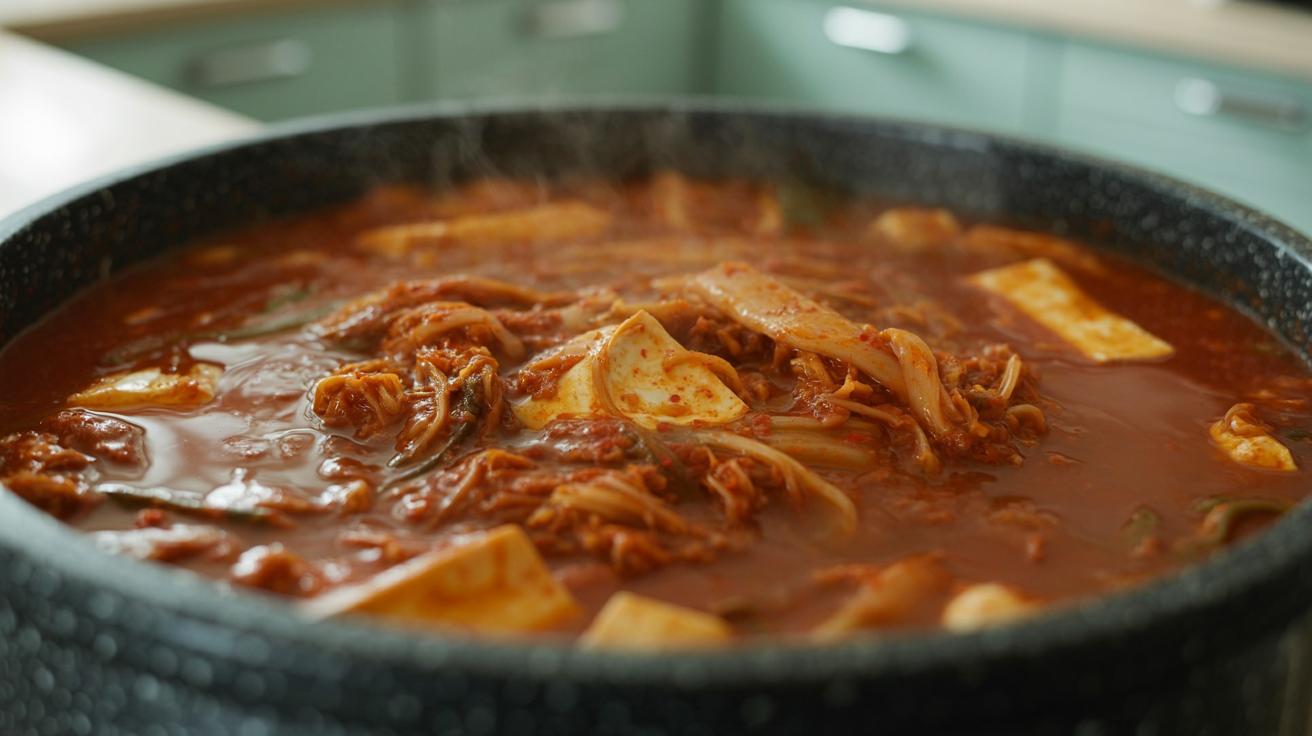
Essential Ingredients for Kimchi Jjigae
Great Kimchi jjigae starts with well-aged kimchi and a few solid ingredients. I always double-check that I’ve got the right kimchi, protein, veggies, and seasonings before I even think about turning on the stove.
Kimchi Selection and Fermentation
Seriously, don’t even try to make Kimchi jjigae with fresh kimchi. Well-fermented kimchi is the secret. If your kimchi’s only been sitting for a few days, it won’t cut it.
Aged kimchi—at least two weeks old—tastes best. It should be sour and a little funky. I always look for napa cabbage kimchi with a strong smell. That’s when you know it’s ready for Kimchi jjigae.
Don’t dump out the kimchi juice! That brine at the bottom is pure gold for Kimchi jjigae. Pour the juice right in with the kimchi pieces. If you skip it, you’ll miss out on so much flavor.
If you use fresh kimchi, your Kimchi jjigae will taste flat. The fermentation process is what makes Kimchi jjigae so special and crave-worthy.
Best Proteins to Use
Pork belly is my go-to for Korean kimchi jjigae. The fat melts into the broth and gives it a rich, savory taste. I just cut it into little half-inch pieces.
Pork shoulder is a solid backup if you want something leaner, but it’s not quite as rich. Some folks use canned tuna or SPAM for a totally different—but still tasty—Kimchi jjigae. It’s kind of fun to mix it up.
I’ve made Korean kimchi jjigae without meat too. Just use more tofu. Firm or medium-firm tofu works best so it doesn’t fall apart. I cut the tofu into big cubes so they can soak up the spicy broth.
Common Vegetables and Add-Ins
Green onion is a must for Kimchi jjigae. I chop it into two-inch pieces and toss some in at the start, then save a bit for the end. It’s simple but makes a difference.
Onion adds sweetness and helps balance the sour kimchi. I slice it thin so it melts into the stew. Mushrooms like shiitake or enoki give Kimchi jjigae an earthy vibe and extra bite.
Here are the veggies I usually throw in:
- Green onion (scallions)
- Onion (yellow or white)
- Tofu (firm or medium-firm)
- Mushrooms (optional)
- Zucchini (optional)
I try to keep the veggie list short. After all, Korean kimchi jjigae is really about the kimchi.
Must-Have Korean Seasonings
Gochugaru (Korean chili flakes) and gochujang (Korean chili paste) are essential for real-deal Korean kimchi jjigae. I usually go with a tablespoon of gochugaru and one or two tablespoons of gochujang, depending on my mood.
Garlic is non-negotiable. I throw in at least three or four cloves every time I cook Korean kimchi jjigae. It just works so well with the kimchi.
For the broth, I like anchovy stock made from dried anchovies and kelp. I simmer them for about 10 minutes, then strain. If I’m in a rush, beef broth does the trick for Korean kimchi jjigae too.
| Seasoning | Purpose | Amount |
|---|---|---|
| Gochugaru | Spicy heat | 1 tbsp |
| Gochujang | Depth and spice | 1-2 tbsp |
| Soy sauce | Saltiness | 1-2 tbsp |
| Garlic | Aromatic base | 3-4 cloves |
| Sesame oil | Finishing touch | 1 tsp |
Soy sauce brings saltiness and umami. I add it slowly and taste as I go because kimchi is already salty. A little sesame oil at the end is my favorite part—it just smells so good in Korean kimchi jjigae. For more on Korean seasonings, check out this pantry guide.
How to Make Kimchi Jjigae at Home
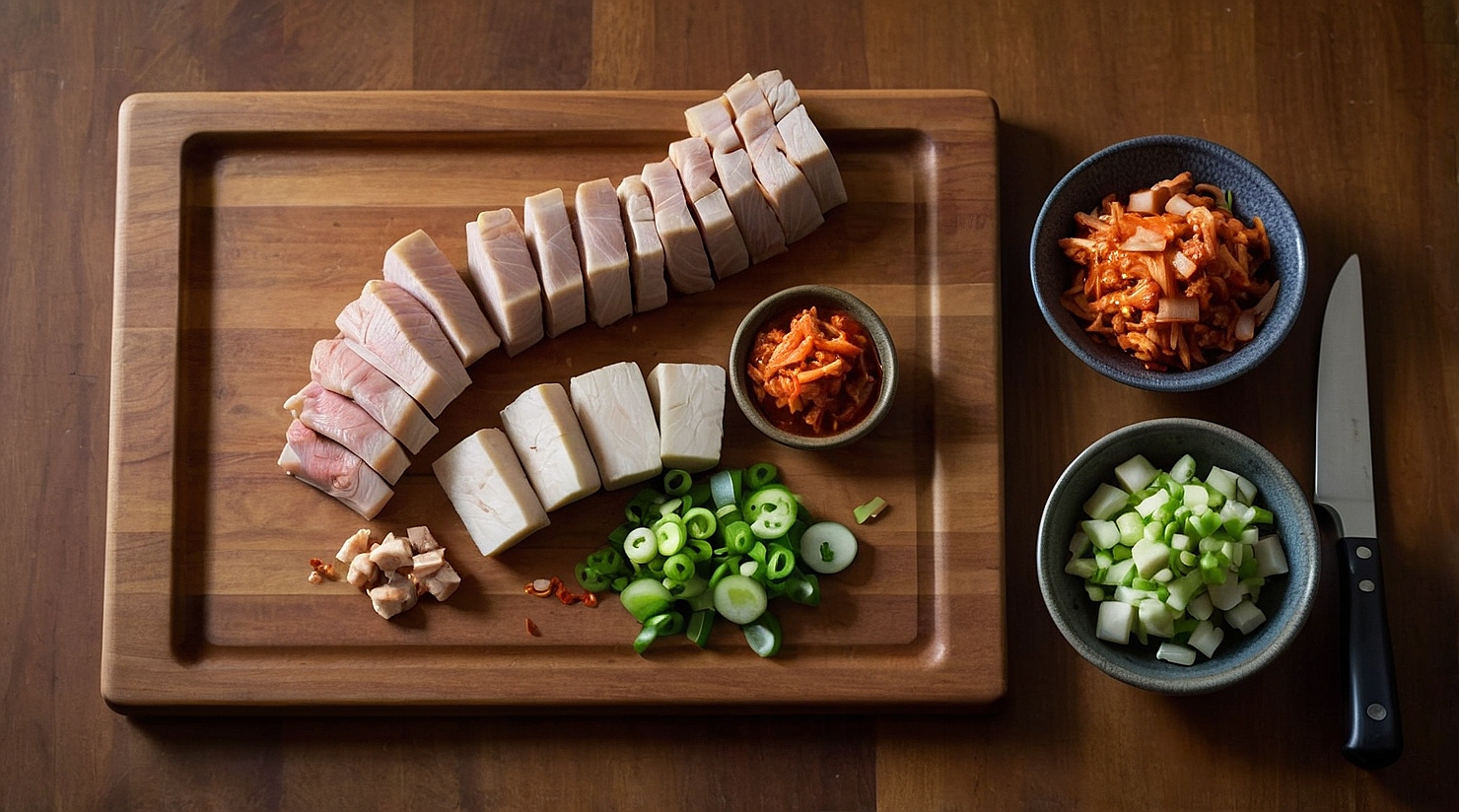
Step 1: Cut and prep. Slice the pork and kimchi into bite-sized pieces. Cut the tofu into about ½-inch thick slices and roughly chop the scallions.

Step 2: Sauté the base. Turn on the Sauté function on the Instant Pot. Once hot, add the pork, kimchi, sesame oil, and red pepper flakes. Cook for about 5 minutes, until the kimchi softens slightly and the pork is no longer pink.

Step 3: Pressure cook. Pour in the kimchi juice, water, soup soy sauce, and garlic. Secure the lid, switch to Soup mode, and set the timer for 10 minutes. Make sure the steam valve is set to “Sealing.”

Step 4: Release pressure. When cooking is complete, carefully turn the steam valve to “Vent” for a quick release. Open the lid once the pressure is fully released.

Step 5: Finish the stew. Add the tofu and scallions, then switch back to the Sauté setting. Let it simmer for about 5 minutes, or longer if needed, until the kimchi is tender to your liking.
Preparing the Ingredients
I always start with aged kimchi for my Korean kimchi jjigae recipe. It should be at least two or three weeks old and nice and sour. Fresh kimchi just won’t give you that punchy flavor Korean kimchi jjigae is famous for.
For protein, I like pork belly, cut into bite-sized chunks. You can use pork shoulder or skip the meat for a vegetarian Korean kimchi jjigae. Tofu gets cut into one-inch cubes so it stays together while cooking.
Here’s what I pull out before I start making Korean kimchi jjigae:
- 2 cups aged kimchi, roughly chopped
- 1/4 cup kimchi juice
- 200g pork belly, sliced
- 1 package firm tofu
- 2-3 cloves garlic, minced
- 1 tablespoon gochugaru (Korean red pepper flakes)
- 1 tablespoon gochujang (Korean red pepper paste)
- 1 medium onion, sliced
- 2 green onions, chopped
Building the Broth
The broth makes or breaks Korean kimchi jjigae. I use anchovy stock because it adds so much savoriness. Just simmer dried anchovies and kelp in water for about 10 minutes, then strain out the bits. If you’re short on time, water with a bit of dashida (soup stock powder) works too.
I add 2-3 cups of liquid, depending on how thick I want my Korean kimchi jjigae. Don’t skip the kimchi juice! It’s loaded with flavor and probiotics. Pour it right in with the kimchi.
Cooking Steps and Tips
I cook Korean kimchi jjigae in a ttukbaegi (Korean earthenware pot) when I can. It keeps everything hot and bubbling for ages, which is kind of the best part.
First, I sauté the pork belly until it starts to brown and release fat. Then, I toss in the kimchi and stir-fry for a few minutes. This step really wakes up the flavors for Korean kimchi jjigae.
I add garlic, gochugaru, and gochujang next, mixing it all up before pouring in the broth. Once it boils, I turn the heat down and let it simmer for 15-20 minutes. The longer it simmers, the better Korean kimchi jjigae gets.
During the last five minutes, I add the tofu and onions. The tofu should heat through but not break apart. Garnish with extra green onion, and you’re done. For more tips and variations, you can check out Serious Eats’ guide to Korean kimchi jjigae or explore the Wikipedia page on Korean kimchi jjigae for even more background.
Customizing Your Stew
When I make Korean kimchi jjigae, I always play with the spice level. Sometimes I toss in a heap of gochugaru, but other days I hold back and let gochujang do more of the heavy lifting. If you want it milder, just cut down the gochugaru and lean on the gochujang for that deep, savory vibe. It’s way easier to tweak than you’d think.
Protein options I keep on rotation for Korean kimchi jjigae include:
- Canned tuna (trust me, it’s a legit and classic move—see Maangchi’s version)
- Spam or ham (yep, it’s a thing in Korean kimchi jjigae)
- Beef brisket, if I’m feeling fancy
- Mushrooms when I want a vegetarian Korean kimchi jjigae
Sometimes I’ll throw in rice cakes (tteok) or ramen noodles to bulk it up. Glass noodles? They’re awesome too. They soak up all that spicy Korean kimchi jjigae broth and just taste amazing.
For a little extra richness, I’ll crack an egg over the bubbling Korean kimchi jjigae right before serving. The egg half-cooks and gets super creamy when you stir it in. Some folks even toss in a slice of American cheese—sounds odd, but it melts right in and gives the Korean kimchi jjigae a creamy, almost addictive quality. If you’re curious, check out this step-by-step guide for more ideas.

Serving and Enjoying Kimchi Jjigae
I always bring Korean kimchi jjigae to the table still bubbling in its pot. There’s just something comforting about that. I pair it with steamed white rice and a bunch of little side dishes. Scooping up the spicy Korean kimchi jjigae broth with rice? That’s honestly the best part. Having the right sides just makes the whole meal feel right. If you want to see how it’s done in Korea, this video is a solid watch.
Traditional Accompaniments
I never skip the steamed white rice when I serve Korean kimchi jjigae. The rice cools down the heat and soaks up all that tangy, spicy broth. It’s just not the same without it.
In Korea, you’ll always see a spread of banchan with your Korean kimchi jjigae. I usually set out three to five small side dishes. My go-tos are seasoned spinach, bean sprouts, and pickled radish, but you can mix it up. If you’re curious about banchan, check out this list of favorites.
Korean side dishes are key for balance. I like to pick at something mild or a bit sweet to offset the spicy punch of Korean kimchi jjigae. Seasoned seaweed or a cool cucumber salad both do the trick. Sometimes I’ll throw raw garlic and sliced green chili on the table—just for that extra kick. Korean kimchi jjigae has a way of making you crave bold flavors.
What to Serve with Kimchi Jjigae
I think Korean kimchi jjigae shines as the centerpiece, but it plays well with other Korean recipes too. If I’m going all out, I’ll add a few lighter dishes to round things out. A classic kimchi stew recipe can help you get started.
For a bigger meal, I’ll sometimes add:
- Grilled fish—mackerel or dried yellow croaker are both great with Korean kimchi jjigae
- Korean egg roll—it’s sweet, fluffy, and balances out the heat
- Japchae—glass noodles and veggies, always a crowd-pleaser
- Tofu salad—cold, refreshing, and a nice break from the stew
I usually skip other heavy or super spicy mains. Korean kimchi jjigae is already rich and bold, so you don’t need much else. Got leftover kimchi? Make a kimchi pancake or kimchi fried rice the next day. Korean kimchi jjigae is super versatile, and leftovers never go to waste.
For more Korean meal inspiration, check out this guide and this recipe—both have great tips for building your own spread.
Storing and Reheating
I stash leftover Korean kimchi jjigae in an airtight container and pop it in the fridge. It keeps for up to four days, and honestly, the flavors just get deeper after a day or two. Korean kimchi jjigae really gets better with time.
Let the stew cool off before you store it—otherwise, you’ll get condensation, and that can mess with the texture. When I want more Korean kimchi jjigae, I just dump it back in a pot and heat it over medium. If it’s thickened up, I splash in a bit of water or broth. The microwave works in a pinch, but the stovetop brings back the original flavor best.
If you’re thinking about freezing Korean kimchi jjigae, skip the tofu. Frozen tofu turns weirdly spongy and just isn’t right. If you plan ahead, leave out the tofu and add fresh cubes when you reheat your Korean kimchi jjigae. It’s a small step, but it makes a big difference.
Using Leftover Kimchi Jjigae
I almost never toss out leftover Korean kimchi jjigae—it’s just too good and honestly, super handy. Most days, I’ll just scoop it over a bowl of rice for a quick, comforting lunch. Who doesn’t love something that easy?
Every now and then, I’ll drain the solid bits from the Korean kimchi jjigae and toss them with some day-old rice. That turns into kimchi fried rice, and wow, the flavor from the jjigae’s kimchi and pork really makes it pop. You can check out more fried rice ideas on Maangchi’s site if you’re curious.
Sometimes I get a little creative with my leftover Korean kimchi jjigae and use it as a filling for kimchi dumplings. I just drain off the broth, chop everything up pretty fine, and wrap it in dumpling skins. If you want to see how that’s done, there’s a great step-by-step on Korean Bapsang.
And hey, don’t let that leftover broth from your Korean kimchi jjigae go to waste. I’ll throw in some noodles, a handful of extra veggies, or even rice cakes to turn it into a whole new meal. You can get creative—maybe try adding tofu or mushrooms, too. There’s actually a bunch of inspiration for this on Serious Eats and Bon Appétit.
If you want to keep experimenting with Korean kimchi jjigae, pick up some kimchi and other ingredients at your local Korean market. Or order online—there are so many options now. For more ideas, you could check out My Korean Kitchen for tips on making and using Korean kimchi jjigae in different ways.
Honestly, Korean kimchi jjigae is one of those dishes that just keeps on giving. Leftovers never feel boring when you can turn them into something totally new. If you haven’t tried mixing it up yet, maybe give it a shot next time. Korean kimchi jjigae saves the day more often than not, at least in my kitchen. There’s just something about the way Korean kimchi jjigae flavors deepen overnight—it’s hard to resist.
Don’t be afraid to play around with your leftover Korean kimchi jjigae. Whether you’re making fried rice, dumplings, or just jazzing up the broth, it’s all fair game. Korean kimchi jjigae really does make leftovers exciting. If you need more motivation, just remember how easy it is to transform Korean kimchi jjigae into something new. Sometimes, that’s all the push you need to get creative in the kitchen.
So next time you have extra Korean kimchi jjigae, don’t let it sit in the fridge too long. There’s always a way to give it another life. I mean, who knew Korean kimchi jjigae could be this fun? Give it a try and see where your taste buds take you. Korean kimchi jjigae honestly never lets me down—maybe it’ll be the same for you.

Kimchi Jjigae vs Doenjang Jjigae
Kimchi jjigae and doenjang jjigae are two of the most iconic Korean stews, but they offer completely different flavor profiles. Kimchi jjigae is bold, spicy, and tangy thanks to fermented kimchi, making it a go-to comfort food for those who love strong, punchy flavors. It’s often made with pork, tofu, and a rich chili-infused broth.
Doenjang jjigae, on the other hand, is built around fermented soybean paste, giving it a deep, earthy, and slightly nutty flavor. It’s less spicy than kimchi jjigae and leans more toward a savory, umami-rich experience. Vegetables, tofu, and sometimes seafood are commonly used.
When comparing kimchi jjigae vs doenjang jjigae, the difference comes down to spice versus earthiness. Kimchi jjigae is vibrant and fiery, while doenjang jjigae is mellow, hearty, and deeply comforting.
Korean Kimchi Jjigae FAQ
1. What type of kimchi is best for kimchi jjigae?
Aged kimchi is best because it has a stronger, more sour flavor that deepens the stew.
2. Why is pork commonly used in kimchi jjigae?
Pork adds richness and balances the tangy, fermented taste of kimchi.
3. Can kimchi jjigae be made without tofu?
Yes, tofu is optional and can be replaced with extra meat or vegetables.
4. How sour should kimchi jjigae taste?
It should have a noticeable tang, but it can be balanced with broth or a pinch of sugar.
5. Is kimchi jjigae better the next day?
Yes, the flavors develop further after resting.

Korean Kimchi Jjigae
Ingredients
- 3 cups kimchi packed, cut (about 1 1/2 pounds kimchi, well fermented)
- 8 ounces pork fatty
- 1 tablespoon sesame oil
- 3 teaspoons gochugaru Korean red chili pepper flakes - adjust to taste
- 1/2 cup kimchi juice if available
- 2 cups water (1/2 cup more if not using kimchi juice)
- 1 tablespoon soy sauce soup
- 1 tablespoon garlic minces
- 8 ounces tofu
- 2 scallions
- black pepper to taste
- 2 teaspoons sugar optional
Instructions
- Slice the pork and kimchi into bite-sized pieces. Cut the tofu into about ½-inch thick slices and roughly chop the scallions.

- Turn on the Sauté function on the Instant Pot. Once hot, add the pork, kimchi, sesame oil, and red pepper flakes. Cook for about 5 minutes, until the kimchi softens slightly and the pork is no longer pink.

- Pour in the kimchi juice, water, soup soy sauce, and garlic. Secure the lid, switch to Soup mode, and set the timer for 10 minutes. Make sure the steam valve is set to “Sealing.”

- When cooking is complete, carefully turn the steam valve to “Vent” for a quick release. Open the lid once the pressure is fully released.

- Add the tofu and scallions, then switch back to the Sauté setting. Let it simmer for about 5 minutes, or longer if needed, until the kimchi is tender to your liking.

Video

