


I’ve been making this Korean sundubu jjigae a lot and honestly, it’s one of those Korean comfort foods that I just never get tired of. The sundubu jjigae is a spicy soft tofu stew—imagine silky tofu floating in a rich, flavorful broth packed with veggies and whatever meat or seafood you’re feeling that day. You’ll spot this Korean dish at just about every Korean restaurant, but making this classic at home is surprisingly doable. Why not give it a shot?
The thing I love most about sundubu jjigae is how simple and adaptable it is. You can make kimchi sundubu jjigae for more tang, toss in seafood for a lighter vibe, or go with pork for something hearty. It comes together fast and, wow, your kitchen will smell amazing.
Here, I’ll show you the ropes for Korean sundubu jjigae—what makes it special, what you need, and how to cook it step by step. Whether you’re new to Korean food or just want to recreate your favorite restaurant version, this Korean dish is a satisfying meal that works any night of the week. I mean, who doesn’t want a bubbling bowl of spicy stew at home?

What Is Korean Sundubu Jjigae?
It’s a bubbling, spicy stew made with super-soft, uncurdled tofu, veggies, and your choice of meat or seafood in a fiery red broth. I think it’s one of the coziest dishes in Korean cuisine. It usually arrives at the table in a traditional stone pot (ttukbaegi), still boiling hot—kind of dramatic, right?
Key Characteristics of Sundubu Jjigae
The main attraction in sundubu jjigae is sundubu—that’s the extra-soft tofu. It’s not pressed or strained like regular tofu, so it has a custard-like texture that just melts in your mouth. There’s nothing quite like it.
Sundubu jjigae gets its kick from gochugaru (Korean chili flakes) or gochujang (Korean chili paste). The broth is garlicky, a little nutty from sesame oil, and sometimes gets a salty punch from soy sauce or fish sauce. If you ask me, the combo is magic.
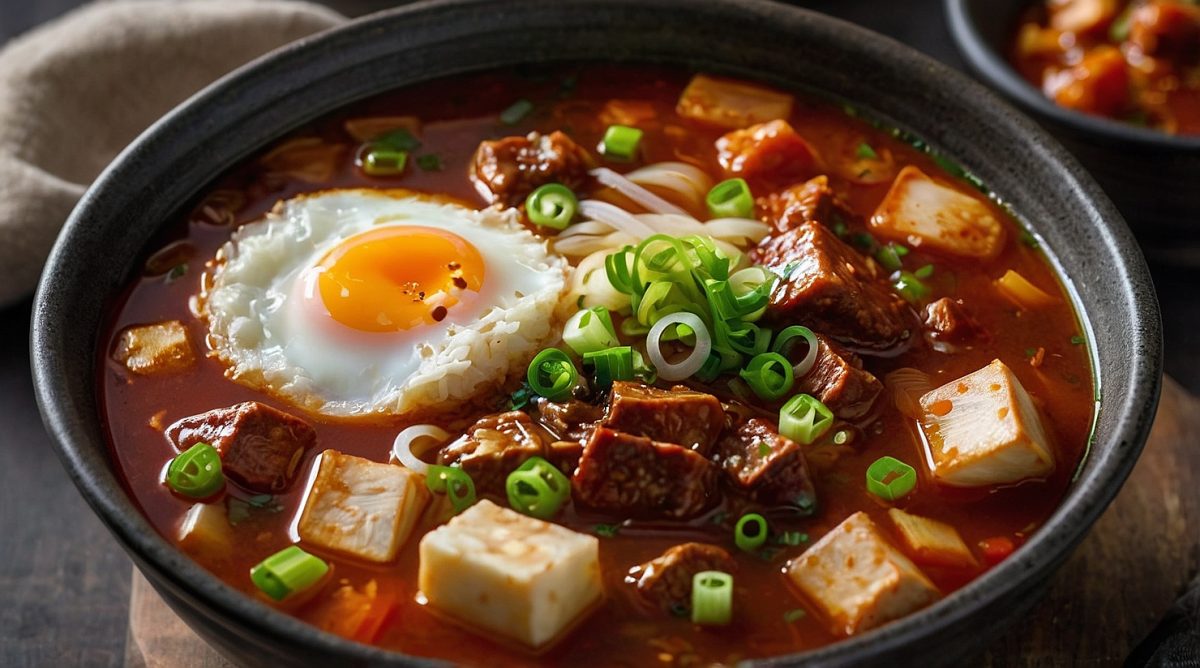
What sets Korean sundubu jjigae apart is how you cook and serve it right in its pot. You’ll usually see mushrooms, onions, and zucchini in there, along with your protein of choice. And you know what? Cracking a raw egg on top, letting it poach in the bubbling stew, is the finishing touch at a lot of Korean spots.
The ttukbaegi (that earthenware pot) isn’t just for looks. It keeps Korean sundubu jjigae piping hot and makes a satisfying sizzle when it gets to your table. That’s half the fun, honestly.
Cultural Significance in Korea
In Korea, sundubu jjigae is true comfort food. It’s what people reach for when they want something warming and nourishing. I totally get it—it’s like a hug in a bowl.
This Korean dish is usually served as a main dish, with rice and a bunch of banchan (those little side dishes). Some folks swear by it as a hangover cure, too—the spicy, savory broth just wakes you up.
Different parts of Korea have their own spins. Coastal regions lean into seafood, while inland areas go heavier on the meat. There’s a version of sundubu jjigae for everyone.
Types and Variations
Haemul sundubu is the seafood take—oysters, clams, mussels, shrimp, all that good stuff. The ocean flavor with creamy tofu? It’s a winner.
Kimchi sundubu folds tangy, fermented kimchi into the stew, which adds a sour punch that balances the richness. Sometimes there’s pork, sometimes not. Either way, it’s classic Korean sundubu jjigae.
If you’re a meat fan, pork belly or beef are the usual suspects. Pork belly makes Korean sundubu jjigae extra rich, while beef brings a savory flavor a bit like bulgogi.
Vegan sundubu jjigae skips meat and seafood, using mushrooms and veggies for that umami. Perilla seeds or kelp broth are great flavor boosters in these versions.
Sometimes people get creative and throw instant ramen noodles into Korean sundubu jjigae, making it even more filling. While kimchi jjigae is technically another stew, you’ll notice a lot of overlap in ingredients with Korean sundubu jjigae. It’s all delicious.

Essential Ingredients for Sundubu Jjigae
Getting ready to make this sundubu jjigae? You’ll need a few key things—soft tofu, spicy seasonings, and whatever add-ins you like. Let’s break it down so you can whip up a killer pot of Korean sundubu jjigae at home.
Soft Tofu: The Star Component
The heart of sundubu jjigae is sundubu, which is this super soft, uncurdled tofu. It’s different from regular silken tofu—it’s not pressed or drained, so it’s extra creamy and delicate.
You’ll usually find sundubu in tubes at Korean markets. It’s so soft that it almost falls apart in the hot broth, making Korean sundubu jjigae feel like eating little clouds. If you can’t get the real thing, silken tofu works, but honestly, it’s not quite the same.
The tofu soaks up all the spicy, savory flavors from the broth. When this Korean dish is bubbling, those tofu pieces become pockets of warmth. I usually use a whole tube (about 12-14 ounces) per serving or per pot.
Spicy Seasonings and Broth Building
The base of sundubu jjigae is all about gochugaru (chili flakes) and gochujang (chili paste). Gochugaru brings heat and that deep red color, while gochujang adds some sweet, fermented depth. They’re both essential for real-deal Korean sundubu jjigae.
For broth, I like to use anchovy stock—just dried anchovies and kelp simmered with radish for 15 minutes. It’s worth it, trust me. If you’re in a rush, water will do, but the anchovy broth really makes Korean sundubu jjigae shine.
Main seasonings for Korean sundubu jjigae:
- Soy sauce (for saltiness)
- Fish sauce (for umami)
- 3-4 cloves of garlic, minced
- Fresh ginger (optional, but I like the warmth)
- Toasted sesame oil (for that nutty aroma)
I use a bit of vegetable oil at the start for sautéing, and I save the sesame oil for the end. That way, it keeps its flavor in the Korean sundubu jjigae.
Popular Add-Ins: Protein, Seafood and Vegetables
The Korean version of sundubu jjigae is super customizable. Seafood is a classic—clams, mussels, shrimp, oysters. They add a briny sweetness that works so well with the spicy broth in Korean sundubu jjigae.
For meat, thinly sliced pork belly or beef are my go-tos. Pork belly gives Korean sundubu jjigae extra richness, while beef makes it hearty. Ground pork is great if you want something easy.
Veggies for sundubu jjigae:
- Zucchini (half-moons work best)
- Enoki mushrooms
- Dried shiitake mushrooms (rehydrated first)
- Kimchi (for tang and spice)
- Green onions (both white and green parts)
Mushrooms add earthiness, zucchini brings texture, and kimchi just amps up the flavor of sundubu jjigae. It’s a stew that really lets you play around.
Toppings and Garnishes
The classic finish for sundubu jjigae? A raw egg cracked right into the bubbling stew before serving. The heat cooks it gently, and the yolk gets all creamy and rich. It’s kind of irresistible.
I like to top Korean sundubu jjigae with chopped green onions and a drizzle of toasted sesame oil for extra fragrance. Sometimes I’ll add a sprinkle of toasted sesame seeds, too. It’s all about those little touches.
When you break the egg yolk and stir it through Korean sundubu jjigae, it coats everything and makes the stew velvety. Honestly, that’s my favorite part.
How to Make Sundubu Jjigae at Home
Cooking Korean sundubu jjigae at home is way easier than it looks. You only need a handful of ingredients and about 40 minutes. Build a flavorful base with aromatics and gochugaru, simmer your protein and veggies, then add that silky tofu. It’s not fussy—promise.
Step-By-Step Cooking Method

Step 1: Add oil to the pressure cooker and cook over medium heat using the sauté function. Once hot, add the onion, garlic, and jalapeño, and cook until softened. Stir in the chili paste or flakes, then add the meat and cook, stirring occasionally, until lightly browned.

Step 2: Add the mushrooms, soy sauce, sesame oil, kimchi, and broth (and kombu if using). Cut open the tofu package and slide it into the soup, gently breaking it apart with a spoon.

Step 3: Turn off sauté mode, secure the lid, and make sure the valve is set to sealing. Cook on high pressure for 1 minute.

Step 4: When the cooking time is finished, allow the pressure to release naturally for at least 10 minutes before opening the lid.

Step 5: Remove the kombu if used. Crack an egg into the soup and let it cook for about 1 minute (turn sauté mode back on if needed). Stir and serve hot, topped with green onions and served with rice and your favorite sides.
Tips for Authentic Flavor and Texture
The secret to authentic Korean sundubu jjigae is the right tofu and the right pot. Always use silken or soft tofu, not firm—the creamy texture is what makes Korean sundubu jjigae so good.
Flavor tips for Korean sundubu jjigae:
- Use fresh gochugaru (old flakes lose their kick)
- Pick well-fermented kimchi for depth
- Finish with sesame oil for richness
- Make anchovy or kelp broth instead of just water
When you add the tofu, don’t stir it too much. Gentle is the way to go—otherwise, Korean sundubu jjigae turns into mush. Serve it in a Korean earthenware bowl or clay pot to keep it bubbling hot, just like in Korean restaurants.
I always crack the egg right before serving so the yolk stays runny. That way, each person can mix it in themselves for extra richness. It’s the best part of Korean sundubu jjigae, honestly.
Adapting the Recipe: Variations and Substitutes
I’ve switched up this Korean sundubu jjigae recipe a bunch, depending on what I’ve got at home. Sometimes I use pork belly, ground beef, clams, shrimp, or just mushrooms for the protein. Vegan Korean sundubu jjigae works great with shiitake mushrooms and veggie broth.
If I don’t have kimchi, I use extra gochugaru and a splash of rice vinegar for tang. When I run out of gochugaru, I’ll mix a tablespoon of gochujang with water—it’s not exactly the same, but it works for Korean sundubu jjigae in a pinch.
I usually serve Korean sundubu jjigae as a main, with banchan like kimchi fried rice or even bibimbap. Sometimes I throw in zucchini, mushrooms, or extra green onions. Korean sundubu jjigae is flexible, forgiving, and honestly, it’s always a good idea. And hey, if you want to dive deeper, check out this detailed sundubu jjigae guide or learn more about the history of Korean sundubu jjigae.

Serving and Enjoying Sundubu Jjigae
If you ask me, Korean sundubu jjigae is at its absolute best when it’s bubbling hot in a heavy stone pot, surrounded by a spread of banchan, and eaten with a few simple Korean dining habits in mind. There’s just something about the presentation and the little details that turn Korean sundubu jjigae into a full-on comfort meal, not just a quick stew.
Traditional Presentation and Table Etiquette
Every time I make Korean sundubu jjigae, I go for the classic ttukbaegi—the earthenware bowl that keeps everything hot and cozy. When the stew hits the table still boiling, you know you’re in for a treat. That sizzle and steam? It’s basically an invitation to dig in before it cools.
Most Korean spots will crack a raw egg right into the Korean sundubu jjigae just before serving. I usually let it poach gently in the stew’s heat, so you get these silky ribbons that swirl through the spicy broth. Sometimes I mix it in, sometimes I just leave it to cook on top—depends on my mood, honestly.
I always serve Korean sundubu jjigae with a bowl of simple steamed white rice on the side. That fluffy rice is perfect for soaking up the spicy, savory broth. Sometimes I’ll scoop rice straight into the Korean sundubu jjigae, or just alternate bites between the two. Either way, it’s a winning combo.
When I eat Korean sundubu jjigae, I stick with a spoon for the broth and tofu, and chopsticks for the bigger pieces. Sharing banchan is just part of the experience—Korean sundubu jjigae isn’t meant to be eaten alone, after all. If you’re new to Korean dining, don’t stress about etiquette. Just enjoy the food and the company.
Common Side Dishes (Banchan) and Pairings
I always put out a few banchan when serving Korean sundubu jjigae. Kimchi is non-negotiable—the sharp, fermented crunch balances out the soft tofu and spicy soup. I’ll usually add a couple more sides like pickled radish, seasoned spinach, or bean sprouts. It’s a nice way to break up the flavors of Korean sundubu jjigae and keep things interesting.
Classic banchan for Korean sundubu jjigae:
- Napa cabbage kimchi
- Pickled radish (danmuji)
- Seasoned spinach (sigeumchi namul)
- Soybean sprouts (kongnamul)
- Seasoned seaweed (gim)
If I’m short on time, I just grab these banchan at a local Korean grocery store. Pre-made options work just fine alongside homemade Korean sundubu jjigae, in my opinion.
For drinks, I usually stick with water or barley tea (boricha) because they’re refreshing and don’t overpower the flavors of Korean sundubu jjigae. Some folks go for soju or makgeolli with their Korean sundubu jjigae, especially if it’s a dinner party. Honestly, those drinks can be a bit much for lunch, but hey—who am I to judge?
If I’m making a bigger spread, I’ll throw in other Korean favorites like kimchi fried rice, bibimbap, or japchae to go with the Korean sundubu jjigae. These dishes complement the stew without stealing the show. For more ideas, check out this guide to Korean stews or dive into the history of Korean sundubu jjigae for inspiration.
Honestly, there’s no wrong way to enjoy Korean sundubu jjigae. Whether you’re slurping it solo or sharing with friends, it’s one of those dishes that always hits the spot. If you haven’t tried Korean sundubu jjigae yet, you’re missing out on one of Korea’s best comfort foods. And if you’re already a fan, you know exactly what I’m talking about—Korean sundubu jjigae just has that magic.
So next time you’re craving something hearty, spicy, and super satisfying, give Korean sundubu jjigae a shot. You can find tons of recipes and tips online, like on Maangchi’s site or Korean Bapsang. Trust me, once you start making Korean sundubu jjigae at home, it’ll become a regular in your kitchen.
Tips for Savoring Korean Comfort Food at Home
Honestly, I always let my Korean sundubu jjigae cool for a minute or two before I dig in—nobody wants a scorched tongue, right? That stone pot? It stays crazy hot, so waiting a bit really does pay off. If you’re new to Korean sundubu jjigae, trust me, patience is your friend here.
I usually taste the broth first to see if the spice level is just right. Sometimes it’s a bit much, so I’ll toss in some extra rice or a splash of water. Other times, I crave more heat, so I’ll grab extra gochugaru or even a spoonful of kimchi juice. Korean sundubu jjigae is all about making it your own. If you want to learn more about spice adjustments, check out Maangchi’s sundubu jjigae tips.
My serving checklist for Korean sundubu jjigae:
- Serve right away while it’s still bubbling and dramatic
- Set out individual rice bowls for everyone
- Don’t forget chopsticks and spoons (you’ll need both)
- Keep extra kimchi close—seriously, you’ll want it
- Have cold water ready, just in case the heat sneaks up on you
I always scrape the bottom of the pot where all the good stuff settles. The flavors down there? Super concentrated. Korean sundubu jjigae just tastes better when you get those last bits. The soft tofu soaks up the spicy broth and, wow, it’s like a flavor bomb in every bite. If you haven’t tried this, you’re missing out—check out Korean Bapsang’s guide for more ideas.
When I cook Korean sundubu jjigae at home, I always preheat my serving bowls. It’s a small step, but it keeps everything hot for longer. I like to serve the meal family-style, putting the pot right in the middle so everyone can watch it bubble away. It’s honestly half the fun. If you want to get the most out of your Korean sundubu jjigae experience, check out Serious Eats’ take on serving tips.
There’s something special about sharing Korean sundubu jjigae with friends or family. It brings everyone together, and the warmth just fills the room. If you want to learn more about the history and culture behind Korean sundubu jjigae, Wikipedia has a great overview. Looking for new variations? The Spruce Eats has some creative twists on Korean sundubu jjigae you might want to try.
To be honest, I can’t get enough of Korean sundubu jjigae. It’s comforting, spicy, and endlessly customizable. Next time you make Korean sundubu jjigae, try playing with different toppings or side dishes. Maybe add seafood or mushrooms—there are so many options. Korean sundubu jjigae is more than just a meal; it’s a whole experience. If you haven’t tried making Korean sundubu jjigae at home yet, what are you waiting for?
So, if you’re craving something warm and bold, Korean sundubu jjigae is the answer. It’s my go-to whenever I need a little comfort. Don’t be afraid to experiment with your Korean sundubu jjigae—make it as spicy or as mild as you want. The key is to enjoy the process and, of course, the delicious results. Korean sundubu jjigae honestly never disappoints.
For more inspiration and authentic recipes, check out The Korea Times’ sundubu jjigae feature. Dive into the world of Korean sundubu jjigae and let your kitchen fill with those amazing aromas. Once you start, you’ll probably want to make Korean sundubu jjigae again and again—at least, that’s been my experience!

Sundubu Jjigae vs Kimchi Jjigae
Sundubu jjigae and kimchi jjigae are both beloved Korean stews, but they differ in texture and main ingredients. Sundubu jjigae features soft, uncurdled tofu that creates a silky, delicate texture in a spicy broth.
Kimchi jjigae, by contrast, is chunkier and more robust, with fermented kimchi providing a tangy, pungent kick. It’s often heavier and more intensely flavored.
When comparing sundubu jjigae vs kimchi jjigae, the key difference is texture and balance. Sundubu jjigae is smooth and comforting, while kimchi jjigae is bold and hearty.
Korean Sundubu Jjigae FAQ
1. What is sundubu?
Sundubu refers to uncurdled, soft tofu with a silky texture.
2. Why is sundubu jjigae served bubbling hot?
It’s traditionally served in a hot stone bowl to keep it boiling at the table.
3. What makes sundubu jjigae spicy?
Korean chili flakes (gochugaru) or chili paste add heat.
4. Can seafood be used in sundubu jjigae?
Yes, seafood like clams or shrimp is commonly added.
5. Is an egg added to sundubu jjigae?
Yes, a raw egg is often cracked into the hot stew before serving.

Instant Pot Korean Sundubu Jjigae
Ingredients
- 1 tablespoon cooking oil
- 1/2 medium onion chopped
- 2 cloves garlic minced
- 1 jalapeno minced
- 1 tablespoon Gochujang Korean fermented chili pepper paste
- 1 tablespoon Gochugaru Korean dried chili pepper flakes
- 1/2 pound beef ground
- 6 ounces shiitake or other mushrooms sliced
- 1 tablespoon soy sauce
- 1 teaspoon sesame oil
- 1/2 cup kimchi
- 2 cups broth
- 11 ounce tofu soft tube, “sun” or “soon” tofu
- 1 egg
- 2 onions thinly sliced green
Instructions
- Add oil to the pressure cooker and cook over medium heat using the sauté function. Once hot, add the onion, garlic, and jalapeño, and cook until softened. Stir in the chili paste or flakes, then add the meat and cook, stirring occasionally, until lightly browned.

- Add the mushrooms, soy sauce, sesame oil, kimchi, and broth (and kombu if using). Cut open the tofu package and slide it into the soup, gently breaking it apart with a spoon.

- Turn off sauté mode, secure the lid, and make sure the valve is set to sealing. Cook on high pressure for 1 minute.

- When the cooking time is finished, allow the pressure to release naturally for at least 10 minutes before opening the lid.

- Remove the kombu if used. Crack an egg into the soup and let it cook for about 1 minute (turn sauté mode back on if needed). Stir and serve hot, topped with green onions and served with rice and your favorite sides.
Video


18 comments
Why didnt the article address the nutritional value of Sundubu Jjigae? Seems like a missed opportunity to me.
Maybe, because the focus was on taste, not health. Not everything is about nutrition!
Does anyone else think that the spicy kick in Sundubu Jjigae represents the fiery spirit of Korean culture? Just a thought!
Interesting read! But why does this recipe not include zucchini? Isnt it a staple in authentic Sundubu Jjigae?
Zucchini isnt a must in Sundubu Jjigae, authenticity isnt defined by one ingredient.
Isnt it fascinating how Sundubu Jjigaes cultural significance transcends into a simple Instant Pot recipe? Keeps the tradition alive, doesnt it?
Does anyone think that adapting Sundubu Jjigae for the Instant Pot might lose some of its cultural significance? Just curious.
Cultural significance isnt lost by convenience, its lost by forgetting the roots.
Does anyone think that a twist of lime would enhance the flavor of the Sundubu Jjigae? Just thinking outside of the pot here.
Definitely an interesting twist, but traditional flavors should be respected. Lime in Sundubu Jjigae? No thanks!
Has anyone tried adding kimchi to this Sundubu Jjigae recipe? I reckon it might boost the flavor even more. Thoughts?
Absolutely not! Kimchi would overpower the delicate balance of flavors in Sundubu Jjigae.
Ever wondered if theres a variation of Sundubu Jjigae with kimchi? Id argue it could add a spicy kick to this classic stew!
Kimchi in Sundubu Jjigae? Sacrilege! Its perfect as is, no need for a spicy kick!
Does the cultural significance of Sundubu Jjigae influence the variations in the recipe or are they more region-based?
Cultural significance? Nonsense! Regional differences dictate the Sundubu Jjigae recipe variations, not culture.
Interesting read! Anyone tried substituting tofu with another protein in this Sundubu Jjigae recipe? Would it still hold its cultural significance?
Swap tofu in Sundubu Jjigae? Thats culinary heresy! Stick to the tradition.
Comments are closed.