


There’s something about a Scottish Rumbledethumps recipe that feels like a warm hug from the past, right? For me, the Scottish Rumbledethumps recipe is exactly that. It’s mashed potatoes, cabbage, and onions baked with cheese—simple, filling, and no-nonsense. When you’re after quick comfort food that’s easy, hearty, and tastes like Scotland, the Scottish Rumbledethumps recipe is a winner.
I’ll show you which ingredients matter most, smart swaps for whatever’s in your fridge, and how to whip it up in a few unfussy steps. You’ll get ideas for variations, tricks for leftovers, and a couple of fun facts that make this Scottish Rumbledethumps recipe even more lovable.

Key Ingredients and Savvy Swaps
Let’s get straight to what makes this Scottish Rumbledethumps recipe so cozy: potatoes for creaminess, cabbage for texture, plus cheese and butter for a golden, melty top. You can swap things in and out without losing that classic feel.
Potatoes: The Starchy Stars
I go with starchy potatoes—Maris Pipers or russets if I can find them. They mash up light and fluffy. Yukon Golds are a solid choice, too, and you don’t even need to peel them if you’re feeling lazy.
Boil the potatoes until they’re fork-tender, drain them well, and let them steam off a bit so the mash doesn’t get watery. I always add butter and a splash of cream or milk for extra richness.
If I’ve got leftover boiled potatoes, I’ll use those to save time. Sometimes I’ll mash in a bit of swede (rutabaga) for a subtle, earthy sweetness—it’s a nod to tradition and just tastes good.
All About the Cabbage Crew
Savoy cabbage is my favorite for a Scottish Rumbledethumps recipe, but regular green cabbage works just fine. Shred it nice and thin so it cooks fast. I sauté a small onion or a few spring onions in butter, then toss in the cabbage to wilt it down. Sautéing keeps the flavor bright and the texture just right—no soggy bits, please.
Sometimes I’ll swap in kale for part of the cabbage, just to mix it up. Don’t forget to season well; cabbage can soak up salt and pepper, so be generous.
Cheese, Butter, and Optional Extras
Cheddar cheese is non-negotiable for the topping. I love a sharp Scottish cheddar, but any strong cheddar will do. Grate plenty for a thick, bubbly crust.
Butter goes into the mash and gets dotted on top before baking. Want it richer? Add a splash more cream or a bit of extra butter. If you’re an onion fan, fry up some chives or more spring onions and fold them in.
Sometimes I’ll add a bit of mashed swede, a pinch of nutmeg, or a handful of breadcrumbs under the cheese for crunch. Avoid anything watery—this Scottish Rumbledethumps recipe should be creamy, not soupy, with a cheesy, browned top.

Step-by-Step: How to Make It Like a Scot
Lets Get Thumpin

Step 1: Prep the potatoes: Peel the potatoes and rinse them under cold water to remove any surface starch. Cut them into even-sized chunks so they cook at the same rate.

Step 2: Boil until soft: Place the potato pieces in a large saucepan and cover with cold water. Add a small pinch of salt. Bring to a boil over medium–high heat, then reduce to a gentle boil and cook for about 15–20 minutes, or until the potatoes are very soft and can be easily pierced with a fork.

Step 3: Cook the onion (if using): While the potatoes are boiling, slice the onion into thin or medium slices. Heat a little butter or oil in a frying pan over medium heat. Add the onion and cook, stirring occasionally, until it becomes soft and lightly translucent. Remove from the pan and set aside.

Step 4: Cook the cabbage in butter: Roughly slice or shred the cabbage. In the same pan, melt of butter over medium heat. Add the cabbage and cook, stirring regularly. At first the pan will look full, but the cabbage will soften and wilt down as it cooks. Continue until the cabbage is tender and reduced in volume.
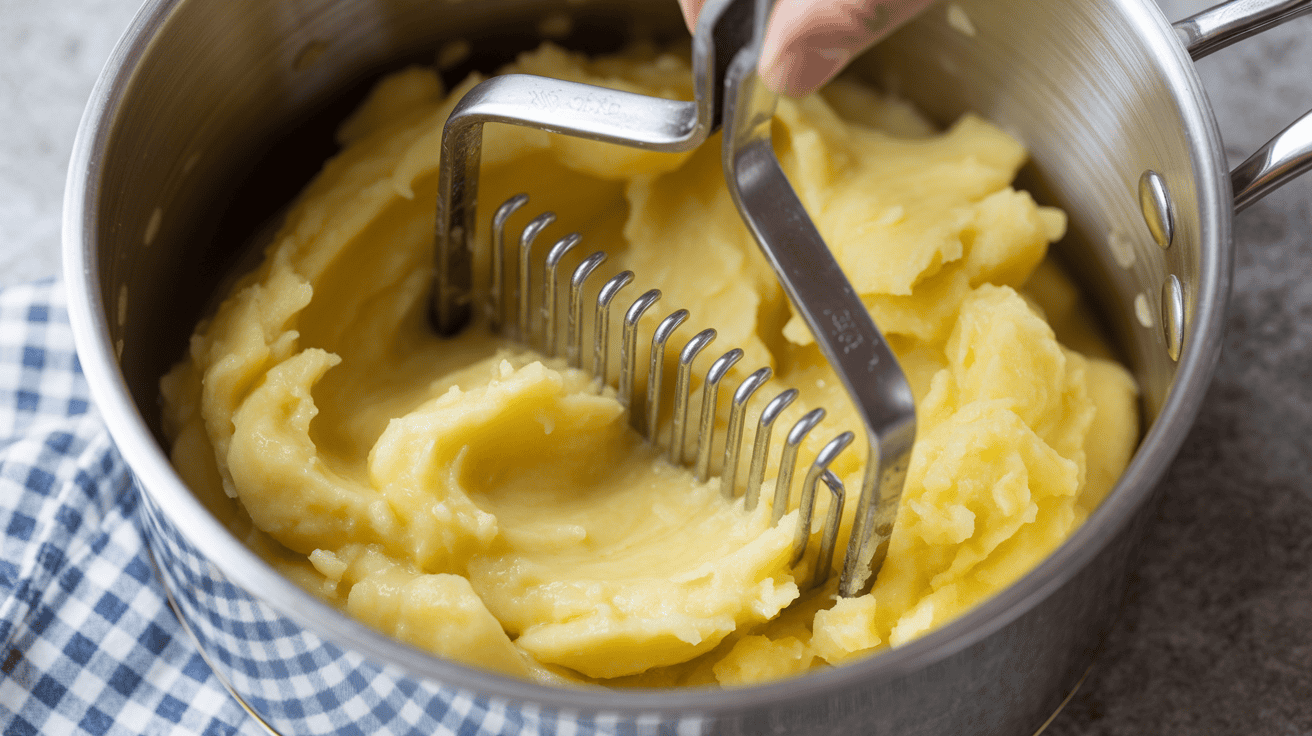
Step 5: Mash the potatoes: Once the potatoes are cooked, drain them well in a colander and return them to the warm pan. Add the remaining butter. Mash the potatoes until smooth or to your preferred texture. Season with salt and pepper to taste.

Step 6: Heat the oven: Preheat your oven to 180°C (about 350°F). Make sure the oven is fully up to temperature before baking.
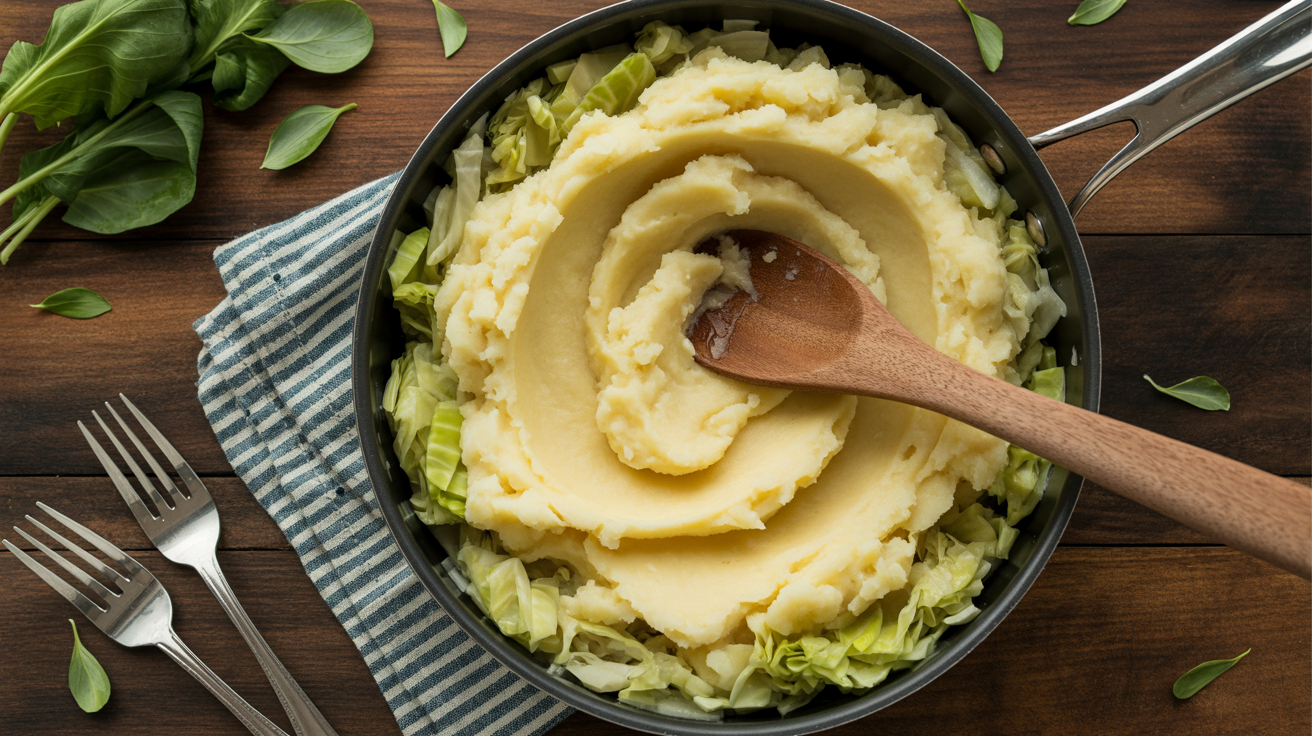
Step 7: Combine potatoes, cabbage, and onion: Add the cooked cabbage and the softened onion to the mashed potatoes. Stir everything together thoroughly so the vegetables are evenly distributed through the mash.
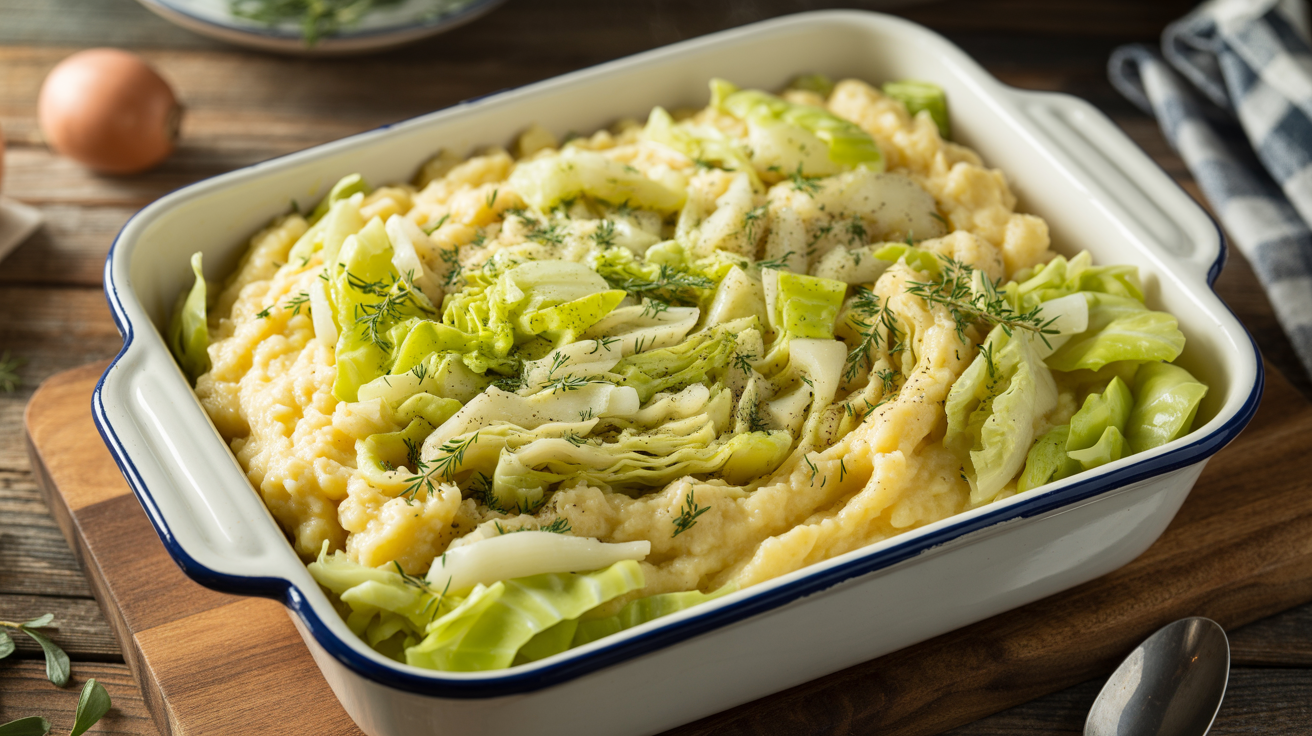
Step 8: Transfer to an oven dish: Spoon the potato and cabbage mixture into an ovenproof baking dish. Spread it out into an even layer, pressing it gently into the corners.

Step 9: Top with cheese and bake: Sprinkle grated cheese evenly over the top of the potato mixture. Place the dish in the preheated oven and bake for 15–20 minutes, or until the cheese has fully melted and turned a light golden brown on top.
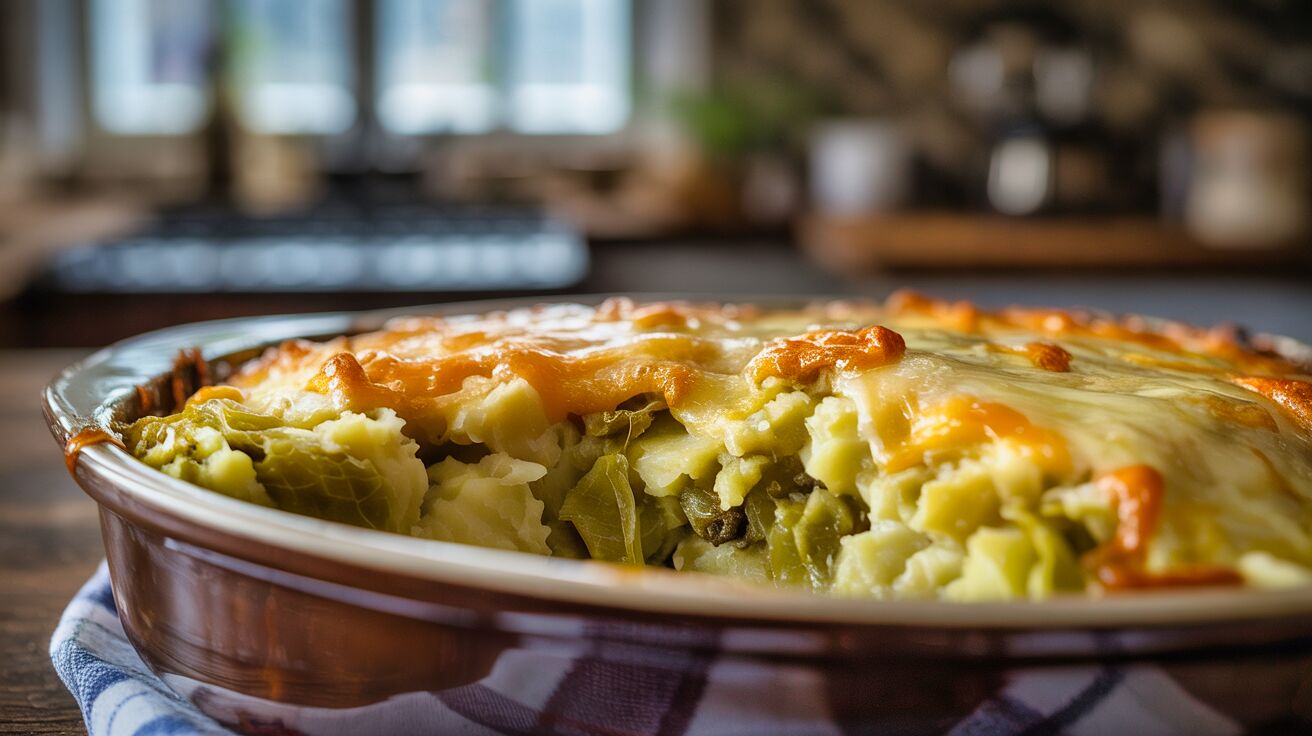
Step 10: Serve: Remove the dish from the oven and let it sit for a few minutes. Serve hot as a side dish with your chosen main meal.
Prepping and Mashing Like a Pro
I peel and quarter the potatoes so they cook evenly. Boil them in salted water for 15–20 minutes until a fork slides in easily, then drain well.
Mash them hot with butter and warmed milk, adding a little at a time until it’s creamy but still has some body. Season with salt and white pepper—taste as you go.
If I’m using leftover mash, I loosen it up with a splash of milk and a knob of butter so it mixes smoothly with the veggies. Set it aside while you cook the cabbage and onion.
Mixing and Layering for Maximum Flavour
Thinly slice your cabbage and dice an onion. Sauté both in butter over medium heat until they’re soft and sweet—about 8 minutes. Sometimes I’ll add a pinch of nutmeg or a dab of mustard for a little zing.
Fold the warm cabbage and onions into the mash with a wooden spoon. Don’t overmix—a few lumps are fine. For extra richness, stir in a handful of grated sharp cheddar or a bit of cooked bacon.
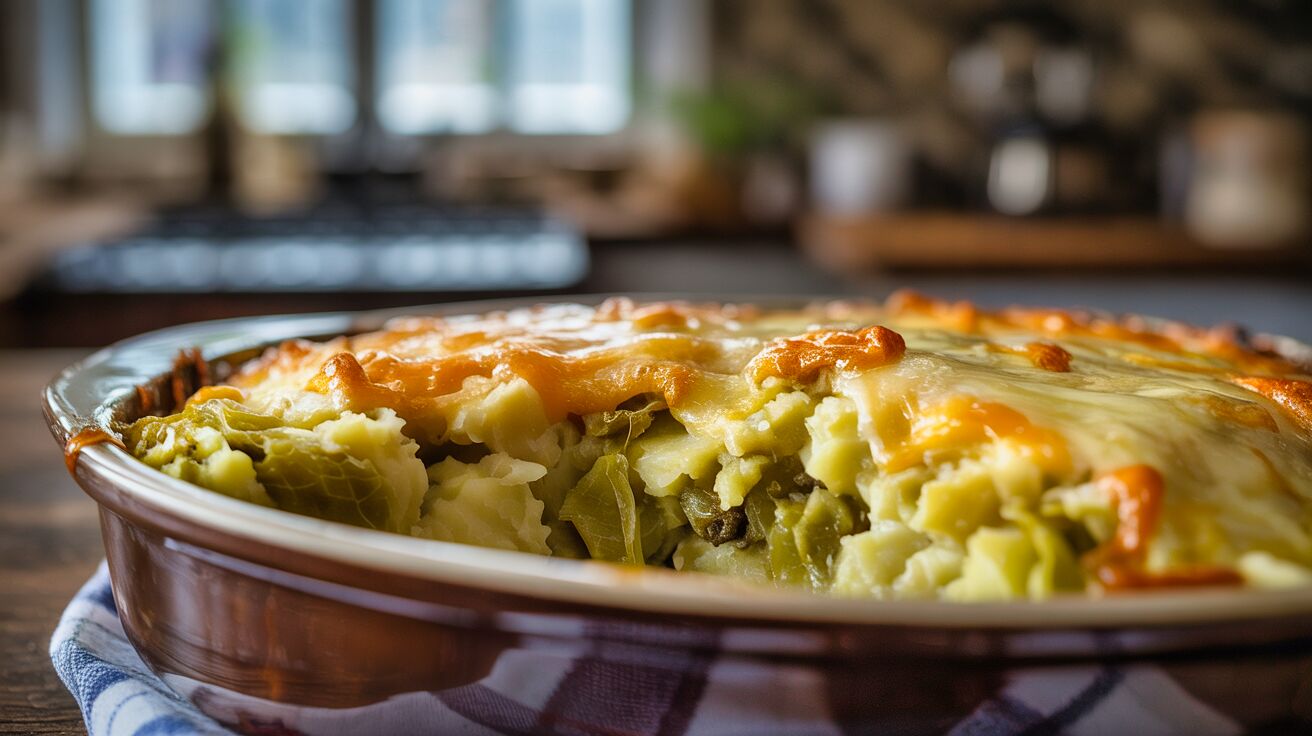
Spoon half the mix into an oiled baking dish, press gently, then spread the rest on top. Finish with a generous layer of grated cheddar. The layering gives you a golden, cheesy top and a creamy base.
Baking to Golden, Bubbly Perfection
Preheat the oven to Gas 4 (180°C/350°F). Bake on the middle rack for 25–30 minutes, until the cheese is melted and the edges are bubbling. If you want extra color, stick it under the grill for a couple of minutes—but keep an eye on it!
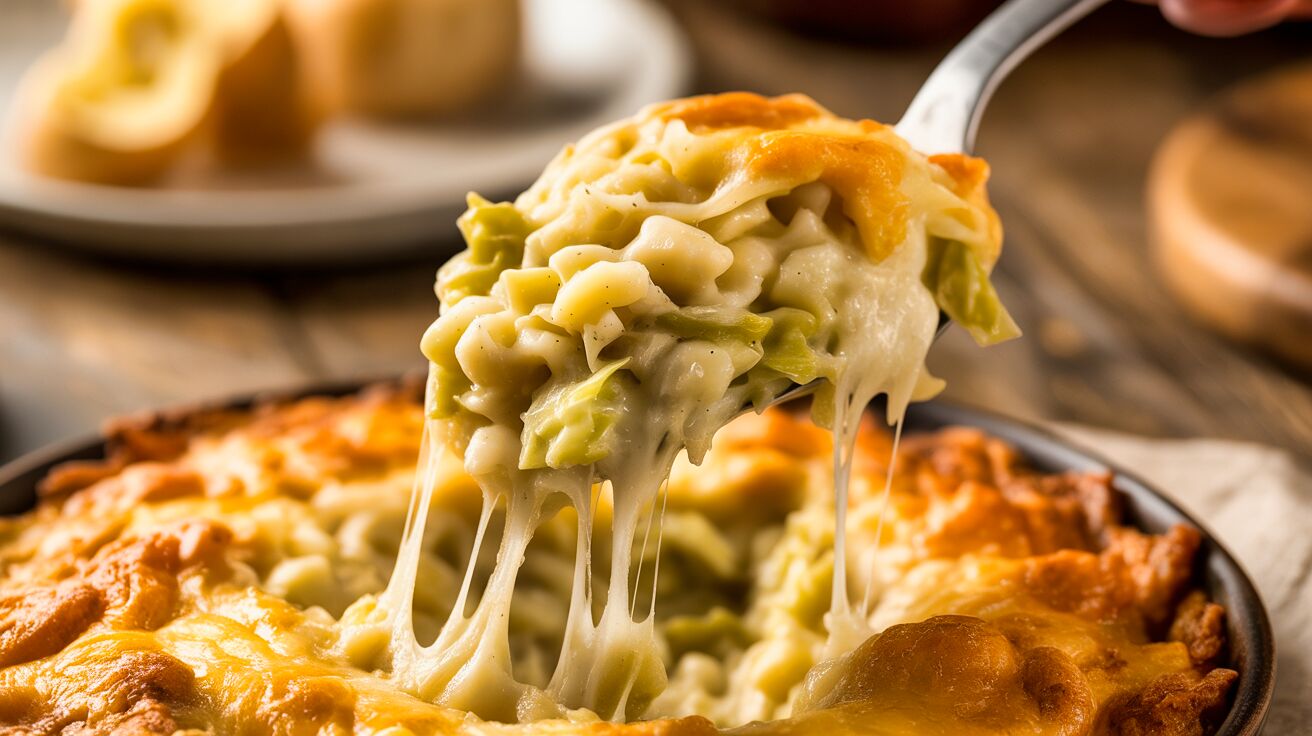
Let your Scottish Rumbledethumps recipe rest for 5 minutes so it firms up. Serve hot, maybe with a pat of butter on top. Leftovers? They reheat well in a low oven.
If you use leftover mash and pre-shredded cheese, prep time drops to about 10 minutes. Handy, right?
Variations, Leftovers, and Serving Ideas
Let’s talk swaps, clever uses for leftovers, and what goes best alongside a Scottish Rumbledethumps recipe.
Riffs and Twists on the Classic
Sometimes I mix in turnip or swede for a peppery kick. Sweet potato adds a new twist, and if you’re short on cabbage, leeks or kale work too.
Cheese on top is a must for that golden finish—sharp cheddar is my go-to. If I want to lighten things up, I’ll fold in mashed cauliflower. For a crispy version, pan-fry scoops of the mix like bubble and squeak.
Meat lovers: crumble in crispy bacon, or serve the Scottish Rumbledethumps recipe with haggis. That’s the classic Scottish combo—can’t go wrong there. If you want more ideas, check out our Haggis, Neeps & Tatties recipe or explore our Scottish side dishes collection.
Smart Uses for Leftover Mash
Leftover mash never goes to waste here. Shape Scottish Rumbledethumps recipe leftovers into patties, dredge in breadcrumbs, and pan-fry for croquettes. They’re a top-notch snack or side.
Another trick: pile the mash into a pie dish, top with beaten egg and more cheddar, then bake until set for a quick veggie main. Or, stuff the mix into peppers or mushroom caps and roast.
Small leftovers? Fry them up with onions for a crispy, bubble and squeak-style breakfast. It’s quick and uses up every bit.
What to Serve With Rumbledethumps
I like to pair the creamy Scottish Rumbledethumps recipe with something salty or with a bit of sauce. Haggis is the classic partner—it cuts through the richness. Roast lamb or slow-cooked beef are great too.
Top with crispy bacon or a poached egg for a full meal. Add a sharp salad or lemony greens to brighten things up. For breakfast, I serve it with fried eggs and baked beans. If you’re curious about similar dishes, take a look at our Colcannon recipe or read up on Bubble and Squeak for more inspiration. For another take, check out this classic Rumbledethumps recipe from Scottish Scran.
Nutrition Nuggets and Fun Facts
Let’s break down some numbers and a few odd facts about the Scottish Rumbledethumps recipe. Calories, lighter swaps, and why the name is so darn fun to say—it’s all here.
Calorie Count and Health Tips
A typical serving with butter, milk, and cheddar clocks in around 350–450 calories per cup. That’s for the potatoes, cabbage, and cheesy top. Use 2% milk or a splash of stock to cut about 40–80 calories per serving.
Protein’s not huge unless you add meat or beans—cheddar gives about 6–8 grams per half cup. You’ll get 3–4 grams of fiber per serving from the cabbage and potatoes, so it’s pretty filling. Want to cut the saturated fat? Use less butter and swap in reduced-fat cheese. Stir in kale or swede for extra vitamins.
- Serving: ~350–450 kcal
- Protein: 6–8 g (without meat)
- Fiber: 3–4 g
- Swaps: low-fat milk, less butter, more greens
For more nutrition tips, see our Healthy Scottish Recipes page, or check out the BBC Good Food Rumbledethumps recipe for another take.
Origins and Oddities: Why the Name?
Honestly, “rumbledethumps” sounds like something from a children’s book. Nobody’s sure where it comes from, but it probably grew out of Scottish dialect and the sound of mixing up potatoes and cabbage. Scots love playful names for food, and this one just stuck.
People in the Borders and rural Scotland made it with leftover potatoes and fried cabbage or kale. It’s a cousin to Irish colcannon and English bubble and squeak—basically, everyone loves a good mash-up. Maybe the fun name is why the Scottish Rumbledethumps recipe has lasted so long. Want to dig deeper? Here’s a detailed Wikipedia entry on Rumbledethumps and a Spruce Eats version if you’re feeling curious.
Try the Scottish Rumbledethumps recipe next time you need comfort food with character. It’s simple, hearty, and—well, it just makes you smile. For more Scottish classics, visit our Scottish Recipes page or check out this Delicious Magazine Rumbledethumps recipe for another spin.
Scottish Roots vs. Global Cousins
Let’s dig into what sets a Scottish Rumbledethumps recipe apart from its cousins around the world. The Scottish Rumbledethumps recipe calls for cabbage or kale mixed into mashed potatoes, all baked under a golden cheese crust. Irish colcannon, on the other hand, usually folds in scallions or kale, but you won’t see that cheesy finish as often. Bubble and squeak? That’s more about pan-frying leftover veggies and potatoes until they crisp up—no baking, no cheese, just a different kind of comfort.
Key differences:
- Rumbledethumps: mashed potato + cabbage/kale, baked, cheese topping.
- Colcannon: mashed potato + kale/cabbage + scallions, usually not baked.
- Bubble and squeak: fried leftover veg and potato, crisp exterior.
It’s funny how a baked cheesy top, like in a classic Scottish Rumbledethumps recipe, can totally change the vibe of the dish. It feels less like a way to use up scraps and more like something you’d crave on a rainy night. If you want some inspiration or to see the original method, check out this traditional rumbledethumps recipe. You’ll spot the same Scottish Rumbledethumps recipe in plenty of Scottish cookbooks, and honestly, it’s worth trying at least once. For more on Scottish classics, see our Scottish recipes collection, or explore how this dish compares with others in our comfort food guide. Curious about Scottish food history? Read our Scottish food history deep dive. If you’re new to this, our beginner’s guide to Rumbledethumps might help. For a twist, try the Scottish Rumbledethumps recipe with sweet potato or red onion—surprisingly good!
Want more inspiration? The BBC Good Food’s Scottish Rumbledethumps recipe is reliable, and The Spruce Eats’ version offers some tweaks. If you’re curious about regional spins, Scotland.org and TasteAtlas both showcase the Scottish Rumbledethumps recipe in their own style. And for a video walkthrough, check out the YouTube tutorial here.
So, whether you’re after a classic Scottish Rumbledethumps recipe or looking to riff on tradition, it’s a dish that’s easy to love and even easier to make your own. Sometimes you just need a little cheese, potato, and a Scottish touch. Isn’t that what comfort food’s all about?
Rumbledethumps vs Colcannon
Rumbledethumps and colcannon are both traditional dishes made with mashed potatoes and greens, but they differ in preparation, texture, and overall richness. Rumbledethumps is a classic Scottish comfort dish made by combining mashed potatoes with cabbage and onions, then baking the mixture with cheese on top until golden and slightly crisp. The baking process adds a layer of texture, creating a contrast between the creamy interior and the crispy, cheesy topping. It’s hearty, filling, and often served as a main or substantial side dish, especially during colder months.
Colcannon, a traditional Irish dish, also combines mashed potatoes with cabbage or kale, but it is typically served fresh and creamy rather than baked. It often includes butter and sometimes milk or cream, resulting in a smooth, rich texture. Colcannon is usually served as a side dish and has a softer, more uniform consistency. The key difference is texture and richness: rumbledethumps is baked with a crisp top and added cheese, while colcannon is smoother and more buttery.
Choose rumbledethumps if you want a heartier, slightly crispy dish. Opt for colcannon if you prefer a creamy, comforting side with a softer texture.

Scottish Rumbledethumps Recipe FAQ
1. What exactly is rumbledethumps made from?
Rumbledethumps is a traditional Scottish dish made with mashed potatoes, cabbage, and onions, all combined and often topped with cheese before baking. It’s similar in spirit to other British potato dishes but has its own distinct flavor from the cabbage.
2. Where does the name “rumbledethumps” come from?
The name is believed to come from the sound of the ingredients being mashed and mixed together—“rumbling” and “thumping” in the pot.
3. Is rumbledethumps served as a main dish or a side?
It can be either. It’s hearty enough to stand alone, but it’s also commonly served alongside roasted meats or sausages.
4. How do you get a crispy top on rumbledethumps?
Adding cheese or butter on top and baking it until golden helps create a slightly crisp, flavorful crust.
5. Can rumbledethumps be made ahead of time?
Yes, you can prepare it in advance and bake it just before serving, which actually helps the flavors meld together.

Scottish Rumbledethumps
Ingredients
- 2.5 lbs potatoes
- 1 cabbage
- 4 oz cheese mature cheddar
- 2 onions small chopped
- 4 oz. butter
Instructions
- Prep the potatoes: Peel the potatoes and rinse them under cold water to remove any surface starch. Cut them into even-sized chunks so they cook at the same rate.

- Boil until soft: Place the potato pieces in a large saucepan and cover with cold water. Add a small pinch of salt. Bring to a boil over medium–high heat, then reduce to a gentle boil and cook for about 15–20 minutes, or until the potatoes are very soft and can be easily pierced with a fork.

- Cook the onion (if using): While the potatoes are boiling, slice the onion into thin or medium slices. Heat a little butter or oil in a frying pan over medium heat. Add the onion and cook, stirring occasionally, until it becomes soft and lightly translucent. Remove from the pan and set aside.

- Cook the cabbage in butter: Roughly slice or shred the cabbage. In the same pan, melt 50 g of butter over medium heat. Add the cabbage and cook, stirring regularly. At first the pan will look full, but the cabbage will soften and wilt down as it cooks. Continue until the cabbage is tender and reduced in volume.

- Mash the potatoes: Once the potatoes are cooked, drain them well in a colander and return them to the warm pan. Add the remaining butter. Mash the potatoes until smooth or to your preferred texture. Season with salt and pepper to taste.

- Heat the oven: Preheat your oven to 180°C (about 350°F). Make sure the oven is fully up to temperature before baking.

- Combine potatoes, cabbage, and onion: Add the cooked cabbage and the softened onion to the mashed potatoes. Stir everything together thoroughly so the vegetables are evenly distributed through the mash.

- Transfer to an oven dish: Spoon the potato and cabbage mixture into an ovenproof baking dish. Spread it out into an even layer, pressing it gently into the corners.

- Top with cheese and bake: Sprinkle grated cheese evenly over the top of the potato mixture. Place the dish in the preheated oven and bake for 15–20 minutes, or until the cheese has fully melted and turned a light golden brown on top.

- Serve: Remove the dish from the oven and let it sit for a few minutes. Serve hot as a side dish with your chosen main meal.

Video


14 comments
Isnt it intriguing how a humble spud can play the lead role in the culinary drama of Rumbledethumps? Potatoes truly are versatile stars!
Potatoes are overrated. Rumbledethumps would be far more exciting with sweet potatoes!
Interesting article, but wouldnt adding some crispy bacon bits take Rumbledethumps to an entirely new level of flavor? Just a savory thought!
Bacon bits? Thatd just overshadow the traditional flavors, not enhance them!
Well, wouldnt it be interesting to try Rumbledethumps with sweet potatoes and vegan cheese? Whos with me on this one?
Is anyone else wondering how this Rumbledethumps would taste with sweet potato instead? Maybe a bit of Brie cheese too? Just a wild thought!
Are we sure the Rumbledethumps recipe won’t be tastier with sweet potatoes? And maybe some smoked gouda? Just throwing it out there, folks.
Interesting article, but isnt it true that substituting kale for cabbage could potentially bring a nutritional upgrade to Rumbledethumps?
Absolutely not! Cabbage holds its own in nutrition. Dont underestimate the underdog.
Anyone tried swapping the cabbage for broccoli in the Rumbledethumps recipe? Might make it more kid-friendly, you reckon?
Broccoli in Rumbledethumps? Thats culinary blasphemy! Stick to the traditional recipe.
I see your point about the potatoes, but isnt it the cabbage that really elevates Rumbledethumps to a whole new culinary level? Thoughts?
Anyone tried Rumbledethumps with sweet potatoes? Bet itd add a nice twist. And what about using kale instead of cabbage?
Sweet potatoes and kale in Rumbledethumps? Thats downright culinary blasphemy! Stick to tradition!
Comments are closed.