


When I first tried Scottish chicken curry, I was honestly surprised—it tasted nothing like the fiery curries I’d grown up with. Scottish chicken curry is a mild, creamy curry dish with subtle spices that developed in Chinese restaurants across Scotland, creating a flavor unlike traditional Indian or Chinese curries. It’s sweet, gentle, and has somehow become a beloved comfort food for Scots, especially after a late night out.
I know, Scotland and curry? It seems like a weird combo. But this dish has its own quirks, like tossing in ingredients you’d never see in Mumbai or Beijing. Some versions even sneak in bacon or mushroom powder—sounds odd, right? Somehow, it just works.
I’ll walk you through making this Scottish chicken curry recipe at home, from picking your ingredients to saving leftovers. Whether you want the classic takeaway vibe or some Scottish twists on the recipe, you’ll get everything you need to nail this comfort food in your own kitchen. And yes, this is my go-to Scottish chicken curry recipe, so you’re in good hands.

The Essential Ingredients for Authentic Scottish Chicken Curry
The Scottish chicken curry recipe stands out because of a handful of key ingredients. I’ve found that the right mix of meat, spices, and aromatics creates something comforting without overwhelming your taste buds. Trust me, you won’t mistake it for an Indian curry after one bite.
Choosing Chicken Breasts or Legs
Every time I’m at the store, I debate: chicken breasts or legs? Breasts are lean, quick to cook, and soak up all those lovely spices. They’re easy to cut into nice, even pieces, which means less babysitting at the stove.
But honestly? Chicken legs bring the flavor. The dark meat stays juicy during cooking and gives the curry a richer taste. I don’t stress about overcooking them either.
Sometimes I just use both because, well, why not? If I’m feeling lazy, I’ll even grab a rotisserie chicken and toss it in at the end. No shame. It’s your Scottish chicken curry recipe—do what works for you.
Spice Cabinet Staples: Curry Powder, Turmeric, and More
My spice cabinet is chaos, but for a Scottish chicken curry recipe, curry powder is the star. I go with mild curry powder if I’m cooking for folks who think black pepper is spicy. It gives you that classic curry flavor without any drama.
Turmeric’s what gives the curry that beautiful golden color. I usually add about half a teaspoon—seriously, don’t overdo it. Ground cumin brings that earthy warmth I crave. Paprika adds a little sweetness and makes the color pop. Ground coriander gives it a citrusy lift. Garam masala goes in at the end to pull everything together. If you’re making a Scottish chicken curry recipe, don’t skip these.
Supporting Players: Garlic, Ginger, and Fresh Coriander
Garlic and ginger are a must. I usually mince 3-4 cloves of garlic and a thumb of ginger. The smell when they hit the pan? Unreal.
I always use fresh garlic and ginger—the jarred stuff just doesn’t cut it. Grating ginger on a microplane makes it melt right into the sauce.
Fresh coriander is non-negotiable for me. I chop it up and sprinkle it over the finished Scottish chicken curry recipe. It brightens everything up. If you hate coriander, well, I feel for you.

Step-by-Step: How to Make Scottish Chicken Curry at Home
Curry European Style

Step 1: Cook the bacon: In a large, wide, heavy skillet big enough to hold all the chicken legs, cook the bacon until crisp. Transfer the bacon to a paper towel–lined plate to drain, leaving the rendered fat in the skillet.

Step 2: Brown the chicken: Increase the heat to high. Working in batches if needed, add the chicken legs to the skillet and brown them on all sides. Move the browned chicken to a rimmed dish and set aside. If there is more than 3 tablespoons of fat left in the skillet, carefully remove the excess.

Step 3: Cook the onions and spices: Reduce the heat to medium-low. Add the sliced onions, garlic, turmeric, black pepper, and cayenne to the skillet. Sauté, stirring occasionally, until the onions have softened.

Step 4: Add curry powder, flour, and Porcini: Stir in the curry powder, flour, and ground Porcini mushrooms (if using). Cook briefly, stirring, so the spices and flour are evenly mixed with the onions.

Step 5: Add liquid and return chicken and bacon: Pour in the chicken stock and add the pearl onions. Return the browned chicken legs and the cooked bacon to the skillet, nestling them into the liquid and onions.

Step 6: Simmer the curry: Bring the mixture up to a boil. Cover the skillet, reduce the heat to a gentle simmer, and cook for about 30 minutes, or until the chicken is cooked through.
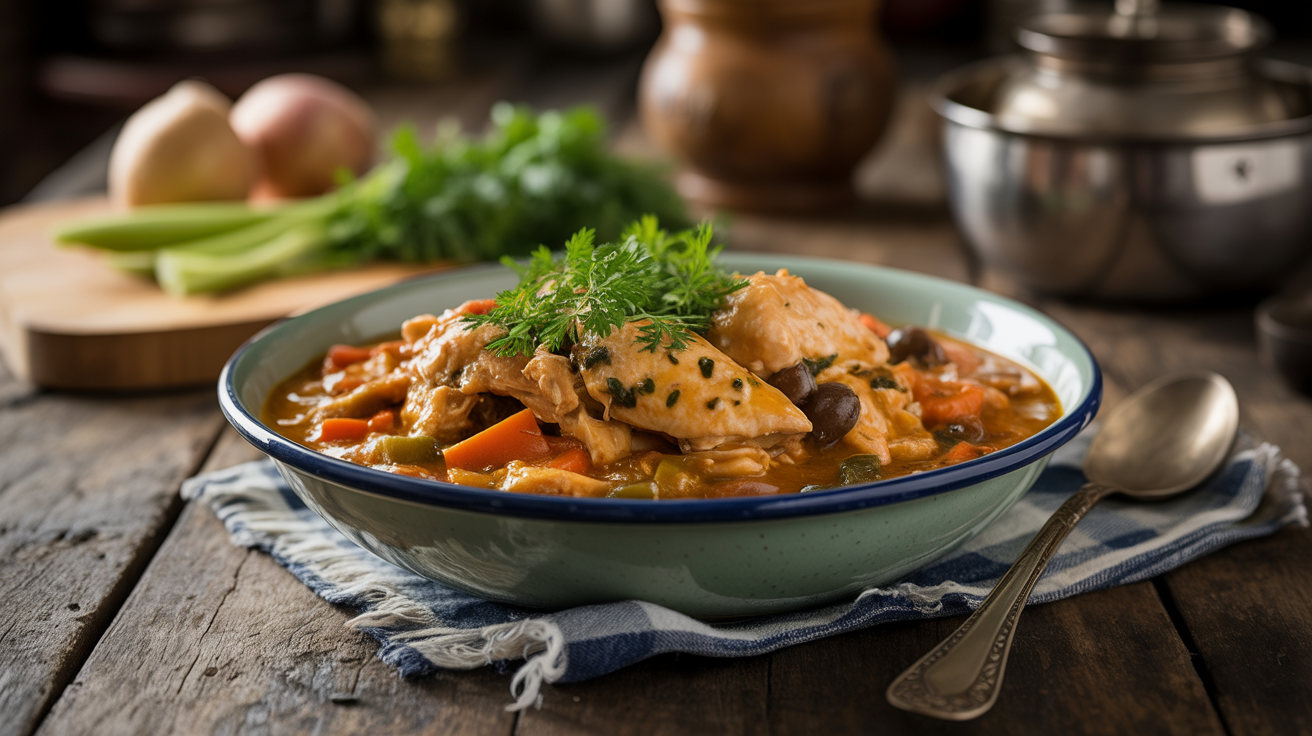
Step 7: Finish and serve: Remove the skillet from the heat and stir in the vinegar. Serve the curry with vegetables, rice, chutneys, flatbreads, or other sides as desired.
Velveting and Marinating the Chicken
I cut my chicken into bite-sized chunks. Not exactly Chinese velveting, but I toss the pieces in curry powder and a pinch of cumin. Let the chicken sit for about 15 minutes while you prep the rest. Some people skip this and go straight to the pan—totally fine.
The marinade’s simple. Even a quick 10-minute rest helps the spices stick. Add a splash of oil if you want. For a Scottish chicken curry recipe, I don’t stress about perfection—just get some flavor on the meat.
Building the Curry Sauce Base
Heat oil in a big pan, then add minced ginger and garlic. I use about two cloves of garlic and a thumb of ginger. Cook for about 30 seconds—just until your kitchen smells amazing.
Add the chicken and brown it on all sides, about 5 minutes. Don’t worry about cooking it through yet.
Now for the sauce. I add tinned tomatoes, a spoonful of tomato puree, and a cup of chicken stock. Sprinkle in curry powder, cumin, and a tiny pinch of cinnamon. Cinnamon gives warmth without turning it into dessert.
Stir it all together, scraping up the brown bits. If you’re making a Scottish chicken curry recipe, this is where the magic starts.
Simmering to Perfection: Cooking Tips and Tricks
Turn the heat down and let the curry bubble gently for 15-20 minutes. The sauce thickens up nicely.
I check the chicken by cutting into a piece—no thermometer needed. If the sauce is too thick, add a splash of stock. Too thin? Let it simmer uncovered. Taste and adjust the spices at the end. Sometimes it needs more curry powder. Let it sit for 10 minutes off the heat so the flavors can come together. That’s a Scottish chicken curry recipe secret right there.

Signature Scottish Curry Variations
Scottish curry houses have their own legendary creations. These twists make the Scottish chicken curry recipe even more interesting—milder, sweeter, and totally unique.
Chicken Chasni: Glasgow’s Sweet and Tangy Icon
First time I tried Chicken Chasni in Glasgow, I was hooked. It’s sweet and sour, basically the Scottish answer to anyone who thinks curries are always spicy.
The sauce uses mango chutney, tomatoes, and cream. It’s like dessert crashed dinner and they became best friends. The chicken soaks up all that rich, fruity sauce. The spice level is gentle, so even my friends who can’t handle heat love it. Garam masala and ground coriander add warmth, not fire. The mango chutney brings that signature sweetness. If you’re after a sweet Scottish chicken curry recipe, this is the one.
Chicken Tikka Masala: The Legend of the Curry House
Isn’t this just regular tikka masala? Well, legend says this creamy tomato curry was actually invented in Glasgow in the ‘70s. True or not, Scottish curry houses claim it as their own.
The story: a customer complained his curry was too dry, so the chef mixed in tomato soup and cream. Boom—chicken tikka masala happened. The Scottish version is ultra-creamy, milder than Indian versions, and has a thick, rich, slightly sweet sauce. Ground coriander and garam masala give it depth, but it never gets too hot. This Scottish chicken curry recipe is a crowd-pleaser.
Mushrooms and Other Veggie Additions
Scottish curries love their mushrooms—honestly, it’s a thing. Curry houses here throw mushrooms into almost everything. I’m not mad about it.
Button mushrooms add earthiness and soak up the sauce. Some recipes use mushroom powder to thicken the curry and add savory depth. You’ll also see peppers, onions, and tomatoes in most Scottish chicken curry recipe variations.

Serving Suggestions and Accompaniments
A Scottish chicken curry recipe needs sides that hold up to its big flavors. I always go for fluffy rice, but warm naan bread and mango chutney make it feel like a real feast.
Serve with Rice: The Ultimate Comfort
Rice is my default with Scottish chicken curry recipe—every single time. Basmati rice is perfect; long grains soak up the curry sauce like a dream. A pinch of salt and a bay leaf in the pot, if I’m feeling fancy.
Pilau rice is great too, especially if you want more flavor. Brown rice works, but it takes longer. My tip: always make more rice than you think you’ll need. Leftover curry and rice is a killer lunch. I use about 75 grams of uncooked rice per person. It’s enough for everyone, with maybe a little left for tomorrow’s Scottish chicken curry recipe lunch.
Perfect Partners: Naan Bread and Mango Chutney
Naan bread is my favorite for scooping up curry sauce. I grab garlic naan from the store and warm it in the oven for five minutes. It comes out soft, perfect for tearing and sharing.
Mango chutney adds a sweet contrast I didn’t know I needed. The fruity tang cuts through the spices and gives your taste buds a break. I put out both mild and spicy chutneys, because why not? A spoonful on the side keeps things interesting. It’s a Scottish chicken curry recipe must-have.
Garnishes for a Flourish
Fresh coriander is my finishing move. I chop a handful and scatter it over the top. It makes the curry look and taste fresh.
If I have them, I add sliced red chili for color and heat. A dollop of plain yogurt cools things down if the curry’s spicier than planned. Lime wedges on the side let everyone add a squeeze of citrus. These little touches make a Scottish chicken curry recipe look like you spent all day on it.
Storing, Reheating, and Leftover Magic
Here’s the thing about a Scottish chicken curry recipe—it’s even better the next day. The flavors settle in and get cozy. I always make extra, because leftovers mean future me gets a break from cooking. Store it right, and you can enjoy your Scottish chicken curry recipe for days, even months if you freeze it. It’s honestly the gift that keeps on giving.
Making It Ahead: Batch Cooking and Freezing
I love making a huge pot of chicken curry on Sunday and pretending I’m a meal prep genius for the rest of the week. The curry keeps safely in the fridge for 3 to 4 days when I store it in an airtight container. I let it cool first, but I never leave it out for more than a couple of hours. This Scottish chicken curry recipe just gets better after a day in the fridge, honestly.
For longer storage, I freeze portions in freezer-safe containers or heavy-duty freezer bags. The curry stays good in the freezer for up to 3 months. I always leave about an inch of space at the top of containers because the sauce likes to expand when it freezes. With this Scottish chicken curry recipe, you can easily make double and stash half for a rainy day.
Sometimes, when I’m batch cooking, I freeze the curry before adding the chicken stock. That way, I can tweak the consistency later. I slap a date label on each container so I don’t end up with mystery meals months down the line. Flat freezer bags win every time—they stack well and thaw way faster than those bulky containers. If you’re making this Scottish chicken curry recipe in bulk, you’ll thank yourself later for the extra effort.
Reheating Without Ruining the Sauce
I reheat my Scottish chicken curry recipe on the stovetop over medium-low heat, stirring now and then until it hits 165°F. The microwave works, but I pour in a splash of chicken stock or water first so the sauce doesn’t dry out and get sad. The sauce thickens up in the fridge (that’s normal), so I just stir in a bit more stock while reheating to loosen it up.
If I’m reheating from frozen, I skip thawing and put it straight on the stovetop—it just takes longer. I only reheat what I’m going to eat right then. Reheating the same Scottish chicken curry recipe batch more than once is just asking for disappointment, maybe even food poisoning. The goal: get the chicken to a safe 165°F, not just sorta warm. This Scottish chicken curry recipe is worth the extra care, trust me.
Honestly, if you’ve never tried freezing a Scottish chicken curry recipe before, give it a go. The flavors mellow out and come together in the best way. Plus, nothing beats pulling out a homemade Scottish chicken curry recipe from the freezer when you can’t be bothered to cook. If you ask me, every freezer deserves a stash of Scottish chicken curry recipe—it’s a lifesaver on busy nights.
Creative Uses for Leftover Curry
When I have leftover chicken curry, I see endless options. Sometimes I spoon it over baked potatoes—honestly, that’s the easiest loaded potato you’ll ever make. Other times, I stuff it into savory hand pies with store-bought puff pastry. If you haven’t tried using your Scottish chicken curry recipe leftovers this way, you’re missing out.
Curry toast is my lazy breakfast masterpiece. I just pile leftover Scottish chicken curry recipe onto thick bread, throw on some cheese, and broil until everything’s bubbling and golden. Sometimes I stir it into cooked pasta—kind of a fusion dish that sounds questionable, but trust me, it works. If you ever wondered what to do with Scottish chicken curry recipe leftovers, try this.
If I’m feeling ambitious, I use the Scottish chicken curry recipe as a filling for samosas or spring rolls. But most mornings, I just scramble it with eggs. Scottish chicken curry recipe meets breakfast—my grandmother would probably raise an eyebrow, but I think she’d secretly love it. Don’t sleep on tossing Scottish chicken curry recipe with eggs; it’s legit. There are so many ways to reinvent Scottish chicken curry recipe leftovers that I almost look forward to having extra.

Scottish Curry vs Indian Curry
Scottish curry and Indian curry share a name and some basic influences, but they differ greatly in spice complexity, intensity, and overall flavor profile.
Scottish curry is typically a milder adaptation of traditional curry dishes, often featuring a creamy or gravy-based sauce with gentle spices. It’s designed to be comforting and accessible, with flavors that are warm but not overpowering. This style of curry is commonly found in home cooking and local takeaways, where it’s served as a hearty, approachable meal.
Indian curry, by contrast, is known for its depth and variety. It uses a wide range of spices such as cumin, coriander, turmeric, and garam masala, often layered to create complex, aromatic flavors. Depending on the region, Indian curries can be rich and creamy or light and spicy, with a much broader spectrum of intensity.
The key difference is accessibility versus complexity: Scottish curry is mild and straightforward, while Indian curry is bold, layered, and diverse.
Choose Scottish curry if you prefer a gentle, comforting dish with mild spice. Opt for Indian curry if you want a more authentic, spice-forward experience with deeper flavor.

Scottish Chicken Curry Recipe FAQ
1. How does Scottish chicken curry differ from traditional Indian curry?
Scottish curry is typically milder and often influenced by British curry house styles, with a smoother sauce and balanced spices.
2. What spices are commonly used in Scottish-style curry?
Curry powder blends, garlic, ginger, and onions form the base, often with less heat than traditional Indian recipes.
3. Is Scottish chicken curry creamy or tomato-based?
It can be either, but many versions lean toward a creamy or mildly spiced sauce.
4. Why is curry popular in Scotland?
Curry became popular through British-Indian cuisine and is now a staple takeaway and home-cooked meal.
5. What is served with Scottish chicken curry?
Rice, naan bread, or chips are commonly served alongside.

Scottish Chicken Curry
Ingredients
- 12 oz bacon 1/4 inch strips thick-cut bacon
- 5 lb chicken
- 1 onion large peeled and thinly sliced
- 1 clove garlic roasted
- 1 tbsp turmeric freshly grated turmeric
- 1 tsp black pepper freshly ground
- 1/2 tsp cayenne pepper ground
- 2 tbsp curry powder homemade or storebought
- 2 tbsp all-purpose flour
- 1-2 tbsp mushrooms finely ground Porcini
- 3 cups chicken stock chicken feet
- 1 cup onions peeled pearl
- 2 tbsp vinegar white wine
Instructions
- Cook the bacon: In a large, wide, heavy skillet big enough to hold all the chicken legs, cook the bacon until crisp. Transfer the bacon to a paper towel–lined plate to drain, leaving the rendered fat in the skillet.

- Brown the chicken: Increase the heat to high. Working in batches if needed, add the chicken legs to the skillet and brown them on all sides. Move the browned chicken to a rimmed dish and set aside. If there is more than 3 tablespoons of fat left in the skillet, carefully remove the excess.

- Cook the onions and spices: Reduce the heat to medium-low. Add the sliced onions, garlic, turmeric, black pepper, and cayenne to the skillet. Sauté, stirring occasionally, until the onions have softened.
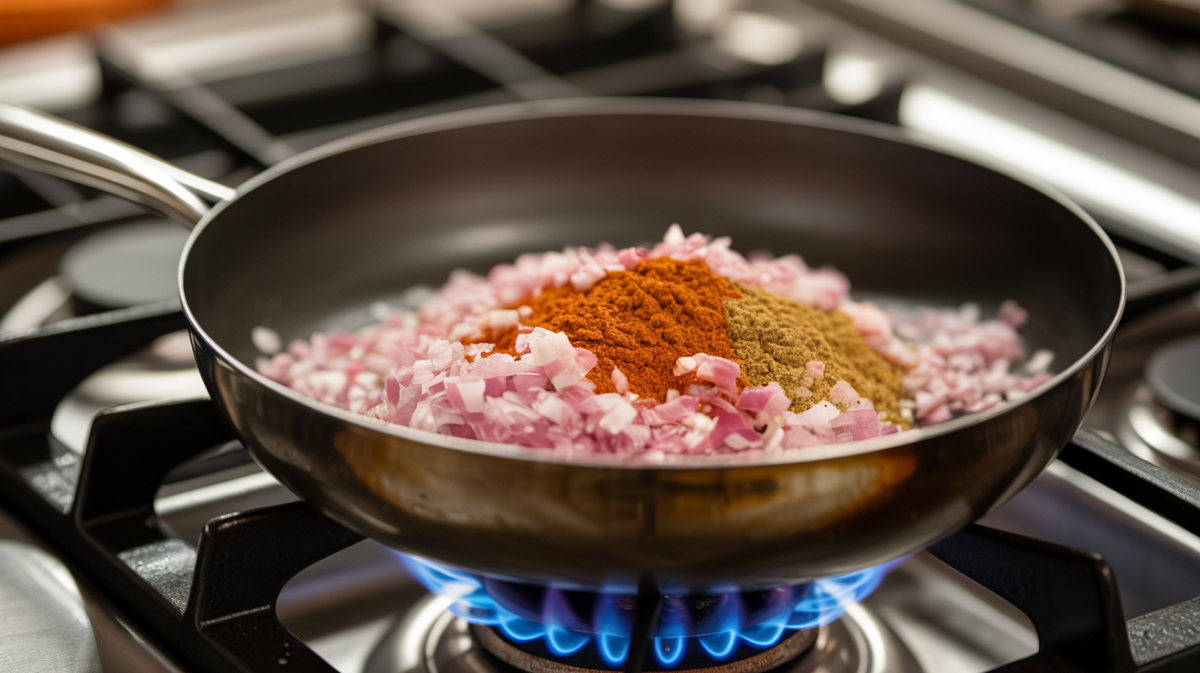
- Add curry powder, flour, and Porcini: Stir in the curry powder, flour, and ground Porcini mushrooms (if using). Cook briefly, stirring, so the spices and flour are evenly mixed with the onions.

- Add liquid and return chicken and bacon: Pour in the chicken stock and add the pearl onions. Return the browned chicken legs and the cooked bacon to the skillet, nestling them into the liquid and onions.

- Simmer the curry: Bring the mixture up to a boil. Cover the skillet, reduce the heat to a gentle simmer, and cook for about 30 minutes, or until the chicken is cooked through.

- Finish and serve: Remove the skillet from the heat and stir in the vinegar. Serve the curry with vegetables, rice, chutneys, flatbreads, or other sides as desired.

Video


8 comments
Just wondering, wouldnt swapping chicken for lamb make this curry more traditionally Scottish? Thoughts anyone?
Actually, lamb isnt more Scottish. Currys foreign to Scotland, regardless of the meat used!
Does anyone else think adding a dash of Scotch whisky could really amplify the Scottish authenticity of this curry?
Absolutely! A dash of Scotch whisky would add a unique, smoky depth to the curry.
Ever tried using coconut milk in the curry? Its a game-changer! Also, dont discount bone-in chicken for added flavor.
Anyone tried substituting ginger with galangal in this Scottish Chicken Curry? Could add an interesting twist!
Surely, galangal in a Scottish curry? Thats like wearing a kilt in Thailand! Stick to ginger.
Interesting read! What about swapping coriander for parsley, would it alter the authenticity of this Scottish chicken curry?
Comments are closed.